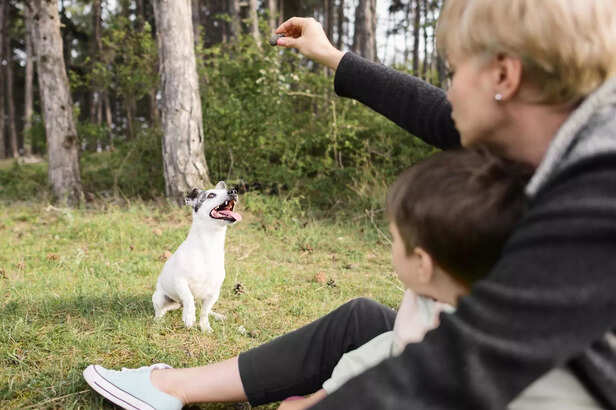
If you’ve ever spoken to your dog and watched them tilt their head to one side, you’ve probably melted at the sight. This charming gesture isn’t just about cuteness it actually reveals how dogs interpret the world around them. From trying to understand your voice to reacting to unfamiliar sounds, head tilting is a fascinating mix of instinct, intelligence, and emotion that reflects the deep bond between dogs and humans.
Better Hearing and Sound Localization
![Better Hearing and Sound Localization]()
Better Hearing and Sound Localization
Image credit : Freepik
Dogs are equipped with an exceptional sense of hearing, far more advanced than that of humans. They can detect higher frequencies and even subtle variations in sound that we might completely miss. However, identifying where a sound is coming from is just as important as hearing it. This is where head tilting plays a role. By slightly shifting the position of their head, dogs adjust the angle of their ears, allowing sound waves to reach each ear differently. This helps their brain calculate the exact direction and distance of the sound source. For example, when you call your dog from another room or make a new sound, the head tilt helps them “fine tune” their hearing. It’s similar to how humans might turn their head or lean in to hear something better. This behavior becomes even more noticeable when dogs hear unfamiliar words, high-pitched tones, or unusual noises, as they try to gather more accurate auditory information.
Trying to Understand Human Speech
![Trying to Understand Human Speech]()
Trying to Understand Human Speech
Image credit : Freepik
Although dogs don’t understand human language in the same way we do, they are incredibly skilled at picking up on certain words, tones, and patterns. Research has shown that dogs can learn to associate specific words with actions, objects, or emotions. When you speak to your dog, especially using a different tone or new words, they may tilt their head as a sign of concentration. This head tilt can be seen as a “processing mode,” where your dog is trying to interpret what you’re saying. They may be listening for familiar keywords like “walk,” “food,” or their name. At the same time, they are also analyzing your tone of voice whether it’s happy, serious, or questioning. This combination of listening and interpreting makes head tilting a sign of intelligence and attentiveness. It shows that your dog is actively trying to communicate and understand you better.
Reading Facial Expressions
![Better Hearing and Sound Localization]()
Better Hearing and Sound Localization
Image credit : Freepik
Dogs are highly observant when it comes to human facial expressions. Over thousands of years of domestication, they have developed the ability to read human emotions through visual cues such as eye movement, mouth shape, and overall facial tension. However, a dog’s snout can sometimes partially block its direct view of a person’s face. By tilting their head, dogs may be adjusting their line of sight to get a clearer and more complete view of your expressions. This helps them better understand how you’re feeling and respond appropriately. For instance, they might recognize a smile as a sign of happiness or a frown as a signal to be cautious. This behavior highlights the deep emotional connection between dogs and humans, as dogs rely heavily on visual communication to strengthen their bond with their owners.
Emotional Connection and Curiosity
Head tilting is often a clear sign that your dog is emotionally engaged with you. When dogs are curious or interested in something, they tend to focus intensely, and the head tilt becomes a natural part of that focus. It indicates that your dog is not only paying attention but is also emotionally invested in the interaction. This behavior is especially common when you use an excited or affectionate tone, call their name, or introduce something new. Dogs may tilt their heads as a way of expressing curiosity almost like they are asking, “What’s that?” or “What do you mean?” It’s a beautiful example of how dogs communicate nonverbally and try to connect with humans on a deeper level. In many ways, this small gesture reflects trust, interest, and a desire to interact, making it one of the most heartwarming aspects of dog behavior.
Positive Reinforcement
Another important factor behind head tilting is learned behavior. Dogs are quick learners, especially when it comes to actions that bring them attention or rewards. When a dog tilts its head and you respond with laughter, affection, or treats, the dog begins to associate that action with positive outcomes. Over time, this reinforcement encourages them to repeat the behavior more frequently. Essentially, your dog learns that tilting their head makes you happy and since dogs naturally seek approval and bonding, they continue doing it. This is why some dogs seem to tilt their heads more often than others; they may have received stronger positive feedback in the past. This cycle of behavior and reward highlights how closely dogs observe human reactions and adapt their actions accordingly.
When It Could Be a Concern
While head tilting is usually harmless and adorable, it’s important to recognize when it might indicate a health issue. Occasional tilting during interaction is perfectly normal, but persistent or excessive tilting especially when not triggered by sound or communication can be a warning sign.
Medical conditions such as ear infections, inner ear problems, or neurological disorders can cause a dog to tilt its head frequently or maintain an abnormal head position. In such cases, you may also notice other symptoms like loss of balance, dizziness, unusual eye movements, or discomfort. If your dog shows these signs, it’s crucial to consult a veterinarian as soon as possible. Early diagnosis and treatment can prevent more serious complications. Being aware of the difference between normal behavior and a potential health concern ensures that your pet stays happy and healthy.
A dog’s head tilt is more than just an adorable habit it’s a window into how they hear, think, and connect with you. Whether they’re trying to understand your words, locate a sound, or simply bond with you, this behavior highlights their intelligence and emotional depth. However, pet owners should also stay alert to unusual patterns that may signal health issues. By understanding this simple gesture, you can deepen your relationship with your furry companion and ensure their well-being.