The journey is over. You are home, the bags are inside, and your dog is pacing the flat or your cat has wedged herself behind the washing machine. Neither is being dramatic. Both are finishing something their body started hours ago and has not yet switched off.
What the body is actually doing during travel
When a pet travels, the stress response activates early and stays on. The hypothalamic-pituitary-adrenal axis releases cortisol; the sympathetic nervous system keeps heart rate and breathing elevated; the digestive system, which is the first casualty of stress in both dogs and cats, slows or becomes erratic. A car journey of four hours or a flight of two produces a cortisol load that does not simply disappear when the engine stops. Research in veterinary stress physiology consistently shows that cortisol takes twelve to twenty-four hours to return to baseline in dogs after a significant stressor, and cats, who have a narrower window of tolerance for environmental change, often take longer. The animal you bring home is not the animal who left. It is the same animal, still mid-response.
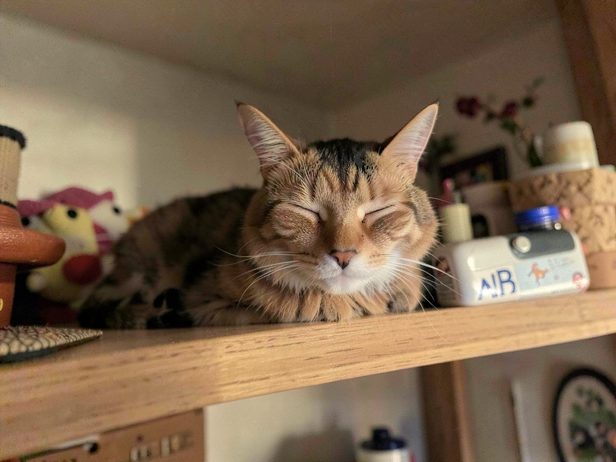
![Cat's peaceful repose]()
Cat's peaceful repose
Image credit : AI
Finding calm after a journey. This feline needs rest after travel.
Why the senses need time too
Travel is loud, unpredictable, and full of smells that mean nothing familiar. A pet in a moving vehicle is processing vibration through its body, engine noise, changing air pressure, exhaust, unfamiliar road smells, and the owner's own stress signals, which dogs read through scent and micro-expression with a precision most owners underestimate. Cats in carriers add the specific misery of confinement: they are prey animals who cannot see a threat coming, and the carrier removes their ability to flee. By the time the journey ends, the sensory cortex has been working hard for hours. The animal is not calm because the environment is now calm. It is still processing the backlog. This is why a dog who seemed fine in the car may bark at nothing two hours after arriving, or why a cat who tolerated the journey may hiss at a family member she knows well. The nervous system is still running hot.
What digestion tells you
Motion sickness in pets is real and common, driven by conflict between the vestibular system and visual input, the same mechanism as in people. But even pets who do not vomit during travel often show digestive disruption in the hours after: loose stools, refusal to eat, excessive gas, or drinking large amounts of water all at once. The gut has its own nervous system, the enteric nervous system, which communicates directly with the brain along the vagus nerve. Stress suppresses normal gut motility. When the stress lifts, the gut restarts, and the restart is not always smooth. Offering a small, plain meal rather than a full portion on arrival, and making fresh water consistently available without encouraging gulping, gives the digestive system room to recalibrate. If vomiting, diarrhoea, or complete food refusal continues beyond twenty-four hours after a journey, that is a vet visit, not a wait-and-see.
![Pet's Post-Travel Nourishment]()
Pet's Post-Travel Nourishment
Image credit : AI
Resting and refueling after a long journey. This quiet moment is crucial for pet travel recovery India.
What a recovery day actually looks like
A quiet day is not doing nothing. It is actively removing demands. No visitors, no introductions to new animals, no long walks in a new neighbourhood, no baths, no grooming sessions. The pet's familiar bedding, water bowl, and litter tray or outdoor toilet spot should be accessible immediately on arrival. Scent is the fastest route back to baseline for both dogs and cats: their own smell on a blanket or bed signals safety in a way that a calm voice or a treat cannot replicate. Let the animal choose where to rest. A dog who wants to sleep in the corner rather than on the sofa is telling you something useful. A cat who retreats to a high shelf is not sulking; she is regulating. Follow their lead rather than reassuring them with handling they have not asked for. Unnecessary physical contact during recovery can extend rather than shorten the stress response, because it introduces another input the animal has to process.
When quiet is not enough
Most pets recover fully within twenty-four hours given space, familiar smells, water, and a small meal. Some do not. Signs that the recovery has stalled rather than progressed: trembling that persists into the following morning, refusal to eat for more than a day, hiding combined with aggression when approached, laboured breathing, repeated vomiting, or a cat who has not used the litter tray in more than twenty-four hours. A blocked male cat is a medical emergency regardless of the reason; if he is straining without producing urine, reach a vet immediately. Persistent hiding with no engagement by the second day is also worth a call, because pain and illness can look exactly like stress, and only a vet can tell them apart. The quiet day is recovery. If it becomes a quiet two days with no improvement, the problem is no longer the journey.