A car sitting in a parking lot on an ordinary afternoon is not a neutral space. With the engine off and the windows up, the interior temperature can climb by 10 to 15 degrees Celsius within the first ten minutes. After thirty minutes, it can be 30 degrees hotter than the air outside. On a 32-degree day in Pune or Chennai, that means the inside of the car reaches 60 degrees or more, the temperature of a hot oven rack.
Why dogs overheat so much faster than people
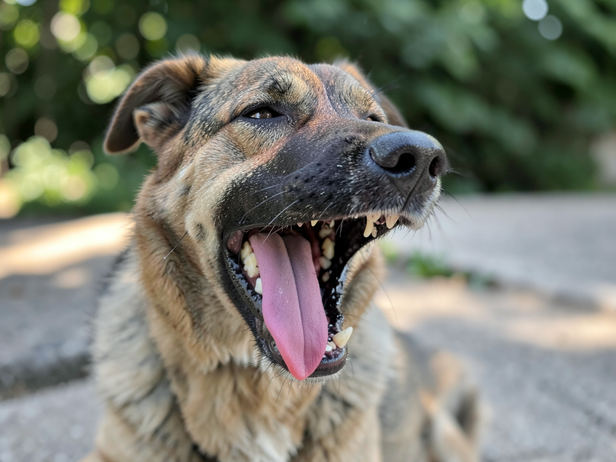
Dogs do not sweat through their skin. Their primary cooling mechanism is panting: they move air rapidly over the moist surface of the tongue and upper airway, and the evaporation of that moisture carries heat away. It works, but only when the air being pulled in is cooler than the dog's body temperature. When the surrounding air is already hotter than 39 degrees Celsius, a dog's normal body temperature sits between 38 and 39.2 degrees, panting stops cooling and starts making things worse. The dog is now pulling hot air in, and the effort of panting itself generates more body heat. There is no exit for the heat. It accumulates.
![Dog Panting in Shade]()
Dog Panting in Shade
Image credit : AI
This dog is clearly struggling with the heat. Recognizing signs of overheating is crucial for pet safety, especially during car travel.
What heatstroke does inside the body
As a dog's core temperature rises above 40 degrees Celsius, the body begins to fail in a specific sequence. Blood vessels near the skin dilate in an attempt to push heat to the surface, which drops blood pressure and reduces blood flow to vital organs. Above 41 degrees, proteins inside cells begin to denature, they lose their shape and stop working. The lining of the gut becomes permeable, allowing bacteria to enter the bloodstream. The kidneys, which filter blood constantly, are hit hard by the drop in perfusion. Above 42 to 43 degrees, the brain swells, blood fails to clot properly, and multiple organ systems begin to shut down simultaneously. This is not a slow process. A dog can move from distress to critical condition in under twenty minutes inside a parked car.
The myths that get dogs into trouble
Two ideas keep appearing in conversations among pet owners, and both are wrong. The first is that cracking the windows makes the car safe. A gap of a few centimetres does almost nothing for interior temperature, the studies that have measured this found that cracked windows reduce peak temperature by only one or two degrees. The second is that shade protects adequately. A car parked under a tree is cooler than one in direct sun, but it still heats up. The car's body absorbs ambient heat, the glass traps radiated heat from every surface inside, and without airflow the temperature rises regardless. Neither cracked windows nor shade makes a parked car a safe place for a dog.
![Cool Water on Hot Day]()
Cool Water on Hot Day
Image credit : AI
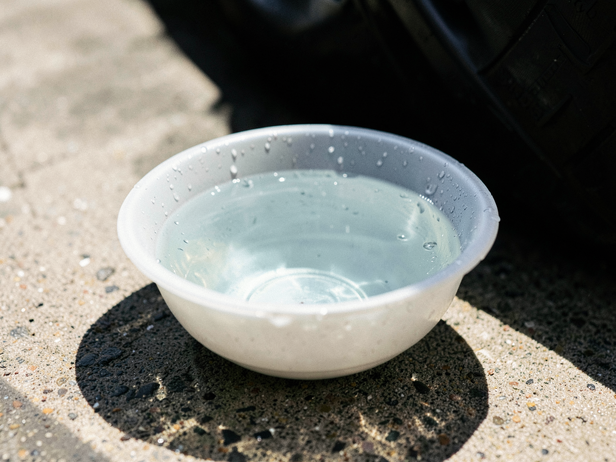
I see droplets forming on the cool water bowl, a reminder of the heat. Pet safety in a parked car is crucial.
Signs that a dog is in heat distress
Heavy, frantic panting that does not slow down is the first signal. A dog in heat distress will also drool heavily, sometimes thick, ropy saliva, and may appear restless, unable to settle. As the condition worsens, the gums turn from their normal pink to a dark red or, in severe cases, pale or grey. The dog may stumble, seem confused, or collapse. If you see any of these signs in a dog that has been in a hot car, the only correct response is to move to a vet immediately. First steps that are safe while getting there: move the dog to shade or air conditioning, offer cool (not ice-cold) water if the dog is conscious and able to swallow, and wet the paws, groin and armpits with cool water. Do not delay the journey to the vet to attempt more than this.
What to do if you find a dog locked in a car
In India, there is no single national law that specifically addresses leaving animals in hot vehicles, though the Prevention of Cruelty to Animals Act, 1960 covers unnecessary suffering broadly. The practical steps: note the car's registration number, contact the nearest police station or animal welfare organisation, and if the dog appears to be in immediate distress and no help is reachable quickly, the situation becomes an emergency. The Animal Welfare Board of India and local animal welfare organisations can advise on the legal position in your state. The point is not to wait and watch, a dog that looks uncomfortable now can lose consciousness within minutes.
A dog left in a parked car is not resting. The car's physics work against it from the moment the engine stops, and the dog's biology offers no reliable defence once the air temperature climbs past a certain point. The risk is not theoretical, and it does not require a particularly hot day to become real. The only safe answer is to not leave the dog in the car at all.