The dog that left your flat three days ago full of energy comes home, drinks half a litre of water, and sleeps until the next morning. If you have seen this, you probably spent some time wondering whether the boarding facility did something wrong. Almost certainly, it did not. What you are watching is a dog finishing a physiologically expensive experience, and the tiredness and thirst are the receipts.
Why boarding is exhausting even when nothing bad happens
A dog at home lives inside a routine it has memorised. It knows when you wake up, when the walk happens, when food arrives, and when the flat goes quiet. That predictability keeps its nervous system at a low idle. Boarding removes every one of those anchors at once.
In their place: new smells, new sounds, unfamiliar dogs, unfamiliar people, and a sleeping space that does not smell like anything it recognises. The dog's brain treats all of this as information that needs processing, and it processes it continuously. Even resting dogs in a boarding environment are not truly resting, they are monitoring. The amygdala stays active. Cortisol, the body's primary stress hormone, runs higher than it does at home. This is not distress in the clinical sense; it is vigilance, and vigilance burns energy the same way physical exercise does.
Add to that the actual physical activity, play sessions, walks, interactions with other dogs, and you have a body that has been running at a higher metabolic rate for days. The sleep that follows is not laziness. It is the nervous system downregulating after sustained activation, and it is exactly what recovery looks like.
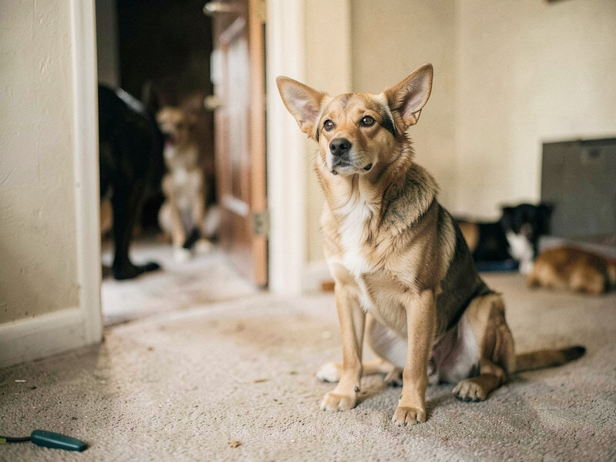
![Alert Dog Awaits]()
Alert Dog Awaits
Image credit : AI
This dog is alert, perhaps anticipating reunion after boarding. The recovery after boarding can be a sensitive time.
The thirst has a specific explanation
Dogs in novel environments often drink less than they do at home, even when water is freely available. Some are too stimulated to pause. Some are wary of water that smells different from their bowl at home. Some are simply distracted. The result is mild dehydration that accumulates quietly over two or three days and becomes obvious the moment the dog is back in a familiar place and finally relaxes enough to notice it is thirsty.
Panting compounds this. A dog that is excited, anxious, or physically active pants more than usual. Panting is how dogs regulate body temperature, but it also loses water vapour with every breath. A dog that has been panting through excitement and social interaction for three days has lost a meaningful amount of fluid that way, separate from any reduction in drinking.
The thirst you see at the door is the dog catching up. Let it drink at its own pace. Do not restrict water after boarding unless a vet has told you to for a specific medical reason.
What is normal and what is worth watching
Sleeping heavily for the first twenty-four hours is normal. Drinking more than usual for the first day is normal. Being quieter than usual, less interested in play, and slower to respond to cues is normal, the dog is processing and recovering, not sulking.
Appetite can go either way. Some dogs eat ravenously when they get home. Others skip a meal or two because their digestive system is still adjusting. A missed meal after boarding is not a cause for concern on its own.
What is worth a call to your vet: vomiting or diarrhoea that continues past twenty-four hours, a dog that will not drink at all despite appearing thirsty, a fever, a cough that sounds wet or persistent, visible wounds or limping that were not there before boarding, or a dog that is still deeply lethargic two full days after coming home. Kennel cough, in particular, can incubate for several days after exposure and shows up as a honking cough that is hard to miss. If you hear it, call your vet rather than waiting to see if it passes.
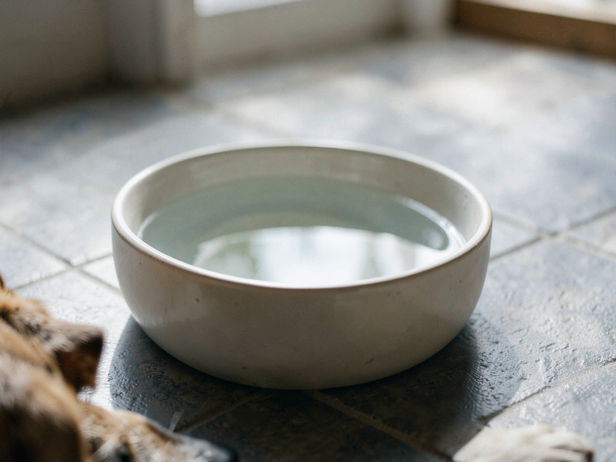
![Thirsty dog drinks water]()
Thirsty dog drinks water
Image credit : AI
My dog is so thirsty after boarding, needing a long drink.
How to handle the first day back
The instinct is to make up for the dog's absence with an extra-long walk or a trip to the park. Resist it. The dog's body is already running a recovery deficit. A big outing on the first day extends that deficit rather than clearing it.
Keep the first day quiet and close to the usual routine. A normal-length walk, normal feeding times, and access to its usual sleeping spot. Let the dog sleep as much as it wants. Do not invite people over to see it. The familiar smells of home, your scent, its bed, its toys, are already doing the work of bringing its nervous system back to baseline. Your presence matters more than stimulation.
By the second morning, most dogs are back to themselves. The ones that take a little longer are usually the ones who were boarded for the first time, boarded for longer than a week, or are older dogs whose recovery systems work more slowly. None of these require intervention, they require patience.