The camera is mounted on the shelf, the app is on your phone, and somewhere between the airport lounge and the hotel room you have checked it eleven times. The pet looks fine. You check again. This is the loop that pet cameras create for a certain kind of owner, and it is worth understanding before you buy one, or before you decide to leave it switched off on your next trip.
What the camera actually shows you
A pet camera gives you a window, not a diagnosis. What you see is a slice of behaviour at the moment you look: your dog asleep on the sofa, your cat sitting by the window, the empty room where the cat was thirty seconds ago. What you cannot see is whether the animal has eaten, whether it drank water, whether it is in the early stages of something that will matter in twelve hours. The camera is a comfort tool, not a monitoring tool in any clinical sense. Treating it as the latter is where the anxiety loop begins.
Dogs and cats behave differently when the house is empty. Most dogs sleep for a large part of the day when there is nothing to respond to, a figure commonly cited by animal behaviourists is upward of twelve to fourteen hours for adult dogs. Cats are crepuscular and may look completely inert for hours before becoming active at dawn or dusk. Checking at two in the afternoon and seeing a motionless animal is not a sign of distress; it is a sign of a resting animal. Without that context, a still pet on a screen reads as worrying when it is entirely ordinary.
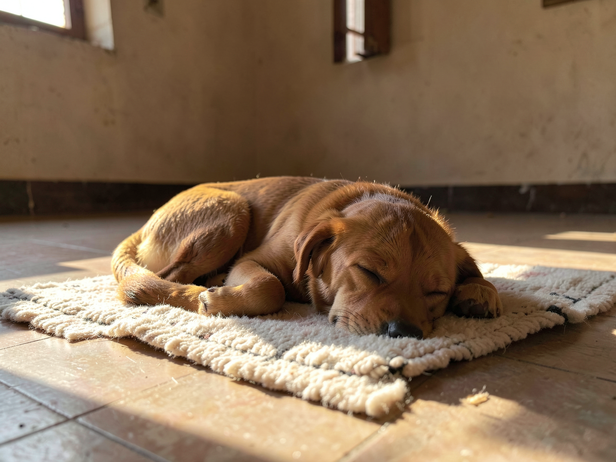
![Dog naps in sunlit room]()
Dog naps in sunlit room
Image credit : AI
My dog rests deeply, a peaceful scene. I use a pet camera while travelling India to check in.
When watching genuinely helps
There are real use cases for a pet camera, and they are specific. If your dog has a known history of separation anxiety, vocalising, destructive behaviour, refusing to settle, a camera lets you confirm whether the management plan you put in place before leaving is actually working. A dog that paces and whines for four hours is having a different experience from one that settles within twenty minutes. That information is useful. It tells you whether the current arrangement is good enough or whether you need to call in a dog sitter, adjust the routine, or speak to a veterinary behaviourist when you return.
Two-way audio, a feature on many cameras, is more complicated. For some dogs, hearing the owner's voice through a speaker is settling. For others, it triggers renewed searching, the dog hears you, cannot find you, and becomes more distressed than before you spoke. Watch the response the first time you use it. If the dog settles, the feature is earning its place. If it runs to the door and then paces, you are making the absence harder to process, not easier.
Cameras are also genuinely useful when someone else is caring for your pet. A house sitter, a family member, or a neighbour checking in once a day gives you a way to confirm the visit happened and that the animal appears comfortable. This is oversight, not surveillance, and it serves a real purpose.
When the camera adds worry instead of removing it
The problem is not the camera. It is the checking behaviour the camera enables. An owner who is anxious about leaving a pet is not going to feel better by watching the pet more often; they are going to find more things to worry about. The cat knocked something over. The dog is lying in an unusual spot. The water bowl looks lower than it should. Each of these observations generates a question the camera cannot answer, and the next check happens sooner.
There is also the question of what you do with what you see. If you are watching from a hotel in another city and the camera shows your dog panting and restless at midnight, you have information you cannot act on quickly. That gap between seeing something and being able to respond to it is where camera-watching tips from reassurance into helplessness. For owners who are already prone to health anxiety about their pets, that is a meaningful psychological cost.
Cats, in particular, are poor subjects for camera monitoring. A cat that is unwell will often hide, and a hidden cat looks identical on camera to a cat that is simply resting somewhere out of frame. A cat that appears active and normal may be masking discomfort in the way cats reliably do. The camera tells you almost nothing useful about a cat's welfare beyond confirming it is moving around.
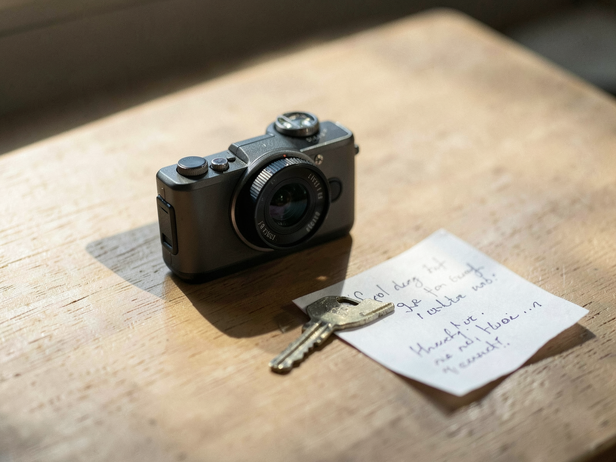
![Pet Camera Ready for Duty]()
Pet Camera Ready for Duty
Image credit : AI
Preparing for my holiday, this pet camera will help ease my dog's separation anxiety while I'm travelling.
Setting up before you leave
The more useful investment is in the arrangement before you travel, not in the monitoring after. A pet that is well-exercised, settled into a consistent routine, and being checked on by a person you trust needs less watching than one left in an unfamiliar situation with no human contact. If your dog is staying home with a sitter, brief the sitter on what normal looks like for that specific animal, what it eats, how it plays, what its resting posture is. That person can use their own judgement in real time in a way a camera feed never can.
If you do use a camera, set a limit on how often you check it. Once in the morning and once in the evening is enough to confirm the animal is moving around and the sitter has visited. More than that, and you are not monitoring your pet, you are managing your own anxiety at the pet's expense, because every check that ends in a question pulls your attention away from where you are.
When to stop watching and call someone
A camera is not a substitute for a person on the ground. If you see something that concerns you, an animal that has not moved for an unusually long time, visible distress, or something that looks physically wrong, the right response is to call your sitter or a neighbour immediately, not to keep watching. If no one can get there and the animal appears to be in real difficulty, your vet's emergency line is the next call. What you see on a screen can prompt action; it cannot replace it.
The camera earns its place when it confirms that a known problem is being managed, that a trusted person has shown up, and that the animal is moving around normally. It stops earning its place when the checking becomes more frequent than the information warrants. Most pets, left in a familiar home with reliable care, are fine. The camera's job is to confirm that, not to give you reasons to doubt it.