A dog that stops panting and sits very still is not calm. A cat that has not moved or made a sound since the carrier went into the car is not fine. Travel stress in pets often looks like the absence of behaviour rather than an eruption of it, which is exactly why owners miss it until the animal is in real trouble.
What the body is doing during a stressful journey
When a pet perceives a threat, and a moving vehicle, unfamiliar smells, engine vibration, and confinement are all genuine threats to an animal that did not choose to be there, the autonomic nervous system shifts into a stress response. Cortisol and adrenaline rise. Heart rate and breathing speed up. Blood moves away from the gut toward the muscles. That last shift is why travel nausea is so common: digestion slows or stops, and the stomach becomes unstable. In cats, the stress response is often deeper and faster than in dogs because cats are both predator and prey animals; their default threat response is to freeze and become invisible, not to signal distress.
![Dog's Anxious Car Ride]()
Dog's Anxious Car Ride
Image credit : AI
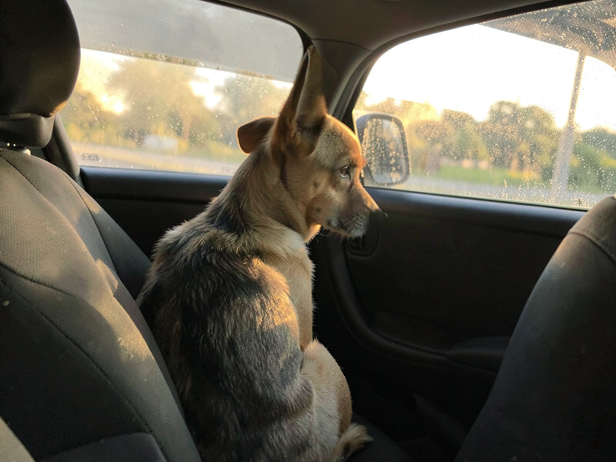
My dog shows clear signs of travel stress, ears pinned back and tail tucked. I'm looking for ways to help my stressed pet in the car.
What stress looks like in dogs on the move
Panting that is heavier than the temperature warrants is the most common early sign. Yawning repeatedly outside of a sleep context is a calming signal, the dog is trying to settle itself. Drooling more than usual, especially without food nearby, points to nausea. Whining, pacing in the footwell, or repeatedly trying to climb into the front seat are active distress signals. The quieter signs are easier to miss: a dog that tucks its tail, pins its ears, and refuses water or treats is telling you it is not coping. Vomiting is a late sign, not an early one. By the time it happens, the dog has been uncomfortable for a while.
What stress looks like in cats in transit
Cats in carriers tend to compress themselves, pressing into a corner, making the body as small and flat as possible. Pupils dilated wider than the light requires, whiskers pulled back flat against the face, and ears rotated sideways or back are all signs of high arousal and fear. Panting in a cat is not normal the way it can be in a dog; a cat panting during travel is in significant distress. Excessive vocalisation, loud, low, repetitive calls rather than the occasional meow, is another clear signal. Urinating or defecating in the carrier almost always means the stress crossed a threshold the animal could not manage. A cat that has gone completely silent and motionless after an initial period of calling may have moved past active distress into a shutdown state, which looks like calm and is not.
![Pet Carrier in Morning Light]()
Pet Carrier in Morning Light
Image credit : AI
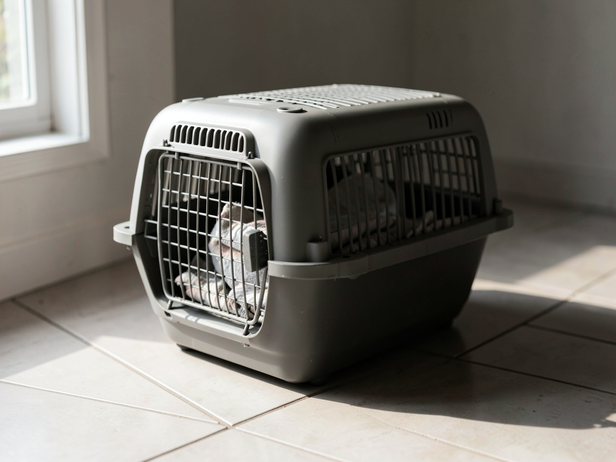
Preparing for travel. I ensure my pet's comfort, addressing potential cat stress in carrier before our journey.
The difference between stress and a medical emergency
Some signs during travel cross from stress into territory that needs a vet immediately. Laboured or open-mouthed breathing in a cat that is not panting from heat is a red flag. Gums that are pale, white, grey, or bluish rather than pink indicate poor circulation. A dog or cat that cannot stand, seems disoriented, or loses consciousness needs emergency care now, pull over and find the nearest clinic rather than continuing the journey. Repeated vomiting combined with a distended, hard abdomen in a large-breed dog is a bloat warning; this is a life-threatening emergency. If an animal was given any sedative or calming medication before travel and is now breathing abnormally slowly or cannot be roused, contact a vet immediately.
What actually helps on a difficult journey
Carrier familiarity is the single most effective intervention for cats and small dogs. An animal that has slept in its carrier at home, eaten meals near it, and associated it with rest rather than vet visits will travel differently from one that only sees the carrier when something bad is about to happen. For dogs, short practice drives that end somewhere pleasant, a park, not a clinic, build a different association with the car over weeks. During travel, covering a carrier with a light cloth reduces visual stimulation without blocking airflow. A worn piece of the owner's clothing inside the carrier provides a familiar scent anchor. Withholding food for a few hours before a car journey reduces the chance of nausea without harming the animal. Forcing interaction, opening the carrier to comfort a cat, picking up a distressed dog, often increases arousal rather than reducing it. Staying calm and keeping the car environment quiet does more than most interventions. If a pet consistently does not cope with travel despite preparation, a veterinary behaviourist can assess whether a short-term pharmaceutical option is appropriate for that individual animal, this is not a decision to make based on advice from a friend or a label.