A pet that arrives calm and unhurt is the only measure of a good journey. The crate is where that outcome is decided, not at the destination, not on the road, but when you are standing in a shop or scrolling a listing and trying to judge a box by its photograph.
Why size is the first thing to settle
Your pet needs to stand without its head touching the roof, turn a full circle without hitting a wall, and lie stretched out on its side. That is the working minimum, not a luxury standard. A crate that forces a dog or cat into a hunched position for several hours creates physical stress on top of travel anxiety, and the two compound each other quickly.
Measure your pet before you measure anything else. Height from the floor to the top of the head when standing, length from the tip of the nose to the base of the tail, and width at the widest point of the shoulders or haunches. Add ten centimetres to each dimension. That is your minimum interior crate size. The number on the product label, small, medium, large, extra-large, means nothing without checking it against your animal's actual measurements, because sizing varies significantly between manufacturers.
A crate that is too large creates its own problem. A small dog or cat sliding around inside a crate built for a Labrador has no stable surface to brace against during acceleration, braking or turbulence. The animal cannot settle, and the anxiety this generates is real and measurable in stress hormones. Fit the crate to the animal, not to your sense of generosity.
![Measuring for Travel]()
Measuring for Travel
Image credit : AI
Preparing for a journey, I measure the space within the travel crate. Essential for any pet carrier.
Ventilation: what adequate airflow actually means
Heat is the danger that kills pets in transit, and it builds faster than most owners expect. A crate sitting in a car boot, a cargo hold, or a sun-exposed corner of a waiting area can reach dangerous temperatures within minutes even when the ambient temperature feels moderate. Adequate ventilation is not a design feature, it is a safety requirement.
Look for mesh or ventilation panels on at least three sides, ideally all four. The mesh should be fine enough that a paw or a snout cannot push through and get caught, but open enough that air moves freely when you hold your hand near it. Run your palm across each panel. If you feel nothing, the airflow is insufficient.
For airline travel specifically, most carriers require crates that meet IATA Live Animal Regulations. These specify ventilation on at least three sides and minimum open-space percentages. The exact requirements and how carriers apply them change; confirm directly with your airline before you book, because a crate that was accepted last year may not be accepted on your route today.
Avoid solid-walled plastic crates with ventilation only at the door. They are built for storage, not transit. In a boot or a cargo hold with no active airflow, they trap heat and humidity around the animal.
Hard-sided versus soft-sided: what the choice actually involves
Hard-sided crates, typically moulded plastic with a metal door, are more structurally stable if the crate is dropped or crushed, and they are the only type accepted in airline cargo holds. They are heavier, bulkier to store, and take longer for an anxious animal to accept as a safe space.
Soft-sided crates, fabric over a frame, with mesh panels, are lighter, easier to carry in a car or on public transport, and some animals settle into them faster because the enclosed feel is less institutional. They are not appropriate for airline cargo, and they are not appropriate for a dog that chews or claws under stress, because the animal can exit the crate mid-journey.
Know your animal's stress response before you choose. A dog that has never travelled and shows signs of anxiety, panting, pacing, drooling, refusing to enter, is not a candidate for a soft-sided crate on a long journey until the crate has been properly introduced over several weeks at home. A cat that travels regularly in a familiar carrier may do better in the soft-sided version it already knows than in a hard-sided crate that smells of nothing familiar.
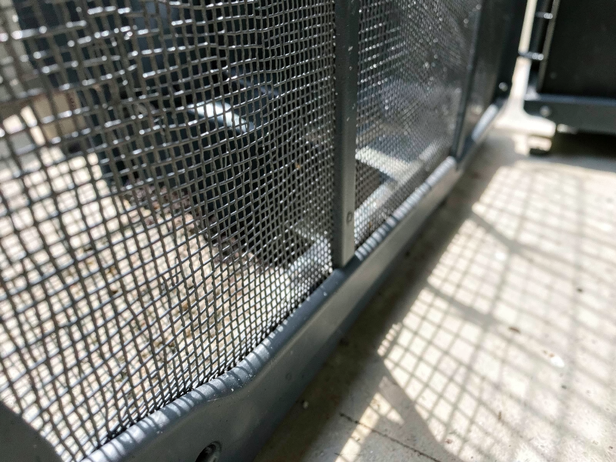
![Ventilation Grid Shadow Play]()
Ventilation Grid Shadow Play
Image credit : AI
I observe the light patterns cast by the mesh on my travel crate. Essential for a comfortable pet carrier experience.
Introducing the crate before the journey
A crate the animal enters for the first time on travel day is a crate the animal will fight. Crate acclimatisation is not optional preparation, it is the difference between a pet that can rest during transit and one that spends the journey in a state of sustained panic.
Start with the crate open in a room the pet uses. Do not close the door for the first several days. Let the animal investigate it, sleep near it, eat near it. Move meals progressively closer to the entrance, then just inside the door, then fully inside. Only once the animal enters and rests voluntarily should you begin closing the door for short periods, a minute, then five, then longer, always with the animal calm before you close it and before you open it.
The timeline for this varies by animal and by the animal's prior experience with confinement. Some dogs acclimatise in a week. Some cats take a month. Do not compress the timeline because the journey is approaching. If the animal is not ready, the journey is not ready.
If your pet shows sustained distress, refusing food near the crate after several days, vocalising continuously when the door is closed, injuring itself trying to exit, speak to a veterinary behaviourist before the journey. Sedation for travel is a conversation between you and your vet, based on your animal's specific health and stress profile; it is not a decision to make from a forum post or a product label.