A full stomach and a moving car are a bad combination for most animals. The same vestibular system that makes a dog lean into a turn also picks up every speed change, every pothole, and every curve, and when the gut is full, those signals land harder. Understanding why helps you make a feeding call that is not just a guess.
What motion does to a full stomach
The inner ear and the gut are in constant conversation. When the body moves but the eyes say otherwise, common in a crate in the back seat, the brain receives conflicting signals. In dogs and cats, this mismatch triggers nausea through the same pathway it does in humans, but their response is faster and harder to suppress. A stomach that is three-quarters full takes longer to empty than one that holds a small meal, which means the contents slosh rather than move through. That mechanical irritation compounds the vestibular signal. The result is drooling, restlessness, repeated swallowing, and eventually vomiting, sometimes within twenty minutes of the car moving.
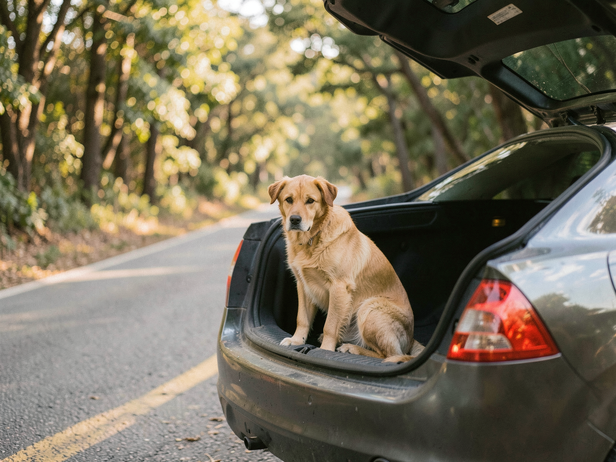
![Golden Hour Dog's Road Trip]()
Golden Hour Dog's Road Trip
Image credit : AI
A peaceful moment before the journey. Considering light meal for dog before car journey is key for comfort.
The case against skipping the meal entirely
Withholding food entirely sounds like a safe call, but it creates its own problems. An empty stomach produces acid continuously. In a stressed animal, and most pets are at least mildly stressed during travel, that acid production goes up. Hunger also raises baseline anxiety, which makes motion sickness worse, not better. A pet that arrives at the destination after a four-hour fast is not calm; it is hungry, unsettled, and more likely to eat too fast when food finally appears. For dogs prone to bloat, deep-chested breeds like the Dobermann, German Shepherd, Great Dane, and Standard Poodle, eating a large meal immediately after a stressful journey carries its own risk.
What a light meal actually means
Light means roughly a third to half of the animal's normal portion, given three to four hours before the car moves. That window is long enough for the stomach to empty into the small intestine, where digestion continues without the sloshing problem, but not so long that the animal arrives at the car genuinely hungry. The meal should be the pet's usual food, travel is not the moment to introduce something new, because a digestive system already dealing with stress handles novelty poorly. Plain, easily digestible food works best: if the regular diet is a dry kibble, keep it dry kibble. A roti dipped in dal or a bowl of curd rice might seem gentle, but unfamiliar textures and fermentable carbohydrates add gas to an already stressed gut.
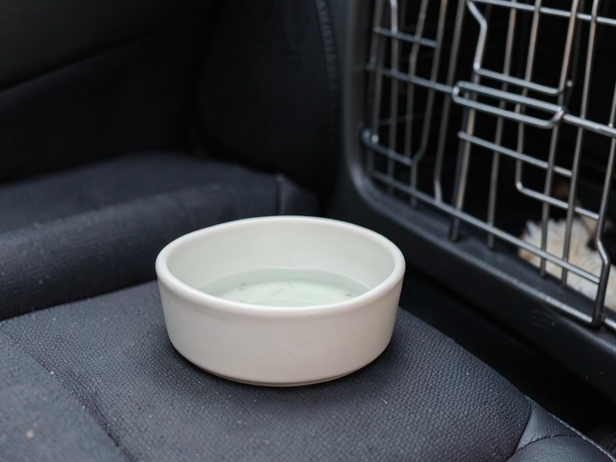
![Pet Travel Essentials]()
Pet Travel Essentials
Image credit : AI
Preparing for a road trip, ensuring my pet has water. A light meal before car journey is key.
Cats travel differently from dogs
Cats are less commonly taken on road trips, but when they are, the feeding logic shifts slightly. Most cats eat smaller amounts more frequently, and many cats refuse to eat at all in the hours before a carrier appears, they read the signs early. If a cat has eaten within two hours of the journey, that is usually sufficient; forcing a meal when the animal is already anxious does more harm than good. Water access matters more for cats on longer trips. A small amount of wet food an hour before travel, if the cat will accept it, provides both hydration and a light base without overloading the stomach.
Water on the road
Hydration is a separate question from feeding, and it is often handled worse. Most owners offer water only at rest stops, which can mean gaps of two or three hours in summer heat. A pet that is mildly dehydrated is more likely to vomit when it does drink, because it drinks too fast. Offer small amounts of water every forty-five minutes to an hour during stops, from a familiar bowl or a travel bottle the animal already knows. Avoid offering water immediately after the car has been moving at speed and then suddenly stopped, let the animal settle for five minutes first.
The feeding window, the portion size, and the familiar food are all things entirely within the owner's control before the car moves. Getting them right does not guarantee a smooth journey, but it removes one of the most reliable causes of a miserable one. If a pet vomits on every car trip regardless of how it was fed, or shows signs of distress beyond normal travel anxiety, prolonged retching, pale gums, a distended belly, that is a conversation for a vet before the next journey, not a feeding problem to solve on the road.