
The Strange Ways Animals React Before Natural Disasters
Deepak Rajeev | May 13, 2026, 23:41 IST

Animals May Notice What Humans Cannot (Image Credit: AI)
This article explores mysterious animal behaviors reported before earthquakes, tsunamis, and severe storms. It examines real-world cases involving dogs, elephants, birds, snakes, and farm animals that appeared to sense danger before humans did. Backed by scientific research and historical accounts, the article explains possible reasons animals react unusually before disasters and why experts remain fascinated by their extraordinary survival instincts.
For centuries, humans have reported eerie stories of animals behaving strangely before disasters struck. Dogs suddenly barking through the night before earthquakes. Birds disappearing from the sky ahead of storms. Elephants fleeing inland before tsunamis. Snakes abandoning their burrows days before major tremors. Across cultures and generations, these stories have created one of nature’s most fascinating mysteries: can animals sense danger before humans do? Modern science does not fully dismiss these reports. In fact, researchers studying animal behavior increasingly believe that many species may detect subtle environmental changes humans completely miss. What remains uncertain is not whether animals react differently, but exactly how they do it and whether those reactions are reliable enough to predict disasters consistently. The mystery has fascinated scientists, geologists, and animal behavior experts for decades.
![Dogs That Become Restless Before Earthquakes]() One of the most commonly reported patterns involves dogs behaving anxiously before earthquakes. Owners across the world have described dogs whining, barking excessively, refusing to stay indoors, pacing, or trying desperately to escape minutes or even hours before seismic activity begins. Scientists believe dogs may detect tiny vibrations known as P-waves before humans notice larger destructive waves. The United States Geological Survey explains that animals with sharper senses may feel these early vibrations seconds before people can.
One of the most commonly reported patterns involves dogs behaving anxiously before earthquakes. Owners across the world have described dogs whining, barking excessively, refusing to stay indoors, pacing, or trying desperately to escape minutes or even hours before seismic activity begins. Scientists believe dogs may detect tiny vibrations known as P-waves before humans notice larger destructive waves. The United States Geological Survey explains that animals with sharper senses may feel these early vibrations seconds before people can.
In Japan, researchers studying dog behavior found reports of unusual canine activity increasing before major earthquakes. Stories of dogs acting aggressively or panicking before tremors became so widespread that scientists began formally examining the phenomenon. However, experts also warn that dogs react to many environmental triggers such as storms, unfamiliar sounds, or stress, making scientific proof difficult. Still, the sheer number of real-world reports continues to intrigue researchers worldwide.
Elephants That Fled Before the 2004 Tsunami
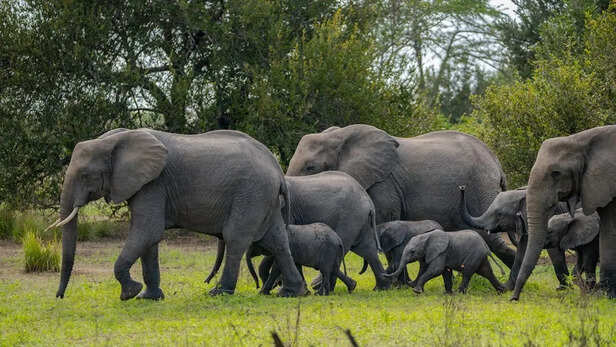
![Elephants]() One of the most famous real-life examples occurred during the devastating 2004 Indian Ocean tsunami. Witnesses in parts of Sri Lanka and Thailand reported elephants suddenly moving toward higher ground before massive waves hit coastal areas.
One of the most famous real-life examples occurred during the devastating 2004 Indian Ocean tsunami. Witnesses in parts of Sri Lanka and Thailand reported elephants suddenly moving toward higher ground before massive waves hit coastal areas.
According to survivors and wildlife officials, some elephants became visibly agitated and refused commands shortly before the tsunami arrived. Other animals, including birds and deer, were also reportedly seen moving away from coastal regions. These accounts triggered global fascination because many animals appeared to react before humans fully understood the danger approaching. Scientists believe elephants may have sensed low-frequency vibrations traveling through the ground or changes in air pressure caused by the approaching tsunami. Their extraordinary hearing and sensitivity to vibrations may allow them to detect environmental shifts humans cannot perceive directly. To this day, the tsunami stories remain among the strongest examples cited in discussions about animals sensing disasters.
Bird behavior before storms and hurricanes has also fascinated researchers. Certain species have been observed altering migration routes, flying unusually low, or disappearing from areas shortly before severe weather strikes.
One particularly fascinating case involved golden-winged warblers in the United States. Researchers discovered the birds abandoned breeding grounds before powerful tornado systems arrived, despite clear weather at the time. Scientists later suggested the birds may have detected infrasonic waves generated by distant storms. Birds possess highly specialized sensory systems that help them navigate across continents, detect atmospheric pressure changes, and respond rapidly to environmental instability. Experts believe these abilities may explain why some species appear unusually sensitive to incoming weather disasters. For humans observing sudden silence in normally active skies, the effect can feel deeply unsettling.
Snakes are among the animals most frequently mentioned in historical earthquake accounts. Ancient records from Greece described snakes abandoning their underground shelters before devastating earthquakes struck centuries ago. Modern reports continue describing similar patterns today. One of the most famous cases occurred before the 1975 Haicheng earthquake in China. Witnesses reportedly observed snakes emerging from hibernation during freezing temperatures before the deadly quake occurred. Authorities partially evacuated the area after unusual seismic and animal activity, and many lives were ultimately saved.
Scientists suspect reptiles may be sensitive to chemical changes, underground vibrations, or electromagnetic disturbances associated with tectonic stress. But despite decades of study, researchers still cannot fully explain why these behaviors happen or why they appear inconsistent.
Recent technological studies have made the mystery even more intriguing. Researchers attached sensors to cows, sheep, and dogs in earthquake-prone regions of Italy and monitored their movement patterns. Surprisingly, scientists observed increased activity before several major earthquakes. According to researchers from the Max Planck Institute of Animal Behavior, farm animals sometimes became unusually agitated hours before seismic events. In some cases, different species appeared to react collectively, almost as if responding to a shared environmental signal.
Scientists still debate whether the animals detected subtle foreshocks, electrical changes, gas emissions, or vibrations too weak for humans to notice. The findings were compelling enough that researchers began exploring whether large-scale animal monitoring systems could someday complement disaster warning technologies.
Cat owners frequently report unusual feline behavior before storms and earthquakes. Some cats suddenly hide, become hyperactive, refuse food, or stare intensely at walls and floors before seismic activity occurs.
Experts believe cats may react strongly to atmospheric pressure shifts, tiny vibrations, or static electrical changes. Because cats possess highly sensitive hearing and sensory perception, they may notice subtle environmental cues long before humans recognize danger. Although scientific proof remains incomplete, veterinarians acknowledge that cats often respond to environmental disturbances earlier than humans do. Their unpredictable reactions continue feeding the mystery surrounding animal disaster behavior.
The Scientific Mystery That Still Has No Final Answer
Despite centuries of stories, scientists remain cautious. The biggest problem is consistency. Many earthquakes occur without unusual animal behavior, while animals frequently act strangely for unrelated reasons such as predators, weather, stress, or environmental changes. The United States Geological Survey states clearly that no reproducible scientific method currently exists for predicting earthquakes using animal behavior alone. Still, researchers continue exploring possible explanations:
Whether animals truly “predict” disasters remains scientifically unresolved. But what continues to fascinate experts is the enormous number of remarkably similar reports across history, cultures, and species. Again and again, humans describe the same unsettling pattern: animals reacting before danger becomes visible. Perhaps animals are not predicting the future in a supernatural sense. Instead, they may simply be more connected to subtle environmental signals humans evolved to ignore. Their senses, refined over millions of years of survival, may allow them to detect vibrations, sounds, and atmospheric changes that human bodies cannot process consciously.
That possibility alone continues to captivate scientists and ordinary people alike. Because hidden within these strange animal reactions may be one of nature’s oldest survival systems quietly operating all around us.
Celebrate the bond with your pets, explore Health & Nutrition, discover Breeds, master Training Tips, Behavior Decoder, and set out on exciting Travel Tails with Times Pets!
Dogs That Become Restless Before Earthquakes

Dogs That Become Restless Before Earthquakes
In Japan, researchers studying dog behavior found reports of unusual canine activity increasing before major earthquakes. Stories of dogs acting aggressively or panicking before tremors became so widespread that scientists began formally examining the phenomenon. However, experts also warn that dogs react to many environmental triggers such as storms, unfamiliar sounds, or stress, making scientific proof difficult. Still, the sheer number of real-world reports continues to intrigue researchers worldwide.
Elephants That Fled Before the 2004 Tsunami
Elephants
Image credit : Pexels
According to survivors and wildlife officials, some elephants became visibly agitated and refused commands shortly before the tsunami arrived. Other animals, including birds and deer, were also reportedly seen moving away from coastal regions. These accounts triggered global fascination because many animals appeared to react before humans fully understood the danger approaching. Scientists believe elephants may have sensed low-frequency vibrations traveling through the ground or changes in air pressure caused by the approaching tsunami. Their extraordinary hearing and sensitivity to vibrations may allow them to detect environmental shifts humans cannot perceive directly. To this day, the tsunami stories remain among the strongest examples cited in discussions about animals sensing disasters.
Birds That Suddenly Vanish Before Storms
Bird behavior before storms and hurricanes has also fascinated researchers. Certain species have been observed altering migration routes, flying unusually low, or disappearing from areas shortly before severe weather strikes.
One particularly fascinating case involved golden-winged warblers in the United States. Researchers discovered the birds abandoned breeding grounds before powerful tornado systems arrived, despite clear weather at the time. Scientists later suggested the birds may have detected infrasonic waves generated by distant storms. Birds possess highly specialized sensory systems that help them navigate across continents, detect atmospheric pressure changes, and respond rapidly to environmental instability. Experts believe these abilities may explain why some species appear unusually sensitive to incoming weather disasters. For humans observing sudden silence in normally active skies, the effect can feel deeply unsettling.
Snakes Leaving Underground Shelters Before Tremors
Snakes are among the animals most frequently mentioned in historical earthquake accounts. Ancient records from Greece described snakes abandoning their underground shelters before devastating earthquakes struck centuries ago. Modern reports continue describing similar patterns today. One of the most famous cases occurred before the 1975 Haicheng earthquake in China. Witnesses reportedly observed snakes emerging from hibernation during freezing temperatures before the deadly quake occurred. Authorities partially evacuated the area after unusual seismic and animal activity, and many lives were ultimately saved.
Scientists suspect reptiles may be sensitive to chemical changes, underground vibrations, or electromagnetic disturbances associated with tectonic stress. But despite decades of study, researchers still cannot fully explain why these behaviors happen or why they appear inconsistent.
Farm Animals That Suddenly Panic Together
Recent technological studies have made the mystery even more intriguing. Researchers attached sensors to cows, sheep, and dogs in earthquake-prone regions of Italy and monitored their movement patterns. Surprisingly, scientists observed increased activity before several major earthquakes. According to researchers from the Max Planck Institute of Animal Behavior, farm animals sometimes became unusually agitated hours before seismic events. In some cases, different species appeared to react collectively, almost as if responding to a shared environmental signal.
Scientists still debate whether the animals detected subtle foreshocks, electrical changes, gas emissions, or vibrations too weak for humans to notice. The findings were compelling enough that researchers began exploring whether large-scale animal monitoring systems could someday complement disaster warning technologies.
Cats Acting Strange Before Storms and Tremors
Cat owners frequently report unusual feline behavior before storms and earthquakes. Some cats suddenly hide, become hyperactive, refuse food, or stare intensely at walls and floors before seismic activity occurs.
Experts believe cats may react strongly to atmospheric pressure shifts, tiny vibrations, or static electrical changes. Because cats possess highly sensitive hearing and sensory perception, they may notice subtle environmental cues long before humans recognize danger. Although scientific proof remains incomplete, veterinarians acknowledge that cats often respond to environmental disturbances earlier than humans do. Their unpredictable reactions continue feeding the mystery surrounding animal disaster behavior.
The Scientific Mystery That Still Has No Final Answer
Despite centuries of stories, scientists remain cautious. The biggest problem is consistency. Many earthquakes occur without unusual animal behavior, while animals frequently act strangely for unrelated reasons such as predators, weather, stress, or environmental changes. The United States Geological Survey states clearly that no reproducible scientific method currently exists for predicting earthquakes using animal behavior alone. Still, researchers continue exploring possible explanations:
- sensitivity to low-frequency vibrations
- detection of P-waves
- atmospheric pressure changes
- chemical releases from underground rock stress
- electromagnetic fluctuations
Final Insight: Animals May Notice What Humans Cannot
Whether animals truly “predict” disasters remains scientifically unresolved. But what continues to fascinate experts is the enormous number of remarkably similar reports across history, cultures, and species. Again and again, humans describe the same unsettling pattern: animals reacting before danger becomes visible. Perhaps animals are not predicting the future in a supernatural sense. Instead, they may simply be more connected to subtle environmental signals humans evolved to ignore. Their senses, refined over millions of years of survival, may allow them to detect vibrations, sounds, and atmospheric changes that human bodies cannot process consciously.
That possibility alone continues to captivate scientists and ordinary people alike. Because hidden within these strange animal reactions may be one of nature’s oldest survival systems quietly operating all around us.
Celebrate the bond with your pets, explore Health & Nutrition, discover Breeds, master Training Tips, Behavior Decoder, and set out on exciting Travel Tails with Times Pets!