Most owners who fly their dog in cargo imagine a quiet, dimly lit room somewhere beneath their feet. The reality is considerably harsher, and understanding it changes how you prepare.
What the hold actually sounds like
Jet engines at cruising altitude produce sustained noise in the range of 85 to 105 decibels in the cargo area, depending on where the hold sits relative to the engines and how well the aircraft is insulated. Dogs hear frequencies between roughly 40 Hz and 65,000 Hz, far wider than the human range, which means they register not just the roar but the high-frequency harmonics that humans filter out entirely. Sustained exposure at these levels causes acute stress in most dogs. The sound does not stop or vary the way traffic or thunder does; it is continuous and inescapable for the full duration of the flight. A dog that has never been crate-trained has no learned association between a confined space and safety, and the noise compounds that absence of comfort.
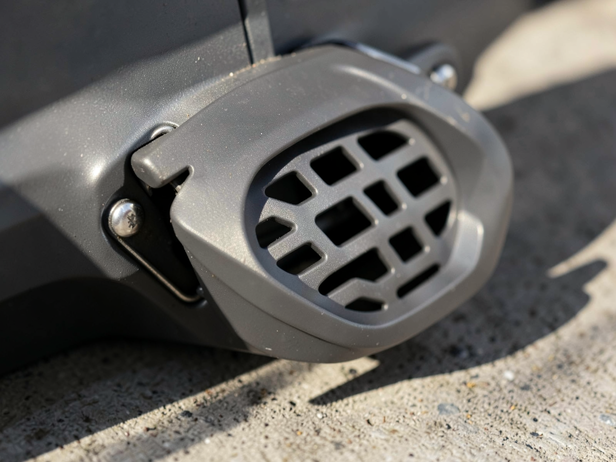
![Pet Crate Latch Detail]()
Pet Crate Latch Detail
Image credit : AI
I examine the robust latch and grille of a pet crate, essential for dog air travel preparation in India.
Darkness, temperature, and air quality
The hold is not pitch black on most commercial aircraft, there is typically low ambient light, but it is dim enough that a dog cannot read its environment. Dogs rely heavily on visual cues to assess threat, and low light removes that option. Temperature is the more serious variable. Cargo holds on modern wide-body aircraft are temperature-controlled, but the range is not the same as the cabin. Holds are typically kept between 7°C and 18°C, and the actual temperature at any moment depends on the aircraft type, the route, and the ground time before departure. Tarmac waiting in summer is the highest-risk period: a closed hold on a hot day can reach dangerous temperatures before the aircraft's systems stabilise. Brachycephalic breeds, Bulldogs, Pugs, French Bulldogs, Boxers, are at serious risk in these conditions because their anatomy already compromises thermoregulation. Many airlines have banned them from cargo for exactly this reason; confirm the current policy directly with the carrier before booking.Air in the hold is recirculated from the same pressurised system that supplies the cabin on most aircraft, so oxygen levels are not significantly different from what the dog breathes at ground level. Pressure is maintained at the equivalent of roughly 1,800 to 2,400 metres altitude, the same as the cabin. This is not dangerous for a healthy adult dog, but it does cause mild ear discomfort during ascent and descent, the same sensation a human feels, with no ability to yawn deliberately or equalise. Dogs with ear infections or upper respiratory conditions feel this more acutely.
What stress looks like before and after
A dog cannot tell you what the hold was like. What it shows you instead is the physiological aftermath. Excessive panting that continues well after leaving the airport, trembling, refusal to eat or drink for several hours, loose stools, or prolonged hiding are all signs the experience was acutely stressful. Some dogs emerge calm and curious; breed, temperament, prior crate experience, and individual threshold all vary enormously. What is consistent is that a dog with no prior crate training, no positive association with confinement, and no exposure to loud or unfamiliar environments is far more likely to show these signs than one that has been prepared.Before the flight, watch for stress signals in the days leading up to travel: reduced appetite, increased clinginess, or changes in sleep. These suggest the dog is already reading the disruption to routine. After the flight, give the animal time in a quiet, familiar space before reintroducing normal activity.
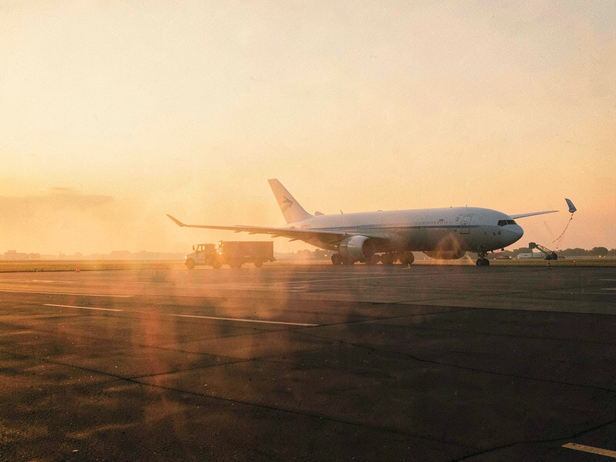
![Airport Tarmac at Dusk]()
Airport Tarmac at Dusk
Image credit : AI
I see the vastness of the tarmac at dusk, with a cargo loader by the aircraft. The warm sky creates a strong sense of scale.
What the owner controls and what they do not
You cannot change the noise, the darkness, or the pressure. What you can control is the crate itself, the dog's relationship with it before the flight, and the state the animal is in when it boards. A crate that smells familiar, a worn t-shirt placed inside, the dog's own blanket, gives the animal one constant in an environment of constants it cannot control. A crate that is the right size allows the dog to stand, turn, and lie down without pressing against the walls; too large and the animal is thrown around during turbulence, too small and it cannot shift position over a long flight.Sedation is a question many owners raise, and it is one for the vet, not this article. The physiological effects of sedation at altitude differ from sedation at ground level, and the risk profile changes with the animal's size, breed, and health status. No dose, no product, and no timing recommendation belongs here. Have that conversation with your vet well before the travel date, not the night before.Airline policies on documentation, crate specifications, breed restrictions, and temperature embargoes change frequently and vary between carriers. Confirm every requirement directly with the airline before booking. What was true for a friend's dog on a different carrier last year may not apply to your booking today.The hold is not designed to be comfortable for an animal. It is designed to be survivable, and for most healthy, well-prepared dogs it is. The gap between survivable and genuinely low-stress is where preparation lives.