There is a moment in almost every dog film where the audience knows exactly what is coming. The dog slows down. The music shifts. And yet the theatre goes quiet in a way it rarely does for human characters. The grief lands as though something real has been lost, because, in the way the brain processes attachment, something real has.
The bond the camera borrows
Dogs are among the few animals that have co-evolved with humans over thousands of years specifically around social reading. A dog tracks a person's gaze, responds to tone, orients toward distress. These are not tricks. They are the result of selection pressure: the animals that read us well survived and reproduced alongside us. When a film places a dog in a human story, it is borrowing a relationship the audience already has in their bodies. The screen version triggers the same neural circuitry as the real one.This is why the emotional response to a fictional dog's death is not embarrassing or disproportionate. The brain's threat and loss systems do not distinguish cleanly between a relationship experienced and one observed. Grief for a character is a diluted version of the same process. With dogs, the dilution is thinner than usual.
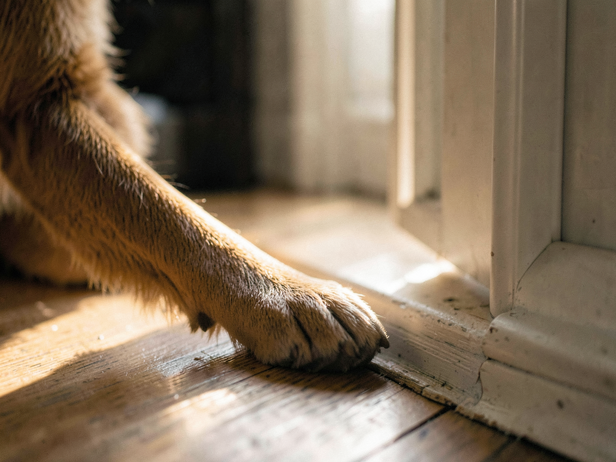
![Morning Light, Waiting Paw]()
Morning Light, Waiting Paw
Image credit : AI
A dog's paw waits patiently, a silent testament to the enduring bond between dogs and humans.
Why the ending is always the same, and why it works
Dog films are built around a structural fact: dogs live shorter lives than the people who love them. A film that follows a dog from puppyhood to old age is, by definition, a film about loss. The audience knows this before the film begins. The dramatic tension is not whether the dog will die but how the relationship will be held in the time that remains.Hachiko, the Akita who waited at Shibuya Station for nearly ten years after his owner's death, is the most documented case of canine fidelity in the historical record. The 2009 film starring Richard Gere uses the true story almost without embellishment, because the true story needs none. Greyfriars Bobby, a Skye Terrier recorded as having stayed near his owner's grave in Edinburgh for fourteen years, follows the same shape. The dog does not understand death. The dog understands absence. That distinction is what makes these stories unbearable.
What the films do that a conversation cannot
A dog film compresses something that real ownership stretches across years. The puppy, the prime, the slowing down, the end, a film gives you all of it in two hours. For someone who has been through it with a real dog, the film is a container for grief that has nowhere else to go. For someone who has not, it is a rehearsal.Marley and Me, based on journalist John Grogan's memoir, was criticised on release for its slow final act. That slowness was the point. The film asks the audience to sit with a dying dog the way an owner sits with one, without rushing toward resolution. The scene lands differently for people who have been in that room. It lands as recognition, not as fiction.
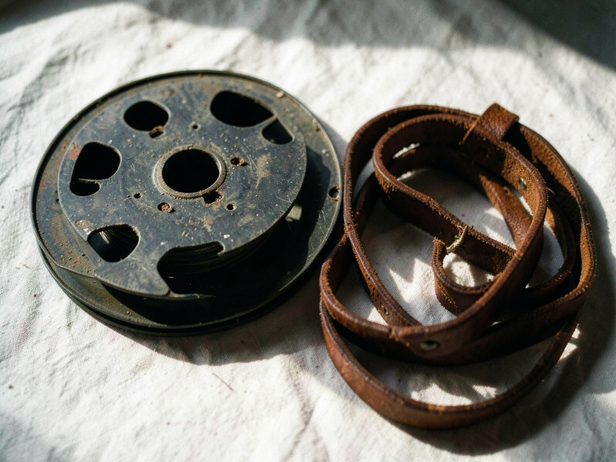
![Analogue Memories, Leather Leash]()
Analogue Memories, Leather Leash
Image credit : AI
This scene evokes the enduring bond between dogs and humans, a connection often explored in cinema.
Why we go back
The question is not why these films are sad. The question is why people who know they will cry, who have cried before, choose to watch again. Part of the answer is that controlled emotional experience has its own value. Grief that arrives in a cinema, on a schedule, with an exit, is grief that can be felt without consequence. The film provides the loss and also the container for it.The other part is simpler. These films, at their best, say something true about what it is to love an animal that cannot tell you what it feels, that will not outlive you, and that asks for very little in return. That truth does not get old. The dog waiting at the door when you come home, the one in the film, the one in your flat, is the same animal. The film just makes you see it for a moment.