
The Ancient Hindu Belief That Dogs Can Sense Negative Energy
Deepak Rajeev | May 08, 2026, 17:14 IST

Importance of Dogs in Hindu Tradition (Image Credit: AI)
This article explores the ancient Hindu belief that dogs can sense negative energy and unseen spiritual forces. It examines the connection between dogs and deities like Bhairava and Yama, explains why dogs are considered sacred protectors in Hindu tradition, and compares mystical beliefs with modern science about canine senses, instinct, and extraordinary perception abilities.
For thousands of years, dogs have held a mysterious and deeply symbolic place in Hindu belief. They are not viewed merely as animals, but as spiritual guardians, protectors of sacred boundaries, and companions of powerful deities. Across temples, scriptures, folklore, and village traditions, one belief appears again and again: dogs can sense energies that humans cannot perceive.
Even today, many people in India continue to believe that unusual canine behavior is not random. A dog suddenly staring into empty space, growling at a corner of a room, barking intensely at night, or refusing to enter certain places is often interpreted as sensitivity to unseen vibrations or negative energy. While modern science explains canine behavior through heightened senses and instinct, ancient Hindu traditions gave these abilities a far more mystical meaning.
![Bhairava with Animals | Instagram - @gooddot]() In Hindu mythology, dogs are closely associated with powerful divine figures, especially Bhairava, the fierce and protective manifestation of Shiva. Bhairava is traditionally depicted with a black dog as his companion or vahana, symbolizing vigilance, loyalty, and spiritual guardianship. Ancient Shaivite traditions describe dogs as beings capable of sensing subtle energies and protecting sacred spaces from harmful influences.
In Hindu mythology, dogs are closely associated with powerful divine figures, especially Bhairava, the fierce and protective manifestation of Shiva. Bhairava is traditionally depicted with a black dog as his companion or vahana, symbolizing vigilance, loyalty, and spiritual guardianship. Ancient Shaivite traditions describe dogs as beings capable of sensing subtle energies and protecting sacred spaces from harmful influences.
In many parts of India, feeding dogs, especially black dogs, is still considered spiritually meaningful. Devotees believe it pleases Bhairava and helps remove fear, negativity, and karmic obstacles from life. Some traditions even associate dogs with protection against unseen forces and negative vibrations. This spiritual symbolism transformed dogs into far more than domestic companions. They became guardians standing between the physical and unseen worlds.
The Ancient Belief That Dogs Sense What Humans Cannot
![The Ancient Belief That Dogs Sense What Humans Cannot]() One of the oldest and most widespread Hindu beliefs surrounding dogs is their supposed ability to detect spiritual disturbances. In folklore and temple traditions, dogs are often described as animals highly sensitive to energies invisible to ordinary human perception.
One of the oldest and most widespread Hindu beliefs surrounding dogs is their supposed ability to detect spiritual disturbances. In folklore and temple traditions, dogs are often described as animals highly sensitive to energies invisible to ordinary human perception.
This belief is deeply connected to the idea that dogs exist closer to instinct and natural awareness than humans, who are distracted by intellect and ego. In spiritual interpretations, a dog’s sudden barking, crying, or fixed staring is sometimes viewed as a response to subtle energetic changes in the environment. Ancient Hindu thought often linked animals with heightened perception because they rely more heavily on instinct than rational thought. Dogs, with their extraordinary hearing and sense of smell, naturally became associated with sensing invisible presences, spiritual disturbances, or approaching danger long before humans became aware of it.
Dogs also appear prominently in Hindu mythology through their connection to Yama, the god of death and justice. Hindu scriptures describe Yama as accompanied by powerful dogs who guard the path between life and death. These dogs are not portrayed as evil creatures, but as guardians of cosmic order and protectors of sacred transition.
This symbolism strengthened the belief that dogs could perceive things connected to mortality, spiritual imbalance, or unseen energies. In some rural traditions, a dog howling at night is still considered spiritually significant, not necessarily because it predicts death literally, but because dogs are believed to sense changes in energy before humans do. The idea may sound mystical today, but in ancient belief systems, animals were often viewed as bridges between the visible and invisible dimensions of existence.
What Modern Science Says About This Belief
Interestingly, science does support one part of these ancient beliefs: dogs possess sensory abilities vastly beyond human capability. Their sense of smell is estimated to be tens of thousands of times more powerful than ours, and they can detect subtle changes in hormones, stress levels, illness, and emotional states.
Dogs can also hear frequencies humans cannot detect and often react to distant sounds long before humans notice them. What ancient people interpreted as sensing “negative energy” may sometimes have been dogs responding to environmental cues, emotional tension, or sensory information invisible to human awareness. However, science cannot fully explain why dogs sometimes react intensely to spaces or situations where no obvious stimulus exists. This unanswered mystery is one reason spiritual interpretations around dogs continue to survive across cultures.
The ancient Hindu belief about dogs sensing negative energy continues to captivate people because it exists in the space between spirituality and instinct. Dogs are deeply emotional animals, intensely loyal, and unusually perceptive toward human behavior and atmosphere. When they react strongly to something humans cannot immediately understand, the experience naturally feels mysterious.
In Hindu tradition, this mystery was never treated as superstition alone. Dogs symbolized loyalty, protection, awareness, and spiritual guardianship. They were respected not because they were feared, but because they were believed to perceive truths humans often overlooked. That belief still survives today in temples, stories, family traditions, and everyday life across India. For many people, when a dog suddenly stares into darkness or reacts to an unseen presence, the feeling is difficult to ignore. Somewhere deep within ancient memory, the old belief remains alive: dogs may sense far more than humans ever can.
Celebrate the bond with your pets, explore Health & Nutrition, discover Breeds, master Training Tips, Behavior Decoder, and set out on exciting Travel Tails with Times Pets!
Even today, many people in India continue to believe that unusual canine behavior is not random. A dog suddenly staring into empty space, growling at a corner of a room, barking intensely at night, or refusing to enter certain places is often interpreted as sensitivity to unseen vibrations or negative energy. While modern science explains canine behavior through heightened senses and instinct, ancient Hindu traditions gave these abilities a far more mystical meaning.
Why Dogs Hold a Sacred Place in Hindu Tradition
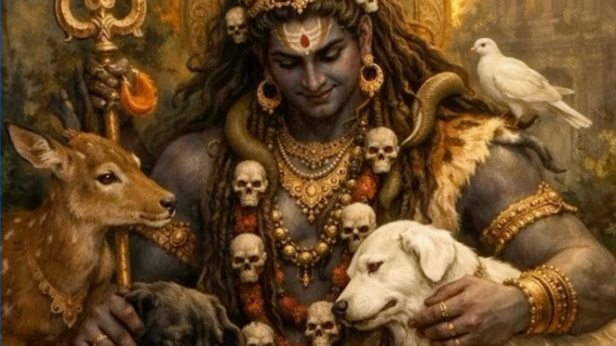
Bhairava with Animals | Instagram - @gooddot
In many parts of India, feeding dogs, especially black dogs, is still considered spiritually meaningful. Devotees believe it pleases Bhairava and helps remove fear, negativity, and karmic obstacles from life. Some traditions even associate dogs with protection against unseen forces and negative vibrations. This spiritual symbolism transformed dogs into far more than domestic companions. They became guardians standing between the physical and unseen worlds.
The Ancient Belief That Dogs Sense What Humans Cannot

The Ancient Belief That Dogs Sense What Humans Cannot
Image credit : Freepik
This belief is deeply connected to the idea that dogs exist closer to instinct and natural awareness than humans, who are distracted by intellect and ego. In spiritual interpretations, a dog’s sudden barking, crying, or fixed staring is sometimes viewed as a response to subtle energetic changes in the environment. Ancient Hindu thought often linked animals with heightened perception because they rely more heavily on instinct than rational thought. Dogs, with their extraordinary hearing and sense of smell, naturally became associated with sensing invisible presences, spiritual disturbances, or approaching danger long before humans became aware of it.
The Connection Between Dogs and Yama
Dogs also appear prominently in Hindu mythology through their connection to Yama, the god of death and justice. Hindu scriptures describe Yama as accompanied by powerful dogs who guard the path between life and death. These dogs are not portrayed as evil creatures, but as guardians of cosmic order and protectors of sacred transition.
This symbolism strengthened the belief that dogs could perceive things connected to mortality, spiritual imbalance, or unseen energies. In some rural traditions, a dog howling at night is still considered spiritually significant, not necessarily because it predicts death literally, but because dogs are believed to sense changes in energy before humans do. The idea may sound mystical today, but in ancient belief systems, animals were often viewed as bridges between the visible and invisible dimensions of existence.
What Modern Science Says About This Belief
Interestingly, science does support one part of these ancient beliefs: dogs possess sensory abilities vastly beyond human capability. Their sense of smell is estimated to be tens of thousands of times more powerful than ours, and they can detect subtle changes in hormones, stress levels, illness, and emotional states.
Dogs can also hear frequencies humans cannot detect and often react to distant sounds long before humans notice them. What ancient people interpreted as sensing “negative energy” may sometimes have been dogs responding to environmental cues, emotional tension, or sensory information invisible to human awareness. However, science cannot fully explain why dogs sometimes react intensely to spaces or situations where no obvious stimulus exists. This unanswered mystery is one reason spiritual interpretations around dogs continue to survive across cultures.
Why the Belief Still Fascinates People Today
The ancient Hindu belief about dogs sensing negative energy continues to captivate people because it exists in the space between spirituality and instinct. Dogs are deeply emotional animals, intensely loyal, and unusually perceptive toward human behavior and atmosphere. When they react strongly to something humans cannot immediately understand, the experience naturally feels mysterious.
In Hindu tradition, this mystery was never treated as superstition alone. Dogs symbolized loyalty, protection, awareness, and spiritual guardianship. They were respected not because they were feared, but because they were believed to perceive truths humans often overlooked. That belief still survives today in temples, stories, family traditions, and everyday life across India. For many people, when a dog suddenly stares into darkness or reacts to an unseen presence, the feeling is difficult to ignore. Somewhere deep within ancient memory, the old belief remains alive: dogs may sense far more than humans ever can.
Celebrate the bond with your pets, explore Health & Nutrition, discover Breeds, master Training Tips, Behavior Decoder, and set out on exciting Travel Tails with Times Pets!