She weighed four pounds and had been found in a foxhole in the New Guinea jungle in 1944. Nobody knew who she belonged to. A soldier named William Wynne bought her for two Australian pounds, named her Smoky, and carried her through the rest of the war in his helmet.
What made Smoky more than a mascot was one afternoon at Luzon in the Philippines, in 1945, when her size became the point.
The pipe at Lingayen Gulf
American engineers at the airstrip at Lingayen Gulf needed to run a telegraph wire under a taxiway used by aircraft. The pipe beneath the runway was roughly eight inches in diameter and seventy feet long, packed with dirt and debris. Digging it up meant exposing the ground crew to enemy aircraft for three days. Someone looked at Smoky and looked at the pipe.
Wynne tied a spool of wire to her collar, called to her from the far end, and she ran it through. The job that would have taken three days and put men at risk took a few minutes. The wire went in, the aircraft kept moving, and nobody had to break the surface of the runway.
This is not a reconstructed story. Wynne wrote about it in his memoir, published in 1996. The event is documented in military records and was reported by war correspondent Ernie Pyle, who met Smoky in the field. The pipe, the airstrip, the wire: these are on record.
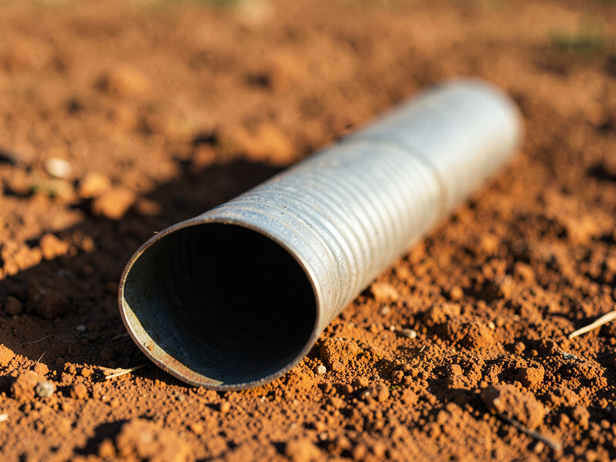
![Corrugated Pipe in Light]()
Corrugated Pipe in Light
Image credit : AI
I focus on the textured surface of a drainage pipe, its form a stark contrast against the earth. A quiet moment, reminiscent of the resilience found in stories like Smoky the war dog.
What she did the rest of the time
Smoky flew twelve combat missions. She survived a typhoon on Okinawa. She was trained by Wynne to walk a tightrope, climb a ladder, and perform a sequence of tricks that he used to entertain hospitalised soldiers, she visited over 150 wards and hospitals across the Pacific. The American Kennel Club and the Yorkshire Terrier Club of America both recognise her as the first recorded therapy dog, based on those visits.
She was never officially enrolled as a war dog. The Army did not recognise her as a service animal, which meant she received no rations and no veterinary care from military supplies. Wynne fed her from his own share and treated her illnesses himself, or with help from the doctors who had come to know her at the hospitals.
She survived the war. Wynne brought her home to Cleveland, Ohio, where she lived until 1957. She is buried in a replica of the helmet she used to travel in, in a park in Medina County, Ohio, where a bronze statue marks the spot.
Why the story holds
War animal stories accumulate legend. Details get added, numbers get rounded up, and the animal becomes a symbol that outgrows what actually happened. Smoky's story is unusually resistant to this because Wynne was meticulous. He kept photographs, over two hundred of them, and he wrote down what happened while it was happening. The pipe incident is specific: one airstrip, one pipe measurement, one afternoon. That specificity is what separates a documented case from a good story.
She is sometimes listed alongside Cher Ami, the carrier pigeon of World War I, and Sergeant Reckless, the mare who carried ammunition during the Korean War, as animals whose contributions were functional rather than symbolic. The distinction matters. Smoky did not inspire by existing. She did a job that needed doing, in a space no person could fit into, and the job got done.
For a four-pound dog found in a foxhole with no known history, that is a precise and verifiable legacy.