A dog's paw pads are tough enough to handle rough ground, gravel, and the occasional stubble of dry grass. They are not tough enough to handle asphalt that has been baking since morning. Tar and dark paving absorb heat at a rate that surprises most owners: a road surface can sit at 60 to 70°C on a day when the air temperature is around 35°C. At that temperature, tissue damage begins within seconds of contact. The problem is that dogs rarely stop and refuse to walk. They keep going, and the damage compounds with every step.
Why paved surfaces get so much hotter than the air
Dark asphalt and concrete absorb solar radiation and re-radiate it as heat from the surface itself, not just from the air above it. The surface temperature climbs well past the ambient air reading and stays elevated for hours after direct sun has passed. A road that was in full sun at noon can still be dangerously hot at four in the afternoon, particularly in Indian cities where paving is dense and shade is patchy. Humidity slows the cooling further. This is not a peak-summer-only risk: a clear October or November day in a city like Hyderabad or Chennai can produce surface temperatures that damage pads, even when the air feels manageable to the person holding the leash.
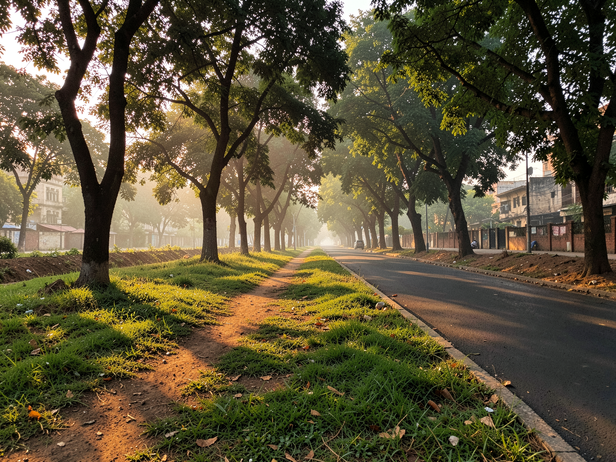
![Shaded Park Path, Early Morning]()
Shaded Park Path, Early Morning
Image credit : AI
Early morning light on a park path. I'm checking the ground temperature for dogs, mindful of hot pavement.
The seven-second hand test and what it actually tells you
Place the back of your hand flat on the pavement and hold it there for seven seconds. If you pull away before the count is done, the surface is too hot for your dog's pads. This test works because the back of the hand is more sensitive to heat than the palm, and seven seconds approximates the contact time a paw gets with each step at a normal walking pace. The test has limits: it tells you about the spot where you are standing, not the whole route. Tar patches, dark-painted speed bumps, and metal drain covers heat faster and hold heat longer than surrounding concrete. Check those separately. If any section fails, treat the whole walk as too hot.
Reading your dog mid-walk
Even with a passing ground check at the start, conditions can change along a route. Watch for these mid-walk signals: lifting paws after contact with the ground, shortened steps or a reluctance to keep moving, licking or biting at the pads during or immediately after the walk, and whimpering without an obvious cause. None of these is a diagnosis, but any one of them is a reason to move to shade immediately, let the dog stand on grass or a cool surface, and inspect the pads. Redness, blistering, or skin that looks raw or peeling means the walk is over and a vet visit is the next step. Do not apply butter, toothpaste, or any home remedy to an open blister on a pad. Rinse with cool, not cold, water and get to a clinic.
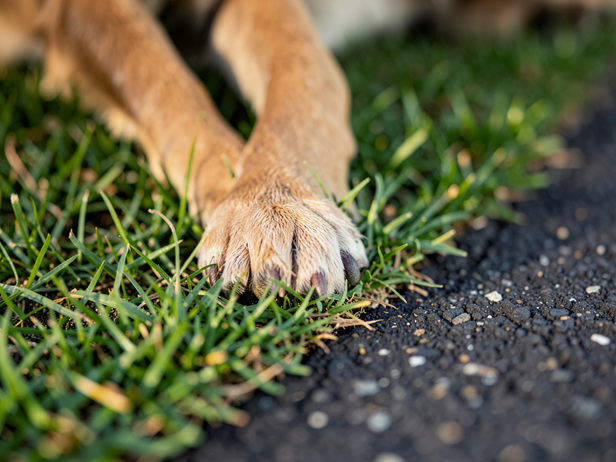
![Paw on the Edge]()
Paw on the Edge
Image credit : AI
Checking ground temperature for dogs is crucial. My paw feels the cool grass beside the hot pavement.
Routes and timing that reduce the risk
Early morning, before the surface has had time to absorb the day's heat, is the safest window. Grass, soil, and shaded dirt paths stay significantly cooler than open paving and are worth routing toward even if it adds distance. In dense urban areas, the pavement under a tree canopy can be several degrees cooler than open road a few metres away. If a morning walk is not possible, wait until well after sunset, not just until the air cools, but until the ground has had time to release stored heat, which often means two hours after dark in peak heat periods. Booties are an option for dogs that tolerate them; introduce them gradually at home before expecting a dog to walk normally in them outside. A dog that fights the booties is not going to walk safely in them on a hot road.