Most dogs that struggle at cafes are not badly behaved. They are under-prepared. A noisy room full of strangers, unfamiliar smells, chairs scraping, crockery clattering, that is a lot of information arriving at once for an animal that has spent most of its life in a quiet flat. The seven steps below build the experience in layers, so by the time your dog is under a cafe table, it already knows what to do.
Start with a settled behaviour at home
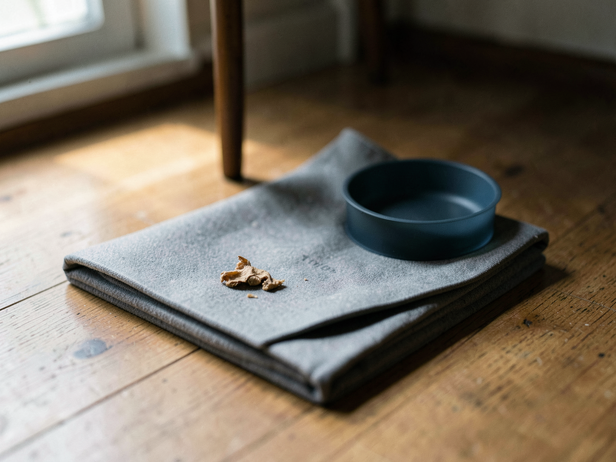
Before a cafe is even on the table, your dog needs a reliable "go to your place" cue, a word or hand signal that means "lie down on this spot and stay there until I release you". Teach it on a mat or folded blanket at home. Mark the moment all four paws are down and the dog relaxes its weight, reward with a small treat, and build duration slowly over several sessions. The mat matters because it travels with you: the dog learns that the mat means settle, not a specific room. This is the foundation everything else sits on.
![Dog's Travel Essentials]()
Dog's Travel Essentials
Image credit : AI
My travel essentials are ready for our next adventure. Perfect for dog-friendly cafe visits!
Practise in progressively busier places
A cafe is not the first outing, it is the fifth or sixth. Work up through quieter public spaces first: a building lobby, a park bench, a friend's busy home. Each new environment adds distraction. The goal at every stop is the same: dog on mat, dog calm, dog rewarded for staying put while the world moves around it. Keep early sessions short, ten to fifteen minutes, and end before the dog starts to fidget. A session that ends on a calm note teaches more than one that drags until the dog gives up.
Choose the right cafe and the right time
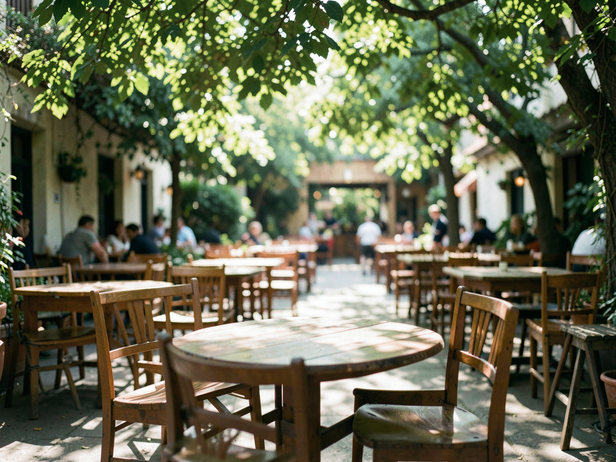
Not every pet-friendly cafe is equally manageable for a dog still learning the ropes. A garden terrace on a quiet weekday afternoon is a different proposition from a packed indoor brunch spot on a Sunday. Go at off-peak hours first. Pick a table at the edge of the seating area rather than the middle, so the dog has one quiet side and fewer legs to investigate. Confirm with the cafe that dogs are genuinely welcome inside, pet-friendly listings vary, and what the owner means by welcome and what the dog needs are not always the same thing.
![Sun-dappled cafe terrace awaits.]()
Sun-dappled cafe terrace awaits.
Image credit : AI
A peaceful cafe terrace, perfect for a quiet moment. Consider how to take your dog to a cafe for a similar calm experience.
Bring the mat, a water bowl and a chew
The mat goes under the table the moment you sit down. A long-lasting chew, a dried tendon, a stuffed rubber toy, gives the dog something to do with its mouth while it settles. Dogs that have something to chew are far less likely to pace, whine or solicit attention from nearby tables. Bring a collapsible bowl and offer water when you arrive; a thirsty dog is a restless dog. Skip a meal before the visit if you plan to use treats for reinforcement, a slightly hungry dog pays better attention.
Manage the first few minutes actively
The first five minutes after sitting down are when most dogs test whether the rules from home apply here too. Keep the lead loose but short, the mat directly under your feet, and reward any moment the dog lies down and stops scanning the room. You do not need to talk to it constantly, that keeps it alert. A calm, brief "good" when it settles, then ignore it. If it stands up, guide it back to the mat without fuss and wait for the down again. Do not repeat the cue more than twice; if the dog is not responding, the environment is too much for this stage and it is time to leave quietly.
Handle attention from strangers calmly
Other customers will want to greet your dog. This is one of the harder parts of a cafe visit to manage, because the dog learns that getting up and approaching people produces good things. Ask people to say hello only while the dog is lying down, not when it is standing or pulling toward them. A simple "he's learning to settle, could you crouch down to him?" is enough. Most people are happy to oblige. If the cafe is so busy that you cannot manage the stream of well-meaning strangers, that visit is a training setback, not a win.
Know when to call it and leave
A successful first cafe visit is twenty minutes of calm, not two hours. Leave before the dog hits its limit. Signs that the session is done: persistent panting without heat as the cause, repeated standing and circling, whining that does not stop when you redirect, or fixating on a specific person or dog nearby. Pack up the mat, finish your coffee, and go. The dog that leaves on a calm note comes back more settled next time. If your dog is consistently distressed in busy public spaces despite gradual exposure, shaking, refusing food, unable to settle at all, that is worth a conversation with a qualified trainer or veterinary behaviourist before you continue.