The invitation said bring the dog. What it did not say was where the dog sleeps, whether the children can feed it, or what happens when it jumps on the host's elderly mother. These are the conversations that do not happen until they need to, which is always at the worst moment.
Start with the host, not the dog
Before you pack the crate, ask one direct question: is everyone in the house genuinely comfortable with a dog being there? Not just the person who invited you, everyone who lives or will be staying there. A host who loves dogs may share a home with a partner who does not, or with a child who is allergic, or with an elderly parent who had a bad experience. Find out before you arrive, not when you are already at the door.
If someone is uncomfortable, work out the ground rules together. Which rooms are off-limits to the dog? Is the garden accessible? Is there a quiet room where the dog can settle away from the crowd if it gets overwhelmed? These are not difficult questions, but they need answers in advance, not improvised responses when the dog has already wandered into the bedroom.
![Dog's Meal vs. Human Treats]()
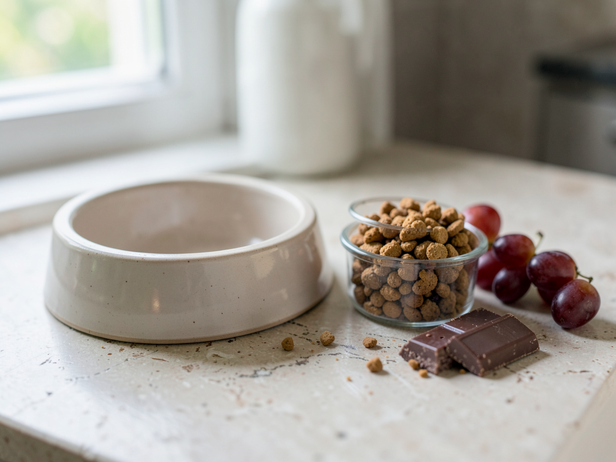
Dog's Meal vs. Human Treats
Image credit : AI
I'm setting up my dog's meal, keeping it separate from human snacks. Essential for visiting relatives with a dog in India.
Feeding rules matter more than you think
Well-meaning relatives are one of the most reliable sources of unsafe food for dogs. A piece of roti seems harmless. Leftover dal with onion and garlic is not, thiosulphates in both are toxic to dogs, and the amounts in a normal home-cooked meal are enough to cause damage over repeated exposure. Grapes and raisins, common in Indian households as snacks or in sweets, are linked to acute kidney injury in dogs; the mechanism is not fully understood, but no safe threshold has been established. Chocolate contains theobromine, which dogs metabolise far more slowly than humans do, and even a small amount can cause serious problems depending on the dog's size and the chocolate's concentration.
Before the visit, tell the host clearly: the dog eats its own food, brought from home, at its normal times. Ask that guests and children not feed it anything, however harmless it looks. Frame it as a health rule, not a preference, because it is. If relatives push back, the short version is: dogs get sick from foods that are fine for people, and it is not always obvious which ones.
Agree on where the dog sleeps and where it does not go
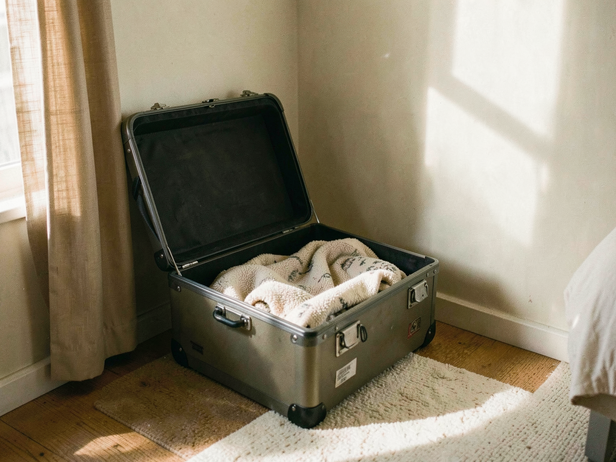
This is the rule that causes the most friction when it is not settled in advance. If your dog sleeps on the bed at home, that habit does not automatically transfer to a guest room with a host's linen. If your dog is crate-trained, bring the crate and set it up in the room you are using, it gives the dog a familiar, settled space and removes any ambiguity about where it should be.
Decide together which rooms are accessible and which are not. A host's puja room, a child's bedroom, a room with a cat or a bird, these need to be agreed on, not discovered. A dog that has free run of its own home will test the same freedom somewhere new, and it will do it faster than you expect.
![Dog's Guest Room Corner]()
Dog's Guest Room Corner
Image credit : AI
Preparing a cozy spot for my dog during our visit. Essential for taking dog to family gathering.
Children, crowds, and keeping the dog from being overwhelmed
A family gathering is loud, unpredictable, and full of strangers from the dog's point of view. Even a dog that is relaxed at home can become anxious, reactive, or simply exhausted in that environment. Watch for the signs: yawning repeatedly, licking its lips, turning its head away, trying to get behind furniture or into a corner. These are requests for space, not rudeness.
Set a rule with the children before the visit: approach calmly, do not run at the dog, do not pull its ears or tail, and do not disturb it when it is eating or resting in its spot. Children who are not used to dogs often do not know these things, and that is not their fault, it is information they need before the interaction, not after something goes wrong. If the dog has any history of snapping or resource guarding, keep it on a lead around unfamiliar children and tell the host. A qualified trainer or veterinary behaviourist is the right next step if guarding or reactivity is an ongoing concern, not a family visit.
What to bring and what to leave to chance
Bring everything the dog needs from home: its food for the full duration, its water bowl, its bed or crate, its lead, waste bags, and any medication it takes. Do not assume the host will have dog-appropriate supplies, and do not buy food on the way, a sudden diet change in an already-stressed dog is a reliable way to end the visit early with an upset stomach.
Leave nothing to chance on the vet front. Know the address of the nearest veterinary clinic to where you are staying before you travel, not after something happens. If your dog takes regular medication, carry more than you need. If it has a known health condition, tell the host, so they are not making decisions in the dark if something changes while you are out.
A visit that works is one where the dog is calm, the host is comfortable, and nobody is managing a situation that could have been a conversation. The house rules are not a checklist for anxious pet owners, they are the difference between a dog that fits into someone else's home for a few days and one that becomes a problem nobody knows how to name.