On 18 October 1963, a Véronique AG1 rocket lifted off from the Sahara Desert carrying a passenger no one had quite planned to care about. Félicette, a small black-and-white stray collected from the streets of Paris, reached an altitude of roughly 157 kilometres, experienced several minutes of weightlessness, and was recovered alive after her capsule parachuted back to earth. She was the first cat, and remains the only cat, ever to travel to space.
How a Paris street cat became an astronaut
Fourteen cats were selected for the French space programme in 1963, all sourced from Parisian streets. They were chosen partly for temperament and partly because their weight was easy to control, the programme needed animals that would stay within a narrow mass range. Each cat had electrodes implanted in its brain to monitor neurological activity during the flight. The cats were trained in centrifuges and compression chambers, conditioned to sit still inside small restraint suits, and assessed over months for how they responded to stress. Félicette was not the original first choice. The cat initially scheduled for the flight was removed from the roster shortly before launch. Félicette went instead.
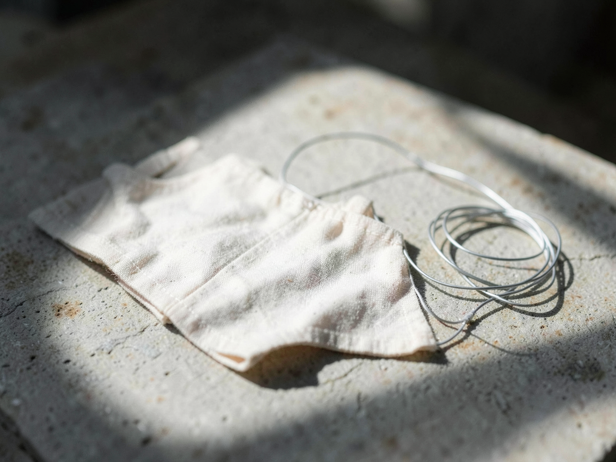
![Canvas Restraint and Electrode]()
Canvas Restraint and Electrode
Image credit : AI
A stark reminder of early animal spaceflight history, this restraint suit and electrode evoke the era of Félicette.
What the flight was actually like
The rocket carried her to the edge of space in under five minutes. At peak altitude she was in microgravity, her brain activity transmitting back to ground stations throughout. The data the French space agency CNES collected was used to study how weightlessness affected the central nervous system, the same questions human spaceflight programmes were wrestling with at the time. The capsule separated from the rocket on descent and parachuted down. Recovery teams reached her in the Algerian desert. She was alive and, by the accounts of the scientists who examined her, in stable condition. The neurological data she returned was considered scientifically useful.
What happened after she landed
Félicette survived the flight by roughly two months. She was euthanised in December 1963 so that researchers could examine her brain and confirm the electrode implants had not caused lasting damage. This part of her story is documented and not disputed. It is also the part that sat unacknowledged for the longest time. For decades she was misidentified in press reports as a male cat named Félix, the name of a cat that had been scheduled for an earlier, scrubbed mission. Her actual name, and the fact that she was female, were largely absent from public memory until researchers and space historians began correcting the record in the 1990s and 2000s. A crowdfunded bronze statue of Félicette was unveiled in Strasbourg in 2019, outside the International Space University. It was the first permanent public memorial she had received.
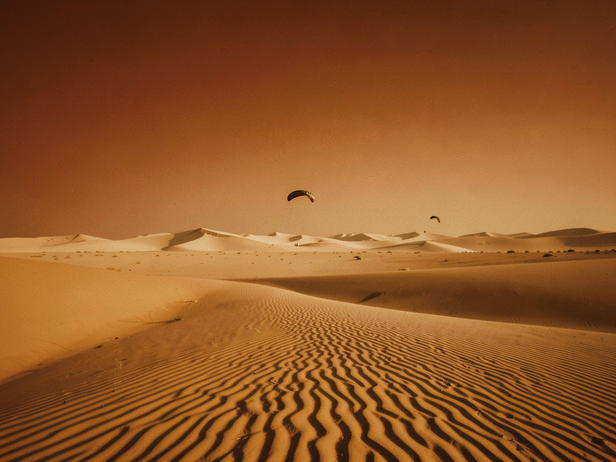
![Desert Descent at Golden Hour]()
Desert Descent at Golden Hour
Image credit : AI
Witnessing a solitary descent in the Algerian desert, a nod to early animal spaceflight history.
Why her story belongs to the history of spaceflight
The Soviet Union had sent Laika, a dog, to orbit in 1957. The United States had flown chimpanzees. France's contribution to animal spaceflight is less widely taught, partly because the French programme was smaller and shorter-lived, and partly because Félicette's identity was obscured for so long by the Félix confusion. What the record shows is a cat that completed a suborbital spaceflight, returned neurological data that contributed to early human spaceflight research, and survived her mission, something Laika did not. The science she enabled was real. The neglect that followed was also real, and it lasted longer than it should have. Her statue exists because a group of people decided that gap was worth closing.