Most pet owners spend more time packing their own bag than briefing the person who will keep their animal alive and calm while they are away. A sitter who is good with animals still cannot read your pet's normal from its abnormal, only you know that your dog's third bark at the door means nothing, but the fourth one means he needs the toilet urgently. That gap between what you know and what you have written down is where things go wrong.
The daily routine, in exact times
Pets do not experience disruption the way humans do. They experience it as hunger arriving late, a walk that did not happen, a bowl that was filled but not in the right place. Write the actual times: 7 am feed, 12 pm walk, 6 pm feed, 10 pm last toilet. If your cat expects wet food at 8 am and dry food left out through the day, say that. If your dog will not eat unless his bowl is on the kitchen floor and not the balcony, say that too. The sitter is not being fussy, the animal is, and the sitter needs to know.
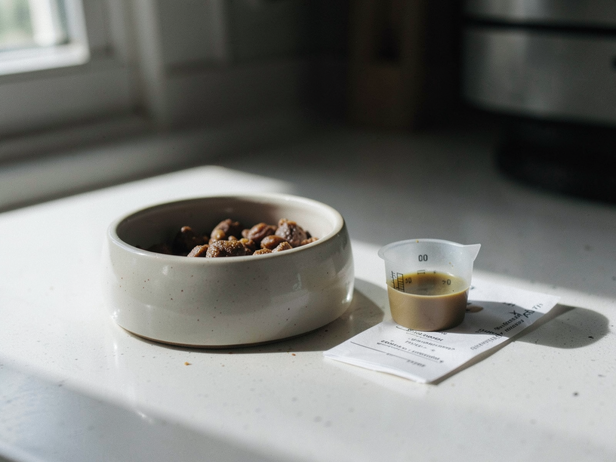
![Morning Pet Meal Prep]()
Morning Pet Meal Prep
Image credit : AI
Preparing for my pet sitter, ensuring they have clear pet care handover instructions.
Food: what, how much, what never
Write the food brand and variety by name, the quantity per meal in the unit you use, a full cup, half a pouch, two scoops, and where it is stored. Then write the short list of what your pet cannot have. Not a lecture on pet nutrition: just the specific things that have caused a problem before, and the common ones relevant to your animal. Onion, garlic, and grapes are dangerous to dogs; cooked plain chicken is fine. Xylitol, found in some peanut butters and sugar-free products, is toxic. If your cat is on a prescription diet, make that impossible to miss, write it at the top of the page, not buried in paragraph four. If treats are allowed, say which ones and how many.
Health details the sitter must know
This section is the one most owners skip and most sitters need. Write your pet's current medications: the name, the dose your vet has prescribed, the time of day, and whether it goes in food or is given directly. Do not ask the sitter to figure out the dose from the packet, write the exact instruction your vet gave you. Write any known allergies or sensitivities. Write the condition your pet is being managed for, if there is one, so the sitter understands why the medication matters. Then write the signs that mean something is wrong for your specific animal: what normal looks like, and what is different enough to warrant a call. A dog who drinks a lot of water every day is normal for that dog; a dog who suddenly starts drinking a lot is not. Your sitter cannot know the difference unless you tell them.
![Medicine, Pen, and Notepad]()
Medicine, Pen, and Notepad
Image credit : AI
Preparing pet sitter instructions for India. This note will guide them.
Behaviour: the quirks, the fears, the boundaries
Every pet has a set of behaviours that look alarming to a stranger and are completely ordinary to the owner. Write them down. Your cat yowls at 3 am every night and then goes back to sleep, normal. Your dog barks at the building's security guard and needs to be walked away before he settles, normal. Your rabbit thumps when the television is too loud, normal. Also write the things that are not normal: if your dog has never shown aggression and suddenly growls, that is worth a call. If your cat stops grooming, that is worth a call. Write the name of a behaviour that means your pet is stressed, some animals pace, some hide, some stop eating, so the sitter knows what to watch for and what to do when they see it. If your pet has a fear of fireworks, thunder, or strangers, write the specific thing that helps: a crate left open with a familiar blanket, the television left on low, a particular room kept accessible.
Emergency contacts and vet information
Put this on a separate line at the top of the note and again at the bottom. Your vet's name, clinic address, and phone number. The clinic's hours, and the name and number of the nearest 24-hour emergency vet, because your regular clinic will be closed on the Saturday night your pet decides to eat something it should not have. Your own number, and a second number for someone the sitter can reach if you are unreachable. Write clearly what the sitter is authorised to do: can they take the pet to the vet and approve treatment up to a certain cost without reaching you first? In an emergency, that clarity is the difference between a sitter who acts and one who waits. If your pet has a condition that could become an emergency, a history of seizures, a known heart condition, a urinary blockage risk in a male cat, write the specific signs that mean go to the vet now, not call and wait.
Access, logistics, and the small things
Where is the spare key. Where is the lead, the carrier, the litter, the poop bags. Which door the building's security will ask about. Whether the lift is pet-friendly or the stairs are faster. The name of the neighbour who has met the dog before and can help in a pinch. Whether the balcony door must stay latched because your cat has worked out how to push it open. These details feel obvious to you because you live there. They are not obvious to someone walking in for the first time with a nervous animal and a phone that is not ringing.
A handover note is not a formality. It is the difference between a sitter managing your pet and a sitter knowing your pet. The animal cannot explain what it needs or what frightened it or why it has not eaten. You are the only one who can, and a note that takes twenty minutes to write can prevent a night that takes much longer to resolve.