A rabbit that goes quiet after a move is not being dramatic. Rabbits are prey animals with a finely tuned stress response, and an unfamiliar environment triggers it hard: elevated cortisol, reduced gut motility, and a real risk of GI stasis if the stress is prolonged. The setup you create before your rabbit arrives is the single biggest thing you control.
Why rabbits struggle with change more than dogs or cats
![Wicker Carrier on Car Seat]()
Wicker Carrier on Car Seat
Image credit : AI
Preparing for a move? This carrier offers a safe space for your pet's journey. Consider rabbit care in Indian apartments.
Rabbits map their territory through scent and spatial memory. They know where the food is, where the safe corner is, where they sleep. A new space strips all of that at once. Unlike a dog, which reads its owner's calm as a cue, a rabbit reads the room itself. An unfamiliar smell, an unfamiliar floor texture, a different echo, each one registers as a potential threat. The gut is the first organ to show it. A rabbit under acute stress slows or stops its digestive system, and a rabbit that stops eating and passing pellets for more than twelve hours needs a vet, not more settling time.
Set up the enclosure before the carrier comes through the door
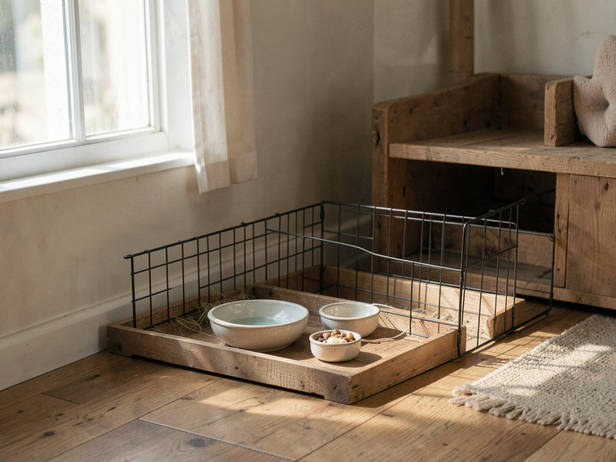
The enclosure should be assembled, bedded, and smelling right before your rabbit is ever brought into the new home. Take a handful of used bedding from the old enclosure and spread it in the new one. Bring the old hay rack, the old water bowl, the old hideaway box if you can. Familiar objects carry your rabbit's own scent, and that scent is the fastest signal that this space is safe. Place the enclosure away from direct sunlight, away from the kitchen and its cooking smells, and away from any window or balcony where street noise or birds are loud. In a flat, an interior room or a quieter corner of the living room usually works better than a spot near the main door.
The carrier journey itself
![Rabbit's New Home Setup]()
Rabbit's New Home Setup
Image credit : AI
Preparing a peaceful space for a rabbit's new home in India. Setting up a comfortable enclosure is key.
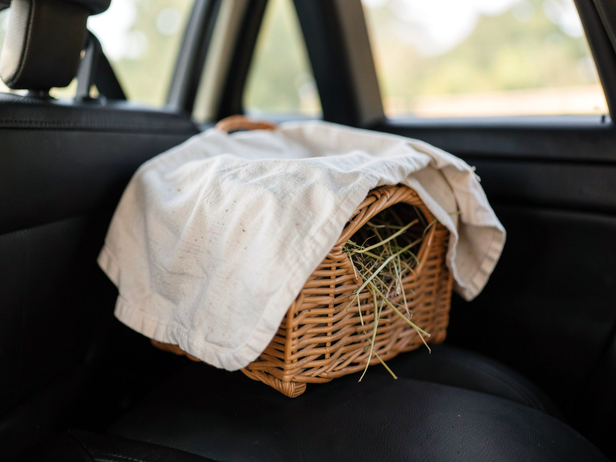
Cover the carrier with a light cloth on three sides. A rabbit that cannot see movement around it stays calmer than one that watches the world rushing past. Put a small amount of familiar bedding inside the carrier and a little hay. Do not put water in a bowl, it spills and soaks the bedding. A water-heavy vegetable like a small piece of cucumber gives enough hydration for a journey under two hours. Keep the carrier flat and stable on the back seat or footwell; do not put it in the boot where vibration and heat are higher. Keep the car cool. Rabbits do not tolerate heat well, and a car interior in Indian weather can reach dangerous temperatures quickly. If the journey is longer than two hours, plan a stop in a quiet spot where you can offer hay and check that the rabbit is breathing normally and not pressing itself flat in a panic posture.
The first hours in the new home
Put the carrier down inside the prepared enclosure and open the door. Do not lift your rabbit out. Let it come out on its own schedule. Some rabbits emerge in ten minutes; some sit in the carrier for an hour. Both are normal. Resist the urge to stroke or reassure, your rabbit is reading the room, and handling interrupts that process. Keep other pets out of the room entirely for at least the first day. Keep noise low. Check that your rabbit eats hay within a few hours of arriving. Hay is the baseline: if it is eating hay, the gut is moving. Fresh water should be available immediately. Pellets and fresh greens can wait until the rabbit has settled, usually by the following morning.
When to call a vet
A rabbit that has not eaten or passed droppings within twelve to fourteen hours of arriving needs veterinary attention, not more time. GI stasis can deteriorate quickly in rabbits. Equally, if your rabbit is grinding its teeth audibly, pressing its belly to the floor, or sitting hunched with its eyes half-closed, these are pain signs and warrant a call to a vet who sees exotic animals or small mammals. Most cities now have at least one practice with rabbit experience; find that practice before moving day, not after. The move itself is manageable. The preparation is what makes it so.