Birds are physiologically sensitive in ways that catch new owners off guard. A temperature drop of a few degrees from an open window, a whiff of paint fumes, or two days of disrupted sleep can suppress a bird's immune system fast enough to show as fluffed feathers and a quiet bird within the week. A house move stacks all of those risks at once. The good news is that the risks are manageable if you plan around the bird, not around your moving schedule.
Prepare the cage before moving day
A familiar cage is one of the few constants your bird will carry into the new place. Do not deep-clean it right before the move. The smell of the bird's own droppings, favourite perch, and food residue is reassuring, not because birds are dirty animals, but because scent is part of how they read their environment as safe. Pack the cage last and unpack it first. If you use a travel carrier for the journey, put a cloth from the bird's usual cage over it so the smell travels with the bird. Carry the cage yourself if you can; do not put it in the moving truck where temperature, fumes, and vibration are uncontrolled.
![Sunlit Birdcage Still Life]()
Sunlit Birdcage Still Life
Image credit : AI
Ensuring my pet bird's safety during moving house with pet bird India is paramount. This still life captures a moment of calm.
Draughts are the single biggest hazard in a new home
A draught is not the same as cool air. It is directional airflow across a bird's body, and it pulls heat away faster than ambient temperature alone. Birds cannot tell you they are cold until they are already chilling, and by then the problem is a vet visit, not a blanket. Before you place the cage in any room of the new house, stand at cage height and feel for airflow from windows, air conditioning vents, ceiling fans, and gaps under doors. In Indian flats, AC units placed high on walls create a cold downdraft that can reach a cage across the room. The cage goes against an interior wall, away from any vent line, and away from the kitchen, cooking fumes, non-stick cookware releasing polytetrafluoroethylene vapour, and gas flames are all hazardous to birds. This is not a new-home rule; it is the permanent rule, and a move is the right moment to get it right.
The drive itself: keeping the bird calm and stable
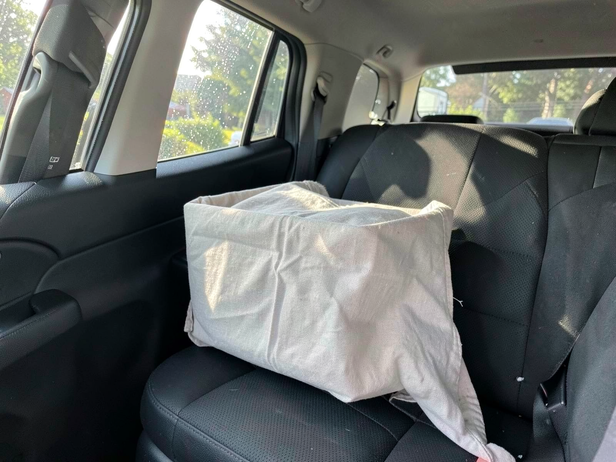
Keep the carrier covered with a light cloth during the drive. Darkness reduces visual stimulation and lowers stress. Maintain the car's interior temperature close to what the bird is used to, do not blast cold AC directly at the carrier, and do not leave the bird in a parked car in the sun for any amount of time. Avoid playing loud music. If the journey is more than two hours, offer water at a stop; most birds will not drink while moving, but the offer matters. Do not open the carrier in the car. A panicked bird in a moving vehicle is a genuine emergency. If the bird shows open-mouth breathing, tail-bobbing, or loss of balance at any point during the journey, reach a vet before continuing.
![Bird Carrier on Car Seat]()
Bird Carrier on Car Seat
Image credit : AI
Ensuring a calm journey for my pet bird during moving house with pet bird India. Safety and comfort are paramount.
The first week: what normal looks like and what it does not
Expect quiet. A bird in a new environment will often go silent for a day or two, eat less, and sit lower on the perch. This is normal stress behaviour, not illness, provided it resolves within three to four days and the bird is still eating, drinking, and producing droppings of normal colour and consistency. What is not normal: droppings that are entirely liquid with no solid component, a bird that stays fluffed and eyes-closed during the day, any discharge from the nostrils, laboured breathing, or a bird that has not eaten in 48 hours. Any of those signs means a vet, not a wait-and-see. Re-establish the bird's routine as fast as possible, same feeding times, same cover-at-night time, same music or household sounds it is used to. Familiar sound is as settling as familiar smell. Put the cage where the bird can see the room's activity without being in the middle of it: birds are prey animals and feel safer with a wall behind them and a clear view of the room in front.