A dog goes missing fastest in the places it has never been before. A car door opens at a highway dhaba, a firecracker sounds near a hotel gate, a crowded railway platform shifts, and the dog is gone into a city where nobody knows it. What happens in the next hour depends almost entirely on decisions you made before you left home.
The ID tag: your dog's fastest introduction to a stranger
When someone finds a dog on the street, the first thing they do is look at the collar. If there is a tag, they read it. If there is no tag, they have to decide whether to take the dog to a vet or a shelter, and that takes time the dog does not have.
A tag needs two things: a phone number that will actually be answered, and the city you are travelling to, not the city you live in. A Mumbai number on a tag found in Jaipur tells a finder almost nothing useful. If you travel often, consider a tag with a QR code that links to a page you can update with your current location before each trip. Engraved tags are more reliable than printed ones, ink wears off, engraving does not. Check the ring that attaches the tag to the collar before you leave; a worn split ring is the most common reason a tag arrives home without the dog.
Put your number on the tag in the format a local SIM can dial. If your number is registered in a different state, note that a finder may need to dial it as a full ten-digit mobile number rather than a local call.
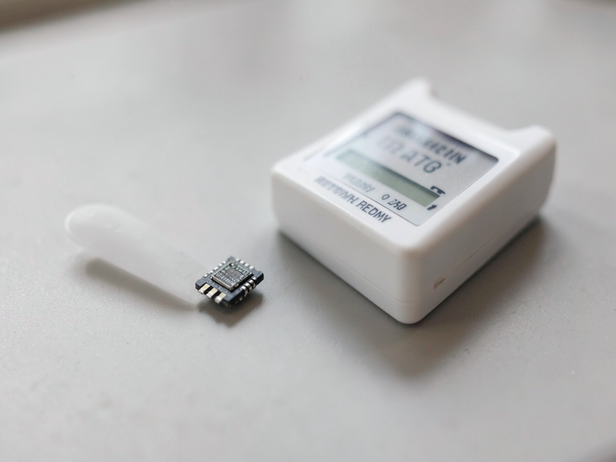
![Microchip and Scanner Ready]()
Microchip and Scanner Ready
Image credit : AI
Ensuring pet safety: a microchip and scanner ready for use. Essential for dog travel safety in Indian cities.
The microchip: the record that cannot fall off
A microchip is a passive RFID transponder, roughly the size of a grain of rice, injected under the skin between the shoulder blades. It carries a unique number. When a vet or shelter scans the dog, that number appears on the reader. The number then has to match a record in a database, and this is where most microchips fail their owners.
The chip is useless if the registration is incomplete, if the contact details in the database are old, or if the database the scanner queries is not the one the chip is registered with. Before any trip, log into the registry where your chip is registered and confirm that your mobile number, your email, and an emergency contact are all current. India does not yet have a single unified pet microchip database; chips registered through the Kennel Club of India, through a vet clinic's own system, and through private registries do not always talk to each other. Ask your vet which registry your chip is linked to, and carry that registry's name and your chip number written on paper in your bag.
Standard microchips in India operate at 134.2 kHz (ISO 11784/11785). Most modern scanners at shelters and clinics read this frequency, but not all older readers do. This is not something you can fix, but it is worth knowing: if a finder takes your dog to a small clinic in a rural area and the scanner shows nothing, the chip may still be there and working, the scanner may simply be the wrong type.
The microchip does not track your dog's location. It is not a GPS device. It only transmits a number when a scanner is held directly against the dog's skin. Its value is identification after the dog has been found, not during the search.
The photo: what you actually need, not what you have
Most people have hundreds of photos of their dog and none that would help a stranger identify it in the street.
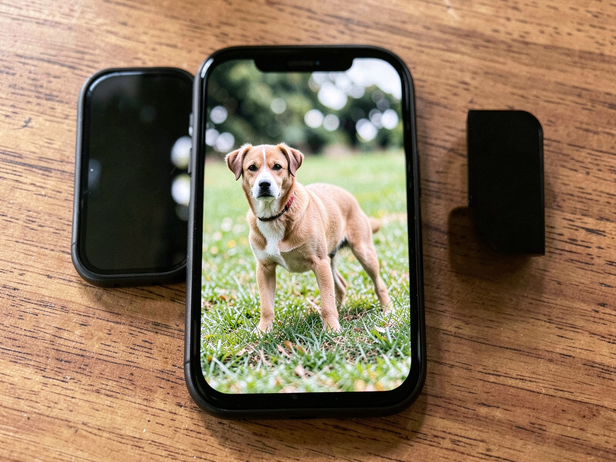
A useful lost-dog photo shows the dog standing or sitting, facing the camera, in natural daylight, with the full body visible. It should be taken from the same height a person would see the dog at eye level, not from above. It should show markings, coat pattern, ear shape, and approximate size relative to something in the frame. A photo of the dog asleep on a sofa, or mid-run in a park, or cropped to show only the face, is nearly useless for identification at a distance.
Take this photo before you travel. Save it to your phone's camera roll and also send it to your email so you can access it if your phone is lost. If your dog has a distinctive marking, a patch over one eye, a scar, a colour split down the face, take a second photo that isolates that feature. When you are posting on local lost-pet groups or handing a description to a shelter, the marking photo is what makes your dog findable rather than just describable.
A short video of the dog walking is worth more than any still photo for confirming identity once a potential match is found. Thirty seconds of the dog moving, shot from the side, takes ten seconds to record and may be the thing that closes a reunion.
![Dog Photo on Phone]()
Dog Photo on Phone
Image credit : AI
My phone shows a dog, a reminder of pet travel safety in Indian cities.
What to do in the first hour if a dog goes missing on a trip
The first hour matters more than any hour after it. A dog that has bolted in a strange place will usually stop within a few hundred metres once the immediate trigger, the noise, the crowd, the vehicle, is gone. It will be confused and frightened, and it will likely stay close to the last place it felt safe.
Go back to where the dog was last seen and stay there for at least twenty minutes. Do not run or call loudly; a frightened dog may run from noise. Sit on the ground if you can, a low, calm presence is more likely to draw a scared animal back than a person moving fast and calling.
While one person stays at the last-seen point, another should contact local vets, shelters, and any active lost-pet groups for that city. Most large Indian cities now have WhatsApp groups and Facebook groups for lost and found pets; a local resident will know them faster than you will. Post the clear photo, the chip number, the tag number, and your current contact number, not your home city number if it differs.
File a report with the nearest police station or municipal body if the dog is not found within a few hours. In some cities this creates a record that helps if the dog is picked up by a municipal van.
If a dog is missing for more than twenty-four hours, it is likely being sheltered by someone who found it and is trying to locate the owner, or it has been taken to a vet or shelter. Both outcomes end the same way: someone scans the chip, reads the tag, or sees the photo and calls you. The three preparations are not redundant, they are three separate chances for that call to happen.