The moment something goes wrong with your pet on a road trip, the instinct is to do something. That instinct is right, but only up to a point. Most of what keeps an animal stable in the first twenty minutes is not treatment, it is containment, calm, and getting to help fast.
The first thing to do is stop the car safely
Pull over as soon as it is safe to do so. A moving vehicle is not a place to assess an animal, and a driver who is trying to check on a pet in the back seat is a hazard to everyone. Once stopped, switch on your hazard lights, secure your pet so it cannot bolt into traffic, and take thirty seconds to look before you touch. Note what you see: is the animal breathing? Is it conscious? Is there visible bleeding? Is it vomiting or having a seizure? What you observe in those first seconds is the most useful thing you will tell the vet.
![Dashboard Essentials]()
Dashboard Essentials
Image credit : AI
Prepared for any pet travel emergency on a road trip in India, with water and a clean cloth.
What you can do without any equipment
Move the animal to shade if the car is hot. Heat is one of the fastest killers in a pet emergency, and a car parked in sun can reach dangerous temperatures in minutes even with windows cracked. If you suspect heatstroke, panting that will not slow, bright red gums, the animal collapsing or becoming unresponsive, move it to shade, wet the paws and the back of the neck with cool water (not ice cold), and keep it still. Do not pour water into the mouth of an animal that is not fully conscious. Do not leave it in a running car with the air conditioning on while you step away. Stay with it and drive to the nearest vet as fast as is safely possible.
For a cut that is bleeding, apply gentle, steady pressure with any clean cloth, a T-shirt, a handkerchief, a folded piece of tissue. Do not remove the cloth to check; keep pressing. Do not apply a tourniquet unless you have been trained to do so. Do not pour antiseptic, alcohol, or any liquid into a wound.
If the animal is breathing normally but seems dazed or unsteady after a bump or fall, keep it still and quiet. Do not try to make it walk to test whether it is injured. Spinal injuries are not visible and movement can make them worse.
Situations where you do nothing except drive
Some emergencies have no safe first-aid step. If your pet is having a seizure, do not restrain it, do not put anything in its mouth, and do not try to hold its tongue. Clear the space around it so it cannot hit its head on a hard surface, note the time the seizure started, and drive the moment it stops or after two minutes, whichever comes first.
If you suspect poisoning, your pet ate something at a rest stop, chewed a plant, or got into a bag, do not induce vomiting. This is the single most important thing to remember. Inducing vomiting at home or on the road without a vet's instruction can cause more damage than the substance itself, particularly with caustic or oily toxins. Call a vet on the phone while someone else drives, describe what was eaten if you know, and follow their instruction only.
A male cat straining in the litter box or crying in pain with no urine produced is a blocked bladder, and it is a life-threatening emergency. There is nothing to do at the roadside. Reach a vet immediately.
A dog with a distended, hard abdomen that is retching without bringing anything up may be experiencing bloat, which can be fatal within hours. Again, no roadside intervention exists. Drive.
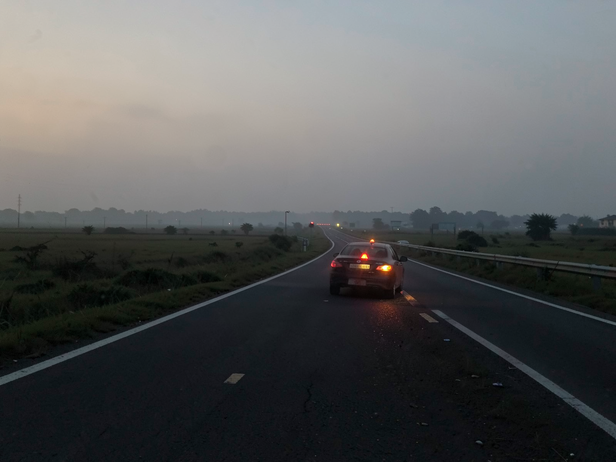
![Highway Dusk, Car Stopped]()
Highway Dusk, Car Stopped
Image credit : AI
A quiet moment on the Indian highway. Facing a pet travel emergency, I've pulled over safely.
Keeping a basic kit in the car
You do not need much, and you should not carry things you do not know how to use. A small roll of clean gauze, a few squares of clean cloth, a bottle of plain water, your vet's phone number saved in your phone, and the number of a 24-hour emergency animal hospital in the city you are travelling to, that is a useful kit. A pet first-aid manual is worth carrying if you have taken a basic animal first-aid course and know how to use what it describes. Carrying medication without a vet's guidance is not recommended; the right dose for a dog is not the right dose for a cat, and many human medicines that seem harmless, paracetamol, ibuprofen, are dangerous to dogs and acutely toxic to cats.
Finding help when you are far from your own vet
Most cities and large towns in India now have at least one private veterinary clinic with extended hours. Before a long trip, search for emergency vet clinics along your route and save two or three numbers. The Indian Veterinary Association maintains a directory, and most city-based veterinary hospitals have a contact number that connects after hours. If you are on a national highway, the nearest toll booth attendant can often direct you to the closest town with a clinic. Do not drive past a closer clinic to reach your usual vet if the animal is in serious distress.
The single most useful thing you can do in a pet emergency on the road is stay calm enough to drive well and reach professional care quickly. The vet will do the rest.