A fish has no way to tell you it is in distress. By the time it is listing sideways or gasping at the surface, the damage from a bad introduction is already done. The bag-floating step that pet shop staff mention in passing is not a ritual or a precaution for anxious owners, it is the difference between a fish whose body adjusts gradually and one that goes into osmotic shock before it has seen its new home properly.
What the fish is actually experiencing inside that bag
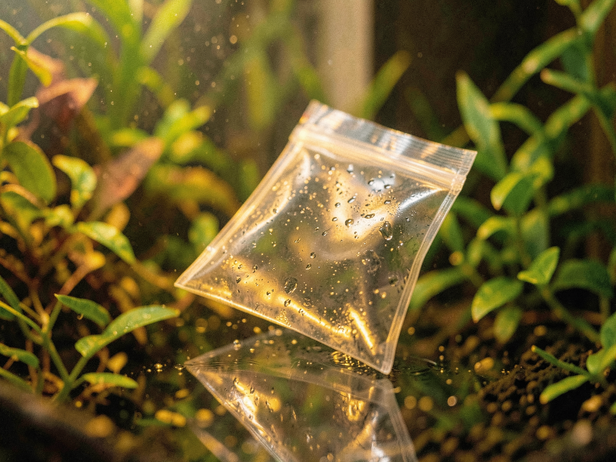
The water in a transport bag is a closed system. From the moment the shop seals it, the fish is breathing into it. Carbon dioxide builds up, pH drops, and ammonia from the fish's own waste accumulates. A short trip of twenty minutes produces a measurable shift. A longer journey, an hour in traffic, a stop at the market, a drive across the city, can push the bag water into conditions the fish would never encounter in a well-maintained tank. The fish's body adapts to whatever it is sitting in. Its cells, its gill function, its osmoregulation, the process by which it balances water and salt across its membranes, all calibrate to that degraded water. Dropping it straight into clean, well-oxygenated tank water at a different temperature is not a rescue. It is a second shock layered on the first.
![New Fish Acclimatization Bag]()
New Fish Acclimatization Bag
Image credit : AI
I'm using the floating method to introduce new fish to my aquarium in India.
Why temperature is the first thing to fix
Fish are ectotherms. Their body temperature matches the water around them, and every enzyme in their body runs at a rate tuned to that temperature. A sudden drop or rise of even three to four degrees Celsius can disrupt enzyme activity, suppress immune function, and trigger temperature shock, a state where the fish loses equilibrium, stops swimming normally, and becomes vulnerable to infection. Floating the sealed bag on the surface of the tank for fifteen to twenty minutes lets the water inside the bag warm or cool slowly toward the tank's temperature. The fish's body follows. By the time the bag water and the tank water are close, the thermal transition is already behind it.
The second problem: water chemistry
Temperature is the visible part of acclimatisation. The harder part to see is chemistry. pH, hardness, and the concentration of dissolved minerals in the bag water may differ significantly from your tank. If you open the bag and release the fish the moment the temperatures match, you are still asking it to cross a chemical boundary all at once. The standard drip method addresses this. Once the bag is open and floating, add a small amount of tank water to the bag every few minutes, a ladle or a slow drip over thirty minutes works, so the fish moves through a gradual chemical gradient rather than a cliff edge. For hardy species like goldfish or mollies, a shorter transition is usually fine. For sensitive species, discus, wild-caught tetras, certain cichlids, a longer, slower introduction matters more. Your fish shop should be able to tell you where your fish sits on that scale.
![Gentle Acclimation Ritual]()
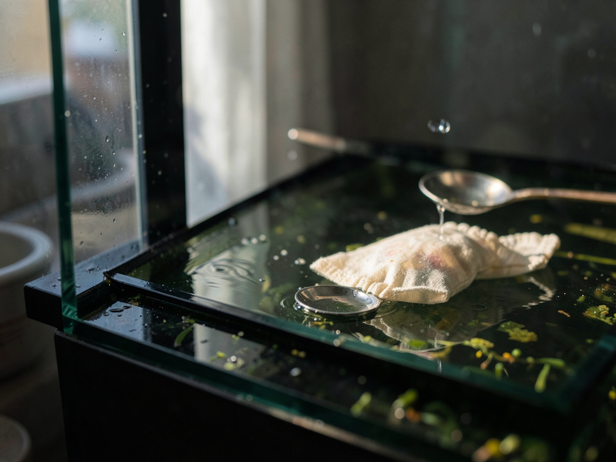
Gentle Acclimation Ritual
Image credit : AI
I'm using the floating method for fish acclimatisation, a crucial step when bringing new fish home.
What to do when you get home
Keep the bag sealed and float it on the tank surface as soon as you are home. Dim the tank light or cover it, a fish that has been in a dark bag for an hour and suddenly sees bright light on top of everything else is dealing with one more stressor it does not need. After fifteen to twenty minutes of floating, open the bag and begin adding small amounts of tank water at intervals. After another twenty to thirty minutes, use a net to transfer the fish into the tank. Do not pour the bag water in. The water from the shop carries whatever was in their system, bacteria, parasites, medication residue, and none of it belongs in your tank. The net is the boundary. Once the fish is in, leave the tank lights low for the rest of the day and resist the urge to watch it constantly. It needs quiet to find its bearings.
Signs the transition has gone wrong
A fish that acclimatises well will begin exploring within a few hours, even if cautiously. One that is struggling will show it: clamped fins held tight against the body, rapid gill movement, hiding without moving, or erratic swimming. These are signs of stress, and stress in a newly introduced fish often opens the door to ich or bacterial infection within the first week. If a fish is on its side, breathing at the surface, or showing white spots within twenty-four hours of introduction, the problem needs a vet who sees aquatic animals, not a home remedy and not a wait-and-see approach. Aquatic veterinary care is available in most Indian metros, and the earlier a sick fish is seen, the more options there are. The bag-floating step does not guarantee a healthy fish. It removes one large, preventable cause of early death and gives the animal the conditions it needs to show you how it is really doing.