A Saint Bernard weighing close to 100 kilograms once had his own sailor's cap, a service record, and a funeral with full naval honours. Bamse, the name means something close to 'teddy bear' in Norwegian, served aboard the minesweeper HNoMS Thorodd from 1940, after Norway fell to German occupation and the ship joined the Allied forces operating out of Scottish ports. What follows is not folklore. Bamse is one of the most documented animal mascots in military history, with contemporary accounts, photographs, and a bronze statue in Montrose, Scotland, where he is still remembered by the town.
How Bamse came to the navy
Bamse was owned by Erling Hafto, the captain of the Thorodd, and had lived with the Hafto family, including four children, before the war changed everything. When Hafto took command of the ship and joined the Free Norwegian Forces, Bamse came along. He was formally enlisted as ship's mascot and given a sailor's cap that sat between his ears. He wore it. Photographs from the period confirm this, and they are not staged: the cap appears in multiple images taken at different times and locations.
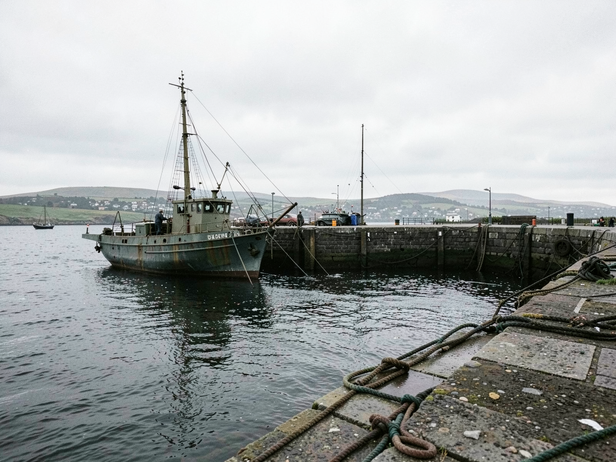
![Scottish Minesweeper at Dock]()
Scottish Minesweeper at Dock
Image credit : AI
A minesweeper at a Scottish dock, a silent sentinel from World War II, a testament to the dogs in World War II.
What the accounts say he actually did
The documented accounts of Bamse are specific enough to be worth stating plainly. He is recorded as having broken up at least one fight on the docks by placing himself between sailors. On one occasion, a crew member was confronted at knifepoint on shore; Bamse reportedly pushed the attacker into the water. He is also recorded as having herded sailors back to the ship before curfew, walking into a pub, collecting a man, and walking him back to the dock. These accounts come from crew members and were recorded while the events were still recent. They are the kind of specific, named-source recollection that distinguishes a documented case from a story that grew in the telling.
His life aboard the ship
Bamse had a steel helmet made for him after the Thorodd came under air attack, the crew wanted him on deck during action stations, and a helmet was the practical answer. He travelled between Dundee and Montrose regularly, and became well known in both towns. Local children knew him. He rode the local bus alone on at least one occasion, apparently familiar enough with the route that the driver let him on. The bus story has the quality of something too specific and too undignified to have been invented for effect.
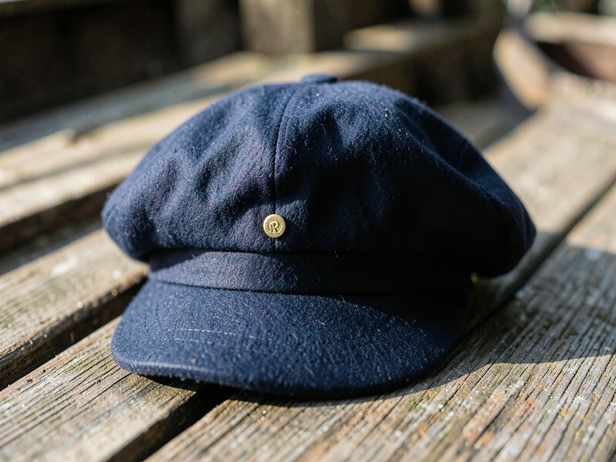
![Saint Bernard's Sailor Cap]()
Saint Bernard's Sailor Cap
Image credit : AI
A Saint Bernard's sailor cap, a nod to dogs in World War II, rests on a ship's deck.
His death and what came after
Bamse died in July 1944 in Dundee, of heart failure. He was buried with naval honours at Montrose, attended by Norwegian and British sailors. A bronze statue was unveiled in Montrose in 2006, funded jointly by Norway and Scotland, and a smaller replica stands in Honningsvåg, Norway, near where he was born. He was posthumously awarded the PDSA's Dickin Medal, the animal equivalent of the Victoria Cross, in 2006, sixty-two years after his death. The Dickin Medal is awarded only for documented acts of gallantry or devotion to duty; the PDSA's assessment of Bamse's record was that it met the standard.
The Thorodd's crew called him the biggest morale asset on the ship. That is the kind of claim crews make about mascots, and it is usually impossible to assess. What is assessable is the rest: the cap, the helmet, the funeral, the medal, the statue, and the bus. Taken together, they make Bamse one of the few animal figures in wartime history whose story does not need embellishment to hold attention.