The first time you try to get a dog into a cab in an Indian city, you learn quickly that the driver's willingness has almost nothing to do with the dog's size or temperament and almost everything to do with how ready you look. A carrier, a calm animal, and a confident owner signal that this will be a clean, uneventful ride. A dog on a loose leash, a nervous owner fumbling for an explanation, and no plan for the seat, that combination loses the negotiation before it begins.
Why short rides stress dogs more than long ones
Dogs regulate stress partly through predictability. A long car journey gives them time to settle into the motion and the smell of the vehicle. A short cab ride, ten minutes across a market, fifteen to the vet, ends before the dog has finished scanning for threat. The engine, the horns, the unfamiliar human in the front seat, the smell of the last passenger's food: each is a new input, and short rides stack all of them without giving the dog time to habituate. This is why a dog that travels fine on family road trips can still pant, drool, and tremble in a cab. The stress response is real and physiological, not a personality flaw. Knowing this changes what you prepare for: the goal is not to make the ride enjoyable, it is to make it short enough and calm enough that the dog's system does not tip into full alarm.
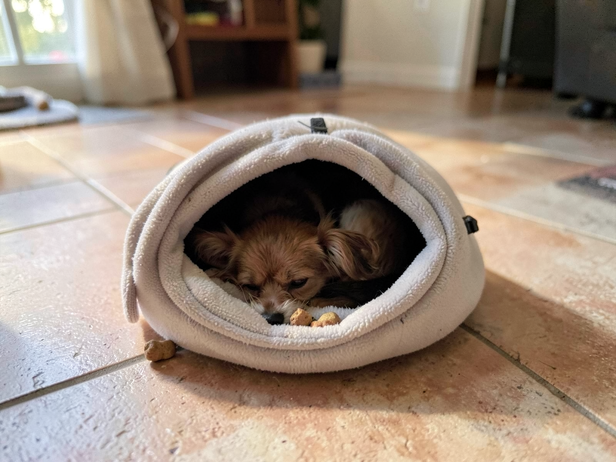
![Cozy Dog in Carrier]()
Cozy Dog in Carrier
Image credit : AI
My dog waits patiently in his carrier, ready for a short ride. Tips for pet travel in Indian cities are helpful!
The carrier question for autos and cabs
An auto-rickshaw and a cab present different physical problems. In an auto, a soft carrier that the dog fits into snugly can sit on your lap or on the floor between your feet, keeping the dog contained and giving the driver no reason to object. A hard crate rarely fits unless the auto is empty and you are willing to negotiate. In a cab, a carrier on the back seat with you beside it is the cleanest arrangement. The carrier door should face you so you can reach in and rest a hand on the dog if needed. A dog riding loose on a back seat in a moving vehicle can be thrown forward in a sudden stop, this is a safety issue, not just a comfort one. If the dog is too large for a carrier, a well-fitted harness clipped to the seatbelt anchor is the next best option. Check that the clip fits your specific harness before you need it.
Negotiating entry, what actually works
The driver sees a dog and calculates: mess, smell, a passenger who will argue if asked to leave, and a seat that may need cleaning before the next fare. Address those calculations directly, before he has finished forming them. Lead with the carrier if you have one, a dog already inside a closed carrier reads as contained and clean. Say the ride is short and the dog will not be on the seat. Offer to put a cloth or a foldable mat under the carrier. Keep the dog calm before you approach the vehicle; if the dog is already pulling and barking at the door, the driver's answer is decided. For apps-based cabs, the driver's policy varies by person and cannot be confirmed in advance through the app, call ahead once the ride is assigned, rather than discovering the problem at pickup. No airline, railway, or app-based service rule on pets can be stated here as current; confirm any formal policy directly with the provider before you rely on it.
![Pet Travel Essentials]()
Pet Travel Essentials
Image credit : AI
Preparing for pet travel short rides Indian cities with these essentials.
What to bring on every short ride
A small bag carried consistently takes the scramble out of every trip. A foldable mat or an old dupatta to lay under the carrier. A few treats the dog finds genuinely motivating, used before and after the ride, not during it, feeding a stressed dog in a moving vehicle often makes nausea worse. A small water bottle and a collapsible bowl for after, not during. A poo bag and a hand sanitiser, because a dog that is stressed may need to go the moment it exits the vehicle, and being ready for that is part of being a prepared owner. If the dog is prone to motion sickness, drooling, excessive yawning, reluctance to get in, mention it to your vet before the next ride. There are options they can discuss with you based on the dog's size, age, and health history.
Building a dog that rides better over time
A dog that has never been in a vehicle except for vet visits will associate the car with stress and needles. The association is learned and it can be changed, but it takes repetitions, not a single good experience. Start with the carrier at home: feed meals near it, then inside it, until the dog goes in voluntarily. Then sit in a parked cab or your own vehicle with the dog in the carrier, engine off, for a few minutes. Then a short drive around the block. Then a ten-minute errand. Each step adds a small amount of the stressor and pairs it with calm and reward. This is desensitisation, the learning principle is that repeated, low-intensity exposure without a bad outcome reduces the fear response over time. It takes weeks, not a weekend. A dog that still shows significant distress, refusing to enter any vehicle, vomiting on every ride, shaking for an hour after arrival, is worth a conversation with a vet or a qualified behaviourist, because the anxiety may need support beyond gradual exposure alone.