The instinct to keep going when a training session is going well is almost universal among dog owners. The dog just sat on cue three times in a row, why stop now? Because the fourth repetition is where the learning often starts to unravel, and the fifth is where the frustration sets in, for both of you.
Why a dog's focus window is shorter than you think
Dogs learn through a process called operant conditioning, behaviour followed by a consequence shapes whether that behaviour repeats. For that loop to work, the dog has to be paying attention when the consequence arrives. A marker, whether a clicker or a verbal "yes", is only useful if the dog is alert enough to connect it to what it just did.
That connection requires working memory, and working memory in dogs, as in most mammals, has a limited capacity before it needs to consolidate. Research in animal learning consistently shows that short, spaced practice sessions produce better retention than long, massed ones. The principle is called distributed practice, and it applies whether the subject is a border collie learning a recall or a person learning a new language.
In practical terms: most dogs, especially puppies and dogs new to a behaviour, can hold focused attention for roughly three to five minutes before the quality of their responses starts to decline. Adult dogs with a strong training history can sometimes sustain ten to fifteen minutes on familiar tasks, but even then, the ceiling is lower than most owners expect.
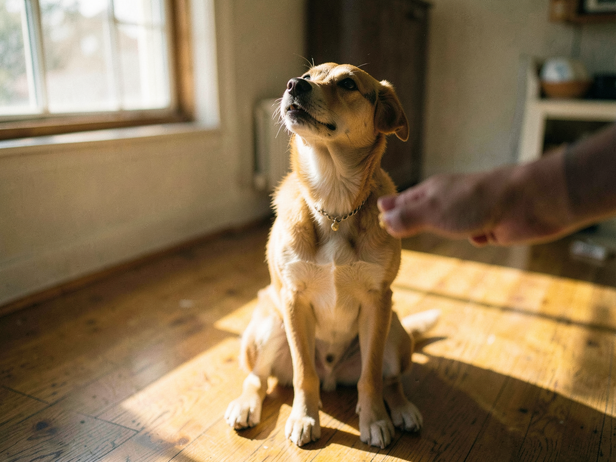
![Anticipation of a Treat]()
Anticipation of a Treat
Image credit : AI
Focused on the reward, I'm ready for my treat. This is a key moment in our dog training session.
What "losing focus" actually looks like
Owners often describe a dog "being stubborn" or "deciding not to listen" partway through a session. What they are usually watching is a dog that has hit its cognitive limit for that block of time. The signs are specific: responses slow down, the dog starts sniffing the ground or looking away, it begins offering behaviours it already knows instead of attempting the new one, or it starts making errors on cues it was getting right ten minutes earlier.
These are not attitude problems. They are the dog's nervous system signalling that it has reached its threshold for that session. Pushing through this point with repeated cues, raised voices, or withheld rewards does not teach the dog to focus longer. It teaches the dog that training is a source of pressure, which makes the next session harder to start.
How to structure sessions that actually build skill
The most effective structure is short blocks separated by genuine breaks. A three-to-five minute session, a five-to-ten minute break where the dog sniffs freely or rests, then another short block. Two or three of these across a day produces more durable learning than one twenty-minute session.
Within each block, the principle of positive reinforcement means the dog should be succeeding most of the time. A rough guide used by many trainers: aim for roughly eight correct responses for every two that need a prompt or a reset. If the ratio flips, if the dog is getting more wrong than right, the session has gone on too long, the criteria have been raised too fast, or both.
End every session before the dog's focus drops, not after. Ending on a correct response, even a simple one the dog knows well, means the dog's last experience of training that day was success. That is what it carries into the next session.
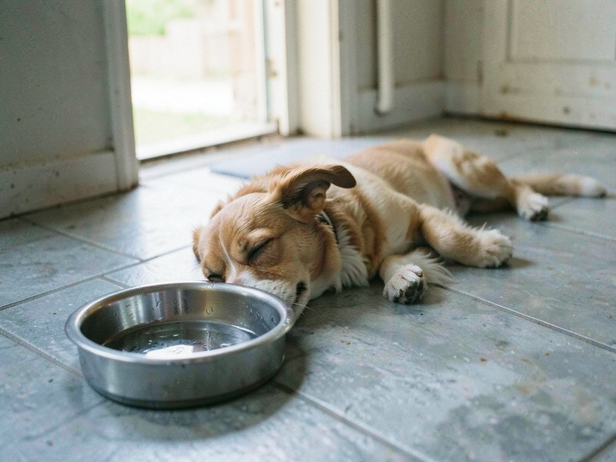
![Dog's peaceful rest]()
Dog's peaceful rest
Image credit : AI
Taking a break during short dog training sessions. Focus is key for success.
Puppies, older dogs, and high-arousal breeds
Puppies operate on an even shorter window than adult dogs, often two to three minutes for a very young puppy, with naps between sessions being as important as the sessions themselves. Sleep is when memory consolidates, so a puppy that trains, then sleeps, then trains again is learning more efficiently than one kept at it through tiredness.
Older dogs, particularly those showing signs of cognitive decline such as disorientation, reduced responsiveness, or changes in sleep patterns, may also have shorter effective windows and benefit from gentler, more familiar tasks. If an older dog that previously trained well starts struggling to follow known cues, a vet check is the right next step before attributing it to stubbornness or boredom.
High-drive breeds, working dogs, herding breeds, terriers, can sometimes sustain longer engagement, but high arousal is not the same as productive learning. A dog in an excited state is often moving faster than its ability to process feedback. Calm, focused attention produces better results than energetic enthusiasm, even in breeds bred to work all day.
If a dog is consistently unable to settle into a training session, shows anxiety, redirects onto objects or people, or displays any form of aggression during training, that is a signal to stop and consult a qualified trainer or veterinary behaviourist before continuing. Reward-based methods work because the dog is a willing participant. When that willingness is absent, the reason needs to be found, not overridden.