Around five to seven months, many owners notice their dog's mouth is back in business. The puppy biting they managed in the first weeks seemed to settle, then returned with more force and less predictability. This is adolescent mouthiness, and it is one of the most common reasons dogs this age get labelled difficult. It is not a training failure. It is a developmental event with a specific shape, and it responds well to consistent work once you understand what is driving it.
Why mouthiness returns at this age
Two things happen around six months that together make a dog's mouth more active. The first is teething. Adult teeth are pushing through, the gums are sore and pressurised, and chewing and mouthing relieve that discomfort in the same way a human infant chews on anything available. The second is hormonal. Adolescence in dogs brings a surge of sex hormones, even in dogs scheduled for sterilisation, that raises arousal levels and lowers impulse control. A dog who had learned to sit calmly when excited now struggles to hold that behaviour when the same hormones that are reorganising his brain are also telling him to move, interact, and use his mouth. These two forces overlap almost exactly at the six-month mark, which is why the behaviour feels like it comes out of nowhere.
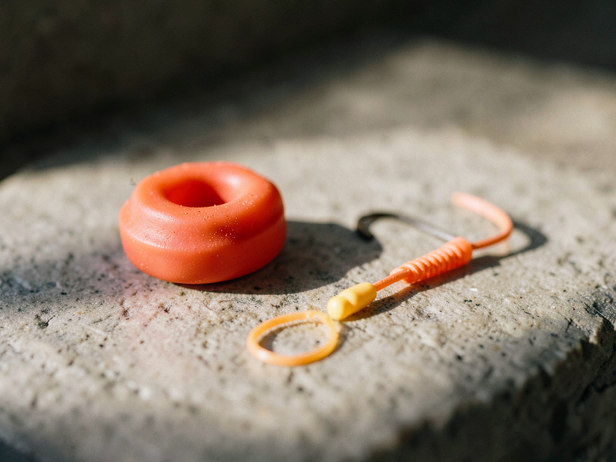
![Chew Toy and Lead]()
Chew Toy and Lead
Image credit : AI
Morning light illuminates a chew toy and lead, essential for adolescent dog mouthing training.
What the mouthing actually looks like
Adolescent mouthing is different from puppy nipping in a few ways worth recognising. It tends to happen at peak excitement, when the lead comes out, when a visitor arrives, when play escalates. The dog is not being aggressive; his bite inhibition is usually intact, meaning he is not biting down hard. What has slipped is the threshold at which he can stop himself from using his mouth at all. He is over his arousal threshold and mouthing is what comes out. Owners sometimes describe it as the dog being grabby with hands, sleeves, or trouser hems. It can also look like jumping followed immediately by a mouth on an arm. The dog is not trying to hurt anyone. He has lost access, temporarily, to the calmer behaviour he does know.
The learning principles that fix it
Two principles do most of the work here: threshold management and positive reinforcement of an incompatible behaviour. Threshold management means keeping the dog below the arousal level where self-control collapses, then practising the calm behaviour at that lower level until the dog can hold it slightly higher. If the lead causes a mouthing explosion, pick the lead up ten times a day without going anywhere, reward four paws on the floor each time, and only clip it on when the dog is already settled. You are lowering the emotional charge of the trigger before you ask for the behaviour you want. The incompatible behaviour is whatever the dog physically cannot do at the same time as mouthing, sitting, holding a toy, nose-targeting a hand. When you feel the dog's arousal climbing, give him something to do with his mouth that is not you. A long rubber chew toy handed over the moment he begins to orbit your legs redirects the oral pressure onto something appropriate and rewards him for taking it calmly. Over time, the toy becomes the dog's own cue that excitement is here and this is how we handle it.
![Calm Young Dog Poses]()
Calm Young Dog Poses
Image credit : AI
This adolescent dog mouthing phase is temporary. Patience and training are key.
What not to do, and why it makes things worse
Punishment-based responses, pushing the dog away, grabbing his muzzle, saying a sharp no, or leaving the room abruptly, tend to spike arousal further or teach the dog that hands near his face predict something unpleasant. Neither outcome helps. Yelping, which is often recommended for puppy bite inhibition, rarely works at this age because the adolescent dog is not nipping by accident; he is mouthing because he is over threshold, and a yelp can read as exciting rather than corrective. Time-outs can work if they are calm, immediate, and brief, thirty seconds behind a baby gate, no drama, but they work by removing the reinforcement of interaction, not by punishing the dog. Consistency matters more than the specific technique. A dog who gets a time-out from one family member and excited wrestling from another is being given contradictory information about what mouthiness produces.
How long this phase lasts
Adolescence in dogs runs roughly from five or six months to eighteen months, sometimes longer in large and giant breeds. The mouthiness itself tends to peak early in that window and ease as the hormonal surge settles and the adult teeth finish coming in, usually by seven to eight months. Dogs who are sterilised during this period often show a reduction in hormonally driven arousal within a few weeks of the procedure, though sterilisation is not a substitute for training. Regular daily practice of threshold work and incompatible behaviours shortens the difficult period noticeably. Most owners who work consistently for three to four weeks see a clear shift. If the mouthing is hard enough to break skin, if it is accompanied by stiff body posture or a fixed stare, or if it is happening in contexts that do not involve excitement, resource guarding, being approached while resting, that is a different picture and warrants a session with a qualified trainer or veterinary behaviourist before the behaviour becomes established.