A parrot wearing a harness and stepping outside for the first time is not a single event. It is the last step in a sequence that starts indoors, moves slowly, and earns the bird's trust at every stage. Skip any part of that sequence and the harness becomes a source of fear rather than freedom.
Why harness training matters for parrots
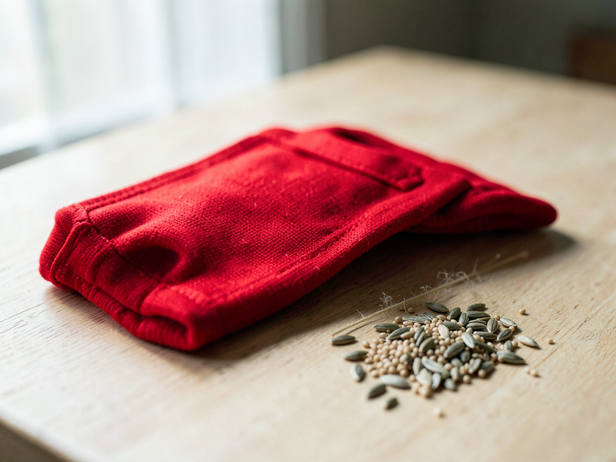
![Parrot Harness & Seeds]()
Parrot Harness & Seeds
Image credit : AI
A bright red Aviator parrot harness, ready for safe outdoor time. Includes sunflower seeds and millet spray.
Even a clipped parrot can catch a gust and be carried out of sight. A fully flighted one can vanish in seconds. Unlike a dog, a parrot in an unfamiliar outdoor environment is in genuine danger, from raptors, from traffic, from the simple fact that wild birds of the same species will not recognise it as one of their own. A well-fitted harness on a bird that has been trained to accept it is the only way to give a parrot real outdoor exposure without that risk. It also gives the bird something it needs: sunlight, moving air, and sensory variety that no indoor space can replicate.
Choosing the right harness
The two designs most commonly used are the Aviator harness and the flight suit. For most parrot owners starting out, the Aviator is the more practical choice, it is adjustable, sized by species, and attaches without needing to thread the bird's wings through loops. Sizing matters more than brand. A harness that is too loose can be stepped out of; one that is too tight restricts breathing. For medium parrots such as conures, caiques, and small amazons, the small or extra-small sizes are usually correct; for African greys, Eclectus, and similar birds, a medium; for macaws and large cockatoos, a large or extra-large. Confirm the fit with the manufacturer's chart for your bird's species, not just its weight, because body shape varies significantly across parrots.
Stage one: making the harness familiar
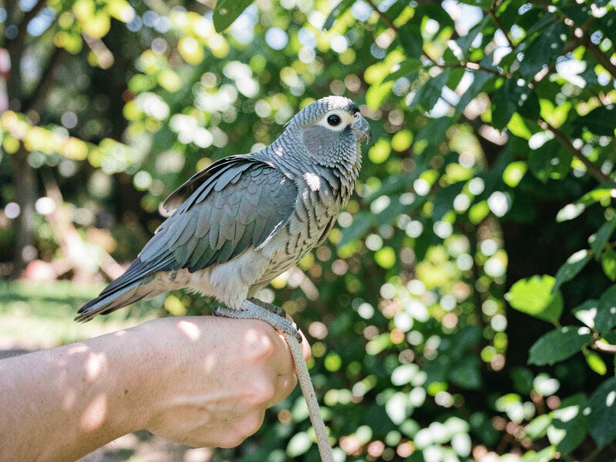
![Parrot on Forearm, Garden Light]()
Parrot on Forearm, Garden Light
Image credit : AI
A parrot enjoys safe outdoor time, alert and curious in a tranquil garden setting. Subtle film grain adds a natural feel.
Before the harness touches the bird, it needs to be part of the room. Leave it near the perch for several days. Let the bird investigate it, step on it, chew it if it wants to. Pair its presence with something the bird genuinely values, a favourite food, a scratch, a game. The goal at this stage is a simple association: harness nearby, good things happen. This stage takes as long as it takes. A nervous bird may need two weeks. A confident one may be ready to move on in three days. Do not rush it. A bird that has been forced into a harness once will be harder to train than one that was never rushed at all.
Stage two: touching and wearing
Once the bird is comfortable with the harness as an object, begin touching it to the bird's body during calm, positive interactions. Touch the neck, the chest, the back of the wings, the areas the harness will contact, while treating and praising. When the bird accepts this without stepping away or showing stress signals (feathers slicked tight, eyes pinned, beak raised), begin threading the harness loosely. Do not fasten it yet. Just let the bird feel the weight and the contact. Fasten it only when the bird is eating from your hand or clearly relaxed. The first time it is fully on, keep the session under two minutes. Build duration across days, not hours. Stress signals during wearing, freezing, biting at the harness, laboured breathing, mean the harness is too tight or the session is too long. Stop, remove it calmly, and go back a step.
Stage three: the first outdoor session
The bird should be wearing the harness comfortably indoors for at least ten to fifteen minutes before the first outdoor session. The first outdoor outing should be short, five minutes, in a quiet spot with no dogs, no loud vehicles, and no other birds visible overhead. Hold the leash close. Watch the body language constantly: a parrot that is curious will hold its feathers loosely, look around, and move toward new things. A parrot that is overwhelmed will crouch, pin its feathers flat, or try to climb back onto your shoulder and stay there. Both responses are normal on the first outing. The second response means the session ends immediately. Go back inside, give the bird something it likes, and try again in a few days with an even shorter session. Outdoor time builds in the same incremental way the harness training did. Most birds reach a comfortable fifteen to twenty minutes of genuine outdoor exploration after four to six weeks of consistent short sessions.
What to watch for and when to stop
Harness training works best with parrots that already have a solid relationship with their owner and a baseline of positive reinforcement training, they understand that stepping up, targeting, and staying calm on a hand are rewarded behaviours. A bird that is already fearful, that bites during handling, or that has never been trained with positive methods is not a good candidate to start with harness work. Address those foundations first, ideally with the help of a certified parrot behaviour consultant or an avian vet who can assess whether the bird's stress responses have a physical component. Heat is the other variable that matters outdoors. Parrots cannot sweat. On days above 35°C, keep outdoor sessions very short and stay in shade. If a bird is panting, holding its wings away from its body, or appears lethargic after outdoor time, bring it inside immediately and contact an avian vet, these are signs of heat stress, not normal tiredness. The harness itself is not the point. What it makes possible, a bird that can share the outside world with you without either of you spending the session in fear, is what the weeks of patient work are building toward.