A cockatiel that steps away from your hand, bites when you reach into the cage, or refuses to come out is not being stubborn. It is being a prey animal with no reason yet to trust a large moving object near its body. Target training gives it a reason: touch this stick, get a treat, nothing bad happens. Once that loop is solid, you can use the same stick to guide the bird anywhere you need it to go.
What target training actually is
The learning principle is positive reinforcement paired with a marker. You present a target, in this case, the tip of a chopstick, and the moment the bird's beak touches it, you mark that exact instant with a short sound (a click from a clicker, or a sharp word like "yes") and immediately follow with a small food reward. The mark tells the bird which behaviour earned the treat. Without it, the bird is guessing. With it, the connection between touch and reward is precise enough that most cockatiels understand the game within a single short session.
Target training does not teach the bird to like you. It teaches the bird that interacting with you produces good things, and liking tends to follow from there. The chopstick becomes a neutral bridge between your hand and the bird's beak, less threatening than a finger, easier to control than a perch.
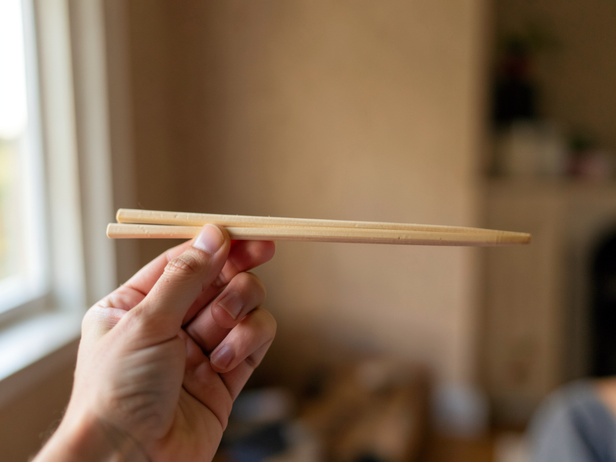
![Chopstick Held at Arm's Length]()
Chopstick Held at Arm's Length
Image credit : AI
Practicing cockatiel target training with a chopstick. Positive reinforcement is key for success.
What you need before you start
A plain wooden or bamboo chopstick works well. The tip is rounded, easy to present at different angles, and has no smell that will confuse the bird. Avoid painted or lacquered chopsticks. Cut a small piece of electrical tape around the tip if you want a clearer visual contrast against a pale background, but most cockatiels will orient to the stick without it.
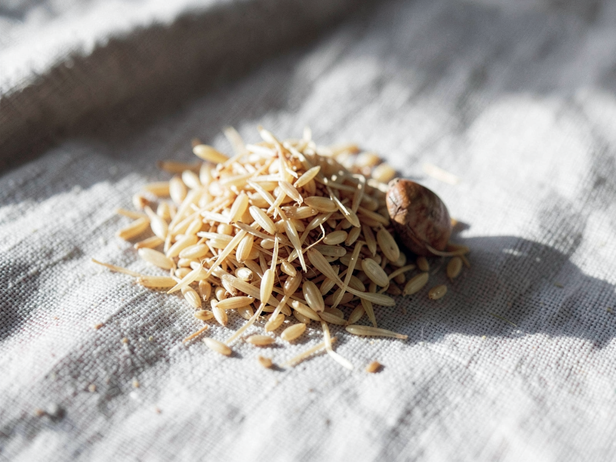
For treats, use something the bird does not get in its regular bowl. A small sliver of millet spray, a single pine nut, or a thin piece of almond works. The treat must be small enough to eat in two seconds, if the bird is busy chewing, the training moment is gone. Identify what your bird finds genuinely exciting before the first session; a treat that gets ignored is not a reward.
Keep sessions to three to five minutes. Cockatiels lose focus quickly, and a bored bird starts making mistakes that undo earlier learning. Two short sessions a day produce faster results than one long one.
The steps, in order
Start outside the cage if the bird is already comfortable coming out, or inside if it is not. Sit at the bird's level. Present the chopstick tip about three centimetres from the bird's beak and wait. Do not push it toward the bird. Do not wave it. Hold it still and let curiosity do the work.
Most cockatiels will lean toward the stick within thirty seconds. The moment the beak makes contact, even a light sniff counts at this stage, mark and treat. Return the stick to your side, pause two seconds, and present again. Repeat until the bird is touching the stick reliably on presentation. This stage typically takes one to three sessions, though a very nervous bird may need a week of short daily sessions just to stop retreating from the stick.
Once the touch is reliable, begin moving the stick slightly before presenting it. Hold it two centimetres to the left of where the bird is sitting, so it has to lean or shift its weight to reach it. Mark and treat the moment it does. Gradually increase the distance until the bird is taking one step, then two, then walking across a perch to touch the target. This step-following stage is where the practical use of target training begins, you are now guiding the bird's movement without touching it.
The final stage is using the target to guide the bird onto your hand. Position your hand palm-up as a perch, hold the chopstick just above it so the bird must step onto your hand to reach the tip. Mark and treat the moment all four toes are on your hand, not when the bird leans. This distinction matters: you want feet on hand, not just a stretch.
![Millet and Pine Nut Still Life]()
Millet and Pine Nut Still Life
Image credit : AI
I'm setting up a simple scene for cockatiel target training, featuring millet spray and a pine nut.
When it stops working
If the bird touches the stick but ignores the treat, the treat is wrong. Try a different food. If the bird was eating the treat yesterday and refuses it today, it may be full, train before the main meal, not after. If the bird touches the stick but bites your hand when you try the step-up stage, you moved too fast. Go back to target-following on the perch for another few sessions before reintroducing the hand.
A bird that hisses, flattens its feathers, or backs away from the stick entirely is over its threshold, the situation feels too threatening to learn anything. Shorten the session, increase distance, and let the bird set the pace. Pushing past a threshold does not speed up training; it teaches the bird that ignoring the stick makes the scary thing go away, which is the opposite of what you want.
If the bird bites the chopstick aggressively rather than touching it gently, that is fine at the beginning, contact is contact. Gentle touches tend to emerge on their own once the bird understands the game, because a gentler touch is easier and gets the same reward. If biting escalates to lunging or the bird is showing signs of distress beyond normal wariness, a qualified parrot behaviourist or an avian vet is the right next step before continuing.
Keeping the skill sharp
Target training is not a one-time lesson. A cockatiel that has not seen the chopstick in two months will likely need a refresher session or two before the behaviour is crisp again. Run a short session once a week even after the bird has the skill, and use the target whenever you need to move the bird from one place to another rather than reaching in and grabbing it. The chopstick becomes a standing communication tool, not just a training prop.
The chopstick also generalises. Once a bird understands that touching a target produces a reward, it can learn to touch other targets, a coloured disc, a small ball, a specific perch, and those can become cues for other behaviours. Target training is less a trick than a shared language, and the chopstick is where that language starts.