A dog that fights the shower is not being stubborn. It is doing exactly what any animal does when something loud, wet, and inescapable appears without warning: it tries to leave. The good news is that the shower itself is rarely the problem. The problem is that the dog never had a chance to decide the shower was safe. That is fixable, and the fix is methodical.
Why dogs resist bathing, and what that tells you about the fix
The resistance is almost always rooted in one of three things: the sound of running water, the sensation of being restrained while wet, or a previous bath that went badly and got stored as a reliable prediction of discomfort. In some cases, a dog with ear sensitivity or a skin condition finds water genuinely uncomfortable, which is worth ruling out with a vet before training begins. For the majority, though, the cause is simpler: no prior positive association was ever built. Desensitisation, the process of exposing a dog to a trigger at a low enough intensity that it stays below the threshold of fear, is the core principle here. Pair that with counter-conditioning, where the trigger predicts something the dog actively wants, and you have the complete method. Neither requires any force, and force will undo both.
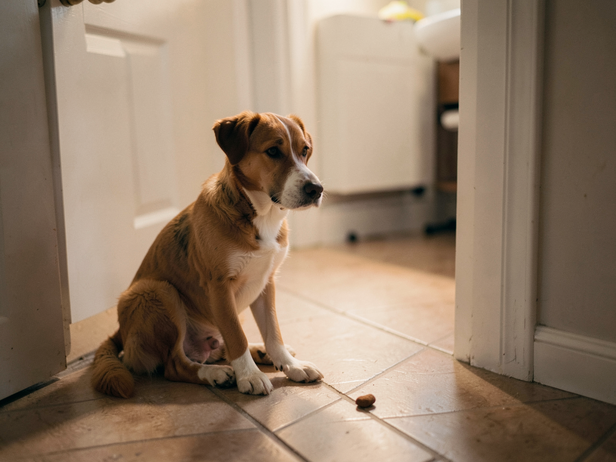
![Patiently Waiting for a Treat]()
Patiently Waiting for a Treat
Image credit : AI
Hoping for a treat after my bath. Stress-free dog bathing at home is the goal!
Before the water: building a good association with the bathroom itself
Start outside the shower entirely. For several sessions, simply walk your dog to the bathroom door, drop a high-value treat on the floor, and walk away. The dog learns: bathroom door predicts good things. Next, step inside with the dog, treat, and leave. Then sit on the floor in the bathroom with the dog and a handful of treats, doing nothing else. The goal is a dog who walks into the bathroom without hesitation and looks at you expectantly. Do not move to the next step until you have this. Rushing is the most common reason the method fails.
Introducing the shower in stages
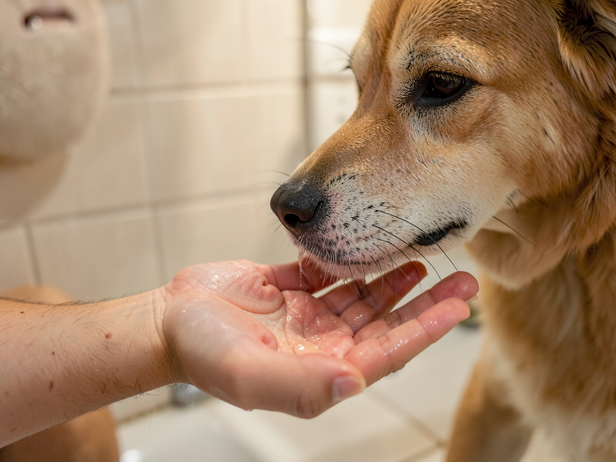
Turn the shower on, without the dog in it, and let the dog investigate the sound from outside the cubicle or tub. Treat every calm glance toward the running water. When the dog is comfortable near the running water, introduce a wet hand: let the dog sniff and lick a wet palm, then treat. Progress to touching the dog's paws with a wet hand, then the legs, then the back. Each stage needs repetition across multiple short sessions, five minutes is enough, before you move forward. A marker word or a clicker makes timing precise: the moment the dog accepts the touch without pulling away, mark it and reward. If the dog stiffens, turns away, or tries to leave, you have moved too fast. Go back one step and stay there longer.
![Gentle Dog Bath Training]()
Gentle Dog Bath Training
Image credit : AI
I'm practicing dog bath training, making desensitisation for dogs in Indian flats a calm experience.
The first real bath, and how to run it
When the dog will stand in the shower tray with the water off and take treats calmly, you are ready. Use lukewarm water and keep the pressure low. Wet one paw, treat. Wet the other, treat. Work up the legs before touching the body. Keep a treat delivery rate high enough that the dog is focused on you rather than the water. Avoid the face and ears until the dog is consistently calm everywhere else. A non-slip mat on the shower floor matters: a dog that slips once in the shower may need weeks of work to recover the association. Dry the dog thoroughly and immediately after, because a cold, damp dog leaving the bathroom is a negative end to an otherwise positive session. End every bath before the dog shows stress, not after.
When the training is not working
If the dog is shaking, panting, refusing food, or trying hard to escape at any stage, stop. A dog that will not take treats in a given context has crossed its stress threshold and is no longer able to learn. That session is over. Note which step triggered it and spend the next several sessions well below that point. If the fear is severe, the dog is injuring itself trying to get away, or the panic persists long after the session ends, a qualified trainer or veterinary behaviourist is the right next step, not a firmer approach. Some dogs carry a fear response that needs professional assessment before training can make progress. Pushing through fear does not resolve it; it deepens it.
The eight steps above are not a shortcut to a dog who loves the shower. They are a map to a dog who tolerates it calmly, which is the realistic and genuinely useful goal. A dog trained this way will still not queue up for bath time. But it will stand still, take its treats, and walk out without either of you having a bad morning.