Most dogs do not choose to settle because they are tired. They settle because they have learned that settling pays. Without that association, an evening on the sofa becomes a negotiation, you ask, the dog wanders, you ask again, the dog sits for thirty seconds and then finds something more interesting. The 'go to bed' cue ends that loop by giving the dog a specific behaviour to perform and a specific place to perform it.
The learning principle at work
The method here is positive reinforcement combined with marker training. The dog hears a marker, a click or a short word like 'yes', at the exact moment it does the right thing, and a reward follows immediately. The marker bridges the gap between the behaviour and the treat, so the dog learns precisely what earned the reward rather than guessing. Timing is everything. A marker that lands two seconds late teaches the dog that whatever it was doing two seconds later is the thing that pays.
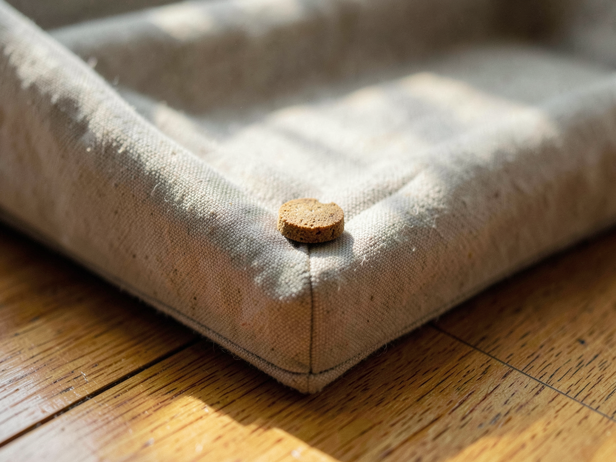
![Dog Treat on Bed]()
Dog Treat on Bed
Image credit : AI
A simple reward for a good dog, encouraging them to go to bed.
Step 1 and 2, Build the bed as a rewarding place
Before adding any cue, the bed itself needs to mean good things. Place the bed in a low-traffic corner of the room. Drop a treat on it with no instruction. Let the dog find it. Repeat five or six times across one session. The dog is learning that the bed produces food without being asked. Once the dog starts moving toward the bed with some enthusiasm, add the second step: wait for all four paws on the bed, mark the moment they land, and reward. Do not lure the dog onto the bed with a treat held in front of its nose. Luring teaches the dog to follow a hand, not to make a choice. The goal is a dog that offers the behaviour, which makes it far more reliable later.
Step 3 and 4, Add the cue and build duration
The cue goes in only after the dog is offering the behaviour consistently, meaning it walks to the bed and gets on without prompting in most repetitions. Say 'bed' or 'place' in a calm, flat tone just before the dog moves toward it. Do not say it while the dog is standing still hoping something will happen. The cue predicts the behaviour; it does not produce it yet. After five or six successful repetitions with the cue, begin building duration. Mark and reward the dog for staying on the bed for progressively longer periods: two seconds, then five, then ten, working up gradually over several sessions. If the dog gets up before you mark, say nothing. Wait for it to return, then restart the duration count. Punishing a dog for getting up creates anxiety around the bed, which is the opposite of what evenings need.
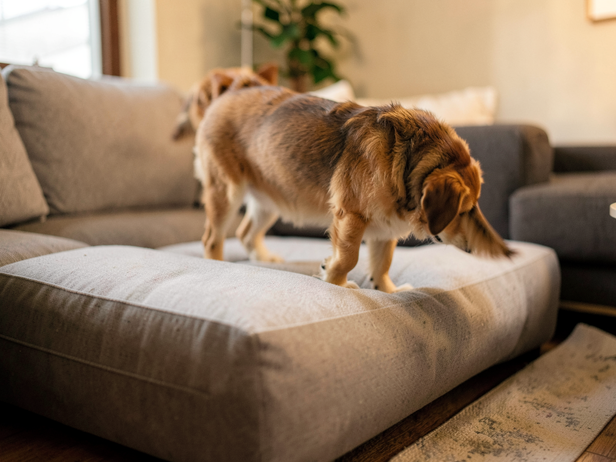
![Dog approaches cozy bed]()
Dog approaches cozy bed
Image credit : AI
I'm learning to 'go to place' training, settling down on my bed. This helps calm my evenings.
Step 5, Proof it in real evening conditions
Duration in a quiet training session is not the same as settling when the television is on and someone is moving around the kitchen. Proof the behaviour by practising during actual evenings, starting with short durations and rewarding heavily. Place the bed where the dog can see the family. A dog sent to a bed in a back room is being isolated; a dog settled near the action is choosing to be calm in the middle of life. Reward intermittently once the behaviour is solid, every third or fourth stay, varying the timing so the dog cannot predict when the treat is coming. Unpredictable rewards maintain behaviour better than predictable ones.
When it is not working
If the dog keeps getting up despite consistent training, consider two things before assuming the dog is being stubborn. First, duration may have been increased too fast. Drop back to a duration the dog can succeed at and rebuild. Second, the bed itself may be uncomfortable. A dog with joint pain, which is common in older dogs and in some breeds, will not choose to lie on a hard or thin surface when the carpet is softer. If a dog that previously settled well starts refusing the bed or seems stiff when getting up, that is a reason to call a vet rather than train harder. Persistent restlessness that appears suddenly in an otherwise settled dog, pacing, inability to lie down, repeated position changes, can signal pain or a medical issue and deserves a vet check before any training response. A qualified trainer or veterinary behaviourist is the right next step if the dog shows any anxiety, reactivity, or guarding around the bed area.