A puppy that cries through the night is not being difficult. Until a few days ago, it slept in a pile with its littermates, regulated its body temperature against warm bodies, and woke to the sound of breathing around it. Your flat is quiet, the floor is cold, and it is alone. The crying is a survival signal, not a behaviour problem. Understanding that changes how you respond, and how quickly the puppy learns that its sleeping space is safe.
Set up the sleeping space before the puppy arrives
A crate or a pen placed in a low-traffic corner of one room gives the puppy a consistent anchor. Line it with something that holds scent, an unwashed T-shirt works, so the space smells familiar from the first night. The crate should be just large enough for the puppy to stand, turn, and lie down. Too much space and it will use one end as a toilet, which sets back toilet training and makes the space feel less den-like. Cover three sides with a light cloth to reduce visual stimulation without blocking airflow. Set this up at least a day before the puppy comes home so the smells settle.
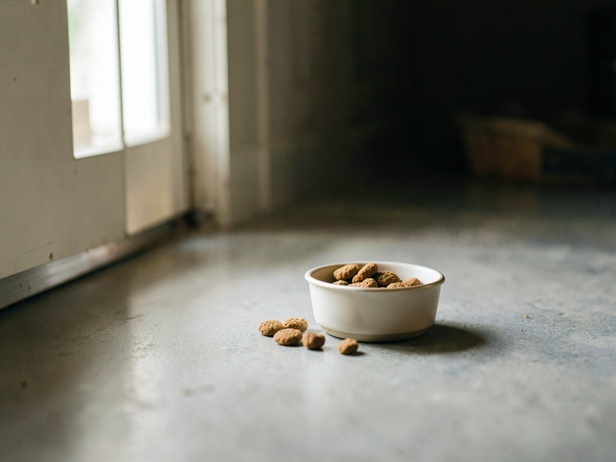
![Morning Kibble by the Crate]()
Morning Kibble by the Crate
Image credit : AI
My puppy's morning meal awaits, a gentle start to the day. Ready for puppy crate training at night.
Tire the puppy out before bedtime, within its limits
A puppy that has been mentally and physically active in the two hours before bed settles faster than one that has been resting. Short play sessions, a brief sniff walk if it is vaccinated and old enough, or a ten-minute training session using its kibble as reward all count. Do not push past the point where the puppy is panting, stumbling, or losing focus, that is over-stimulation, not tiredness, and it will make settling harder. End the session calmly. A high-energy game right before lights out raises arousal and delays sleep.
Use a consistent wind-down routine every night
Puppies learn sequences quickly. A fixed order, last toilet trip, a small drink of water, into the crate, a chew or a lick mat for five minutes, lights low, signals that sleep is coming. Within a week, most puppies begin to show calm anticipatory behaviour when the sequence starts. Keep the routine short, under fifteen minutes, and do it at the same time each night. Variation in timing is one of the most common reasons puppies take longer to settle; the body clock cannot anchor to a moving target.
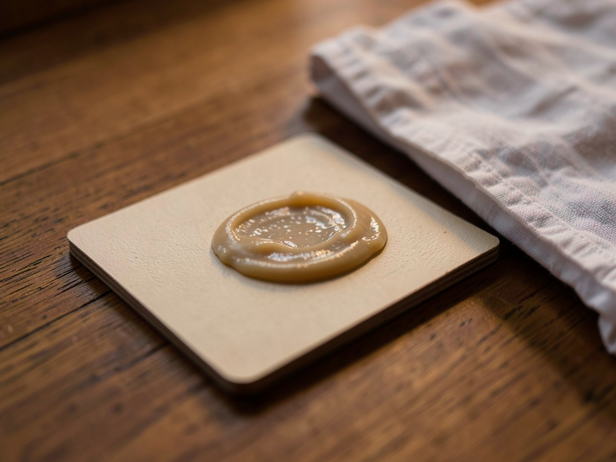
![Evening Paste Treat]()
Evening Paste Treat
Image credit : AI
A moment of calm before sleep training. This paste helps my puppy settle.
Place the crate where the puppy can sense you
The most common mistake in the first week is putting the crate in a separate room to avoid the noise. This extends the settling period significantly. For the first two to four weeks, place the crate next to your bed or just outside the bedroom door. The puppy can hear your breathing and smell that you are near. Once it is sleeping through consistently, move the crate in small increments, a metre every few nights, toward its permanent location. Rushing this step is the single most reliable way to restart the whining.
Respond to night waking correctly
Young puppies under twelve weeks cannot hold their bladder through the night. A single night toilet trip, calm, lights low, no play, straight back to the crate, is necessary, not a reward for crying. Wait for a brief pause in the whining before you go to the crate. Going in at the peak of the noise teaches the puppy that louder crying brings a faster response. If the puppy wakes, cries briefly, and then quiets on its own, do not go in, it is learning to self-settle, which is exactly what you want. Keep a simple log of wake times for the first two weeks; most puppies naturally push the gap longer as bladder capacity grows.
Make the crate rewarding during the day
Night settling is easier when the crate already means good things. Feed meals inside it with the door open, scatter kibble at the back so the puppy walks in voluntarily, and drop treats through the top whenever the puppy rests inside without being asked. Never use the crate as a punishment. A puppy that associates the crate with being sent away will resist it at bedtime; one that chooses to rest in it during the day will settle into it at night with far less protest.
Know when the routine is not working
Most puppies show clear improvement within ten to fourteen nights. If the whining is getting louder rather than shorter, if the puppy is not eating or drinking normally, or if it is showing signs of distress during the day, pacing, refusing to settle anywhere, not playing, those are reasons to speak to a vet to rule out a physical cause, and then to a qualified trainer or veterinary behaviourist if the vet finds nothing. Separation-related distress that does not respond to a consistent routine is a specific condition with specific interventions; it is not fixed by waiting it out longer.