Parrots are wired to be loud. In the wild, contact calls keep a flock connected across a canopy, a bird that goes quiet is a bird in trouble. Bring that animal into a flat, and the same instinct runs on the same logic: scream until someone responds. The problem is not the parrot. The problem is that screaming has been working.
Why the screaming keeps happening
Attention-seeking screaming is maintained by intermittent reinforcement, the most powerful learning schedule known. Every time you walked into the room to tell your parrot to stop, or covered the cage, or even just made eye contact, the bird logged it: screaming produces a response. It does not matter that the response was frustration. Social contact of any kind is the reward. The scream got louder and more persistent because intermittent reward, sometimes it works, sometimes it doesn't, makes a behaviour far harder to extinguish than one that is rewarded every single time.
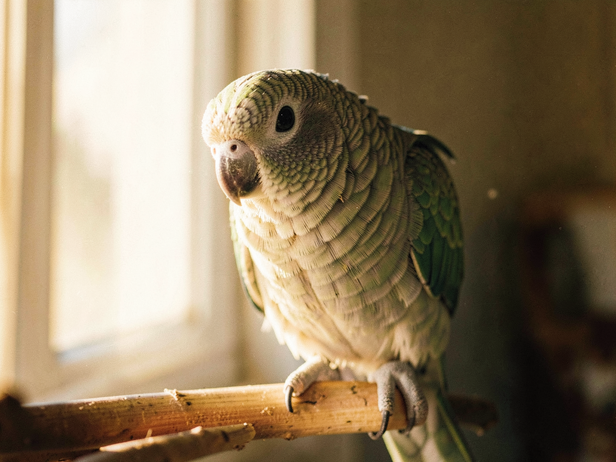
![Golden Parrot in Morning Light]()
Golden Parrot in Morning Light
Image credit : AI
I capture a parrot's quiet moment, its feathers illuminated by warm morning light. This image highlights true-to-life feather texture.
Step 1: Identify what the bird is actually asking for
Before changing anything, watch for three days. Note when the screaming happens: first thing in the morning, when you leave the room, when the household goes quiet, when it can see you but cannot reach you. Most attention screams cluster around one or two triggers. A bird screaming at dawn has a different need from one that screams the moment you pick up your phone. Knowing the trigger tells you what to replace the screaming with, which is the whole job.
Step 2: Teach a contact call before you extinguish the scream
You cannot take a behaviour away without giving the bird something else that works. Choose a short, distinct sound, a whistle, a word, a soft two-note call, and use it yourself every time you leave the room. When the bird produces any version of it back, return immediately and give calm, positive attention: a few seconds of talking, a scratch on the head, a small piece of fruit. You are installing a quieter communication channel. This step takes one to three weeks of consistent practice before it is reliable enough to carry the next step.
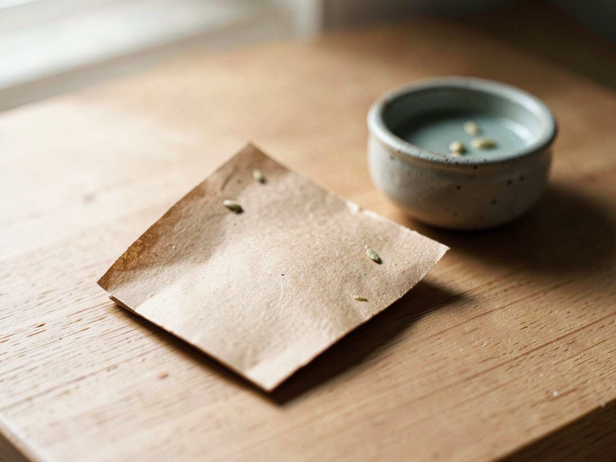
![Foraging Toy with Seeds]()
Foraging Toy with Seeds
Image credit : AI
My parrot's foraging toy, a simple paper square with seeds, awaits. I'm training its attention-seeking behaviour.
Step 3: Stop responding to screaming entirely
Once the contact call is working, withdraw all responses to screaming. This means no eye contact, no raised voice, no walking toward the cage, no covering it. Leave the room if you were in it. Return only when there is a pause, even two seconds of quiet counts at the start. This is extinction: removing the reinforcer that maintained the behaviour. Extinction produces an extinction burst first, the screaming will get worse before it gets better, sometimes significantly worse, for a few days. This is normal and means the process is working. If you give in during the burst, you have just taught the bird that screaming harder is the correct strategy.
Step 4: Reward quiet proactively, not reactively
Most owners only interact with their parrot when it demands it. Flip this. Walk to the cage when the bird is calm and quiet, offer attention before it asks. A parrot that gets reliable, unprompted social contact throughout the day has less reason to escalate. Schedule four or five short interactions, two to five minutes each, spread across your day. Predictability reduces anxiety, and anxiety is often what tips contact calls into screaming.
Step 5: Audit the environment for unmet needs
A parrot screaming from boredom or under-stimulation will not respond to training alone. Check: how many hours is the bird outside the cage each day? Does it have foraging opportunities, food hidden in paper, inside a paper cup, wrapped in a palm leaf, rather than food sitting in a bowl? Does it have objects to shred, manipulate, and destroy? African greys, cockatoos, and Amazon parrots need two to four hours of active out-of-cage time and consistent foraging to stay behaviourally stable in a flat. If the environment cannot provide this, the screaming is a welfare signal, not a training problem.
Step 6: Know when to bring in a qualified behaviourist
If the screaming is accompanied by feather-destructive behaviour, self-injury, aggression, or has persisted for more than six weeks without any reduction despite consistent training, contact a certified parrot behaviourist or an avian vet. Some screaming has a medical root, pain, respiratory discomfort, hormonal changes, and a vet check is the right first step whenever the behaviour changes suddenly or is paired with any physical sign. A behaviourist can observe the bird in its actual environment and adjust the approach in ways a written guide cannot.
Screaming that started as a contact call and became a habit did not develop overnight, and it will not resolve overnight. The mechanism is simple, remove the reward, install a replacement, make quiet more valuable than loud, but the timeline is weeks, not days. Consistency across everyone in the household is the variable that determines whether the training holds.