A dog that clamps its mouth shut the moment you reach toward its face isn't being difficult. It's responding exactly as an animal should when something unfamiliar moves toward a sensitive part of its body. The goal of toothbrush training isn't to overpower that instinct, it's to replace it, slowly, with a conditioned association between the brush and something the dog genuinely wants.
Why staged training works better than just starting
Desensitisation works by breaking a threatening stimulus into steps so small that the dog's stress response never fully activates. Each step is repeated until the dog is relaxed and anticipating reward before you move to the next one. Skip steps and you get a dog that tolerates the brush badly, or not at all. The learning principle is straightforward: pair each new stage with high-value food, mark the moment of calm with a consistent signal (a word like "yes" or a clicker), and keep sessions short, two to three minutes at most. Longer sessions push a dog past its threshold, which is the point where stress overrides learning. Once a dog is over threshold, the session is already lost.
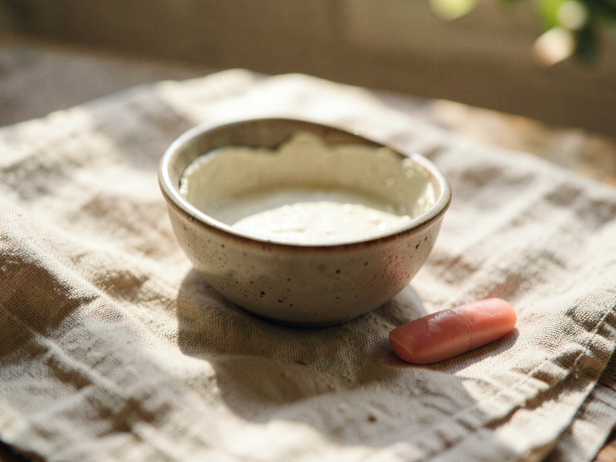
![Morning Paste Ritual]()
Morning Paste Ritual
Image credit : AI
Preparing for a gentle touch, a moment of calm before the day's care. Essential for dog dental care at home.
Stage one: your finger, their lip
Start with no brush in the room. Put a small amount of dog-safe toothpaste on your fingertip, chicken or beef flavoured pastes work well because the dog will actively seek them out. Let your dog lick it off. Do this for two or three days, once a day. When the dog is clearly looking forward to this moment, move to touching the outside of the lip with the same finger. Not inside the mouth, just the lip. Mark and reward. After a few sessions of calm lip touches, slide the finger along the outside of the upper teeth for one second. Mark and reward immediately. Build duration one second at a time over several sessions. The dog should be leaning in, not pulling away, before you move forward.
Stage two: introducing the brush as an object
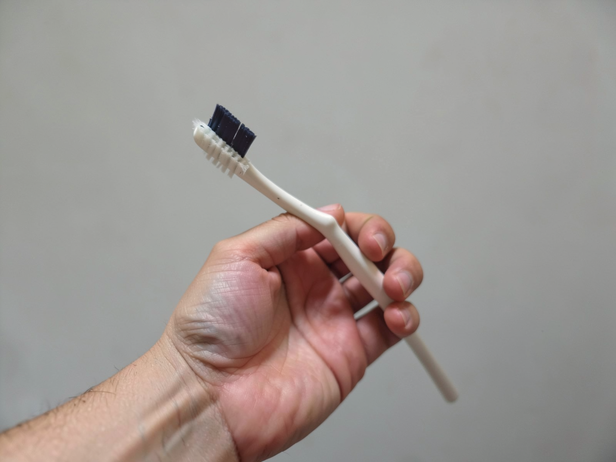
Before the brush goes near the mouth, it needs to exist in the dog's world without causing tension. Place it on the floor and let the dog sniff it. Mark and reward any calm investigation. Pick it up, hold it in your hand during a normal interaction, and reward the dog for ignoring it. Then put a small amount of toothpaste on the bristles and let the dog lick it off while you hold the brush still. The brush is now associated with the same good thing the finger was. This stage can take three to five days depending on how sensitive the dog is around its face and mouth.
![Gentle Dog Toothbrush Hold]()
Gentle Dog Toothbrush Hold
Image credit : AI
Preparing for dog dental care at home with a gentle touch. This step is crucial for desensitisation training for dogs.
Stage three: brush to tooth
With the dog calm and the brush loaded with paste, touch the bristles to the outside of one canine tooth for one second. Mark and reward. That is the entire session for the first day. The next session, touch two teeth. Build up across sessions, not within them. Once the dog accepts the front teeth without pulling away, work toward the back upper premolars, these are the teeth that accumulate the most tartar and the ones most dogs find most intrusive to have touched. Go slower here. Counter-conditioning applies: if the dog shows any sign of discomfort (head turn, lip lick, body stiffening), you've moved too fast. Drop back one step and rebuild. The inside surfaces of the teeth come last, and many dogs never fully accept them. Focusing on the outer surfaces, which a vet or veterinary nurse can confirm is where plaque builds fastest, is a realistic and worthwhile goal.
Keeping it going once it works
Daily brushing is the standard recommendation for dental health in dogs, and the habit is easier to maintain than to restart after a gap. Keep sessions predictable, same time, same place, same sequence. If your dog has a day where it's unwell, overtired, or already stressed, skip the session rather than push through. One skipped session doesn't undo the training; a forced session can. If at any point the dog begins showing avoidance, growling, or snapping during what was previously a calm routine, stop and speak with a qualified trainer or veterinary behaviourist before continuing. Pain is a common reason a previously cooperative dog suddenly resists mouth handling, and that warrants a vet check before assuming it's a training problem.