Cats climb because height feels safe, surfaces smell interesting, and the kitchen counter is, from a cat's perspective, the most rewarding spot in the flat. Before anything else, it helps to understand that. A cat on the counter is not being defiant. She is being a cat, and the counter is delivering exactly what she wants: warmth, scent, a view of the room, and the occasional dropped piece of paneer. Any method that ignores those motivations will fail the moment you leave for work.
Give her a better high place first
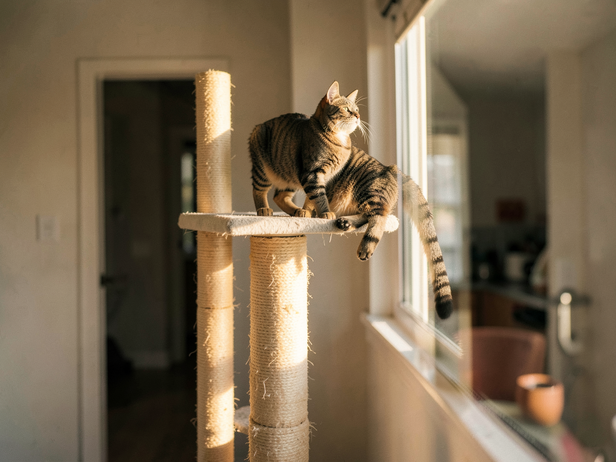
The single most effective counter-deterrent is a cat tree, a tall shelf, or a window perch positioned somewhere she already likes to be. Cats do not want the counter specifically. They want elevation and a good vantage point. If something taller, more comfortable, and more interesting than the counter is available, most cats will choose it within a week. Place the alternative near the kitchen if the kitchen is where she spends time. Put a piece of worn clothing on it for the first few days so it carries your scent. Reward her every time she uses it with a treat or a slow blink and a quiet word. She is learning that the new spot pays off.
![Tabby Cat's Golden Hour View]()
Tabby Cat's Golden Hour View
Image credit : AI
My tabby enjoys the golden hour, a peaceful moment away from the kitchen counter. Positive reinforcement cat training works!
Make the counter surface unpleasant to land on
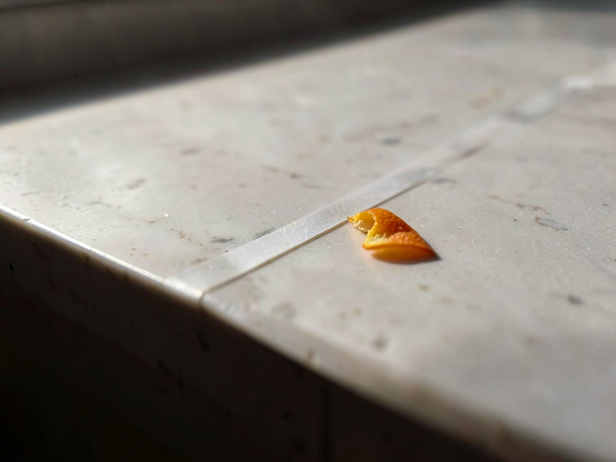
Cats dislike certain textures under their paws. Double-sided tape laid across the counter edge, a crinkled sheet of aluminium foil, or a plastic carpet runner placed spike-side up on the surface all create a landing experience the cat finds disagreeable. None of these hurt her. They simply remove the reward of a smooth, warm surface. The key is consistency: the deterrent needs to be there when you are not watching, because cats are very good at learning that a rule only applies when you are in the room. Once she has stopped jumping up for two to three weeks, you can remove the deterrent gradually rather than all at once.
Use scent she dislikes at the counter edge
Cats have a strong aversion to citrus. Rubbing the counter edge with a piece of lemon or orange peel, or placing a few drops of diluted citrus essential oil on a cloth tucked under the counter lip, discourages approach without any confrontation. Refresh it every couple of days. This works best as a complement to the texture deterrents above, not as a standalone. Some cats are less bothered by citrus than others, so observe whether it is actually changing her behaviour before relying on it.
![Sticky Countertop Still Life]()
Sticky Countertop Still Life
Image credit : AI
I'm using this to stop my cat jumping on counter. The tape is a deterrent.
Remove what draws her up there
Food left out, a warm hob, a dripping tap, a dish drying on the rack, these are the reasons the counter is interesting. Securing food in covered containers, wiping down surfaces after cooking, and keeping the counter as bare and unscented as possible removes the pull. This is not about making your kitchen sterile. It is about making the counter a boring destination compared to the alternative you have set up for her. A cat who goes up and finds nothing will eventually stop going up.
Redirect rather than punish
When you see her about to jump or already on the counter, the most useful response is a calm, neutral sound, a single clap or a short vocal cue, followed immediately by directing her toward her designated spot and rewarding her for going there. The sequence matters: the cue interrupts the behaviour, the redirect gives her something to do instead, and the reward makes the alternative feel worthwhile. What does not work is shouting, chasing, or the water spray bottle. These create a startled cat who associates you with unpredictable unpleasantness, which damages trust and teaches nothing about where she should be instead. Punishment-based methods also tend to produce cats who wait until the owner leaves the room, which is the opposite of what anyone wants.
Be consistent across everyone in the household
One person letting the cat up while another enforces the rule is enough to undo weeks of progress. Cats learn by what the environment consistently delivers, not by what any one person says. If the counter sometimes produces a reward and sometimes produces a deterrent, the cat will keep trying because intermittent reinforcement is actually more persistent than reliable reward. Agree on the approach with everyone in the flat, keep the deterrents in place all the time, and reward the alternative every time you see her use it. Consistency is the method. Everything else is just the detail of how you apply it.