An adult Indie brought home from the street or a shelter carries a full behavioural history you cannot read. Crates were not part of it. The goal here is not to override that history but to build a new association, one careful step at a time, using what the science of learning says actually works.
Why the crate feels threatening to an adult Indie
Indies that have lived outdoors are accustomed to space, escape routes, and the ability to move away from anything uncomfortable. A crate removes all three at once. The first time a dog sees one, the instinct is to treat it as a trap. That instinct is not stubbornness or defiance, it is a nervous system doing exactly what it evolved to do. Forcing the dog in, even once, confirms the fear and sets the training back by weeks. The entire method below works around this by never closing the door until the dog chooses to go in on its own.
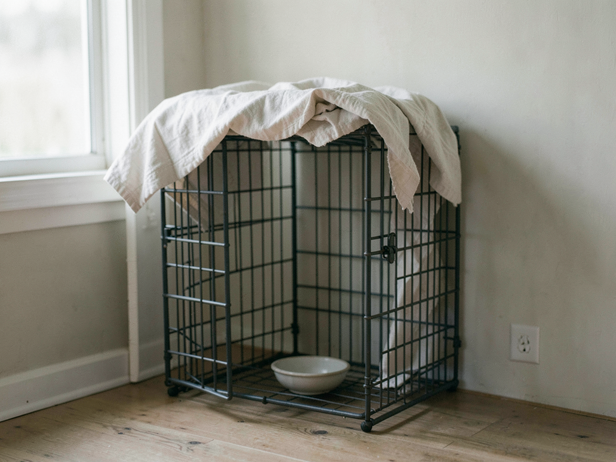
![Crate Prepared for Comfort]()
Crate Prepared for Comfort
Image credit : AI
Preparing a comfortable crate for adult dog crate training. This space offers a sense of security.
The learning principle: desensitisation paired with counter-conditioning
Desensitisation means exposing the dog to the crate at an intensity low enough that no fear response fires, starting with the crate simply existing in the room, then moving closer, then going inside voluntarily. Counter-conditioning runs alongside it: every interaction with the crate predicts something the dog genuinely wants, usually food. The two work together to replace the old association (enclosed space equals danger) with a new one (enclosed space equals good things happen). Neither works without the other, and neither works fast. Expect the full process to take two to four weeks for a dog with moderate wariness, longer for one that has had a genuinely frightening experience.
The seven steps, in order
Step one: place the crate in a low-traffic room with the door removed or propped fully open. Leave it there for two days. Do not point it out or encourage the dog toward it. Let curiosity do the first work.
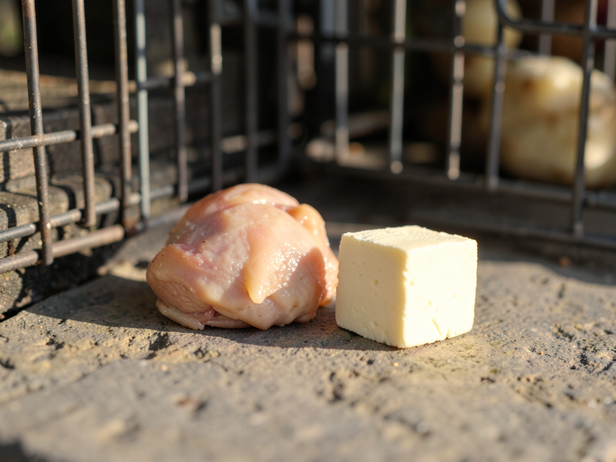
Step two: drop high-value food, a piece of boiled chicken, a small cube of paneer, near the crate entrance, not inside it. Do this at every meal for two or three days. The dog eats near the crate without entering. That is the goal for this step.
Step three: move the food just inside the entrance threshold. The dog stretches in to get it without committing its body. This is progress. Do not rush it.
Step four: place the food further inside, so the dog steps in fully to reach it. Keep sessions short, five minutes, twice a day. End each one before the dog shows any sign of wanting to leave.
Step five: begin feeding full meals inside the crate with the door open. The dog eats, finishes, and walks out. Repeat for three to five days until the dog walks in without hesitation.
Step six: close the door for the duration of the meal only. Open it the moment the dog finishes. Extend the closed time by thirty seconds every two or three sessions, not every session. If the dog whines or paws at the door, you moved too fast. Go back one step.
Step seven: build duration in the closed crate while you are present in the room, then while you are in the next room, then for short absences. A dog that is comfortable for thirty minutes with you present is not automatically comfortable for thirty minutes alone. Treat those as separate training goals.
![Chicken and Paneer Still Life]()
Chicken and Paneer Still Life
Image credit : AI
I placed chicken and paneer near the crate door, a simple scene for adult dog crate comfort.
What to do when it stalls
The most common stall point is step six: the dog enters freely but panics when the door closes. This usually means the transition happened too quickly. Go back to step five for a full week. A second common stall is the dog entering only when extremely hungry, which means the food is not high-value enough for the dog's current level of anxiety. Try something the dog has never had before: a small piece of egg, a sliver of fish. If the dog refuses food entirely near the crate, the exposure is still too intense. Move the crate to a different room and restart from step one at a greater distance.
If the dog shows sustained, escalating distress, panting, drooling, frantic pawing, self-injury attempts, in the closed crate after several weeks of patient work, this has moved beyond a training problem. A veterinary behaviourist can assess whether there is an underlying anxiety disorder that needs support alongside the training. Do not continue forcing the process if distress is severe.
Timing, cover, and placement
A crate covered on three sides with a light cotton sheet feels less exposed to most dogs, because it reduces visual stimulation from all directions. Leave the front open. Place the crate against a wall rather than in the centre of a room for the same reason. Avoid placing it near a door the dog watches anxiously, or near the kitchen where food smells create frustration. Once the dog is comfortable, the crate can move to wherever suits your home, but move it gradually, not overnight.
The crate should never be used as punishment. If the dog associates it with being sent away after a scolding, the counter-conditioning work unravels. Keep it a neutral-to-positive space at all times.