Most cat introductions fail in the first five minutes because the two animals are pushed into the same space before either one is ready. The resident cat has a scent map of the home; every surface, corner and piece of furniture carries its own smell. A new cat arriving without warning is not just a stranger, it is a disruption to an entire sensory world. The scent swap method works by building familiarity through smell alone, over days and sometimes weeks, before any visual contact happens.
Why scent comes before sight for cats
Cats are not primarily visual animals. Their world is organised by olfactory information: who has been where, how recently, and whether that individual is a threat or a neutral presence. Two cats meeting face to face for the first time are reading each other at a distance their noses were never designed for. Scent, by contrast, gives a cat time to process without the pressure of a live encounter. A smell on a blanket carries no immediate threat. It can be approached, retreated from, and returned to at the cat's own pace. This is what makes the slow introduction work, it lets each cat reach a conclusion about the other before the other is actually in the room.
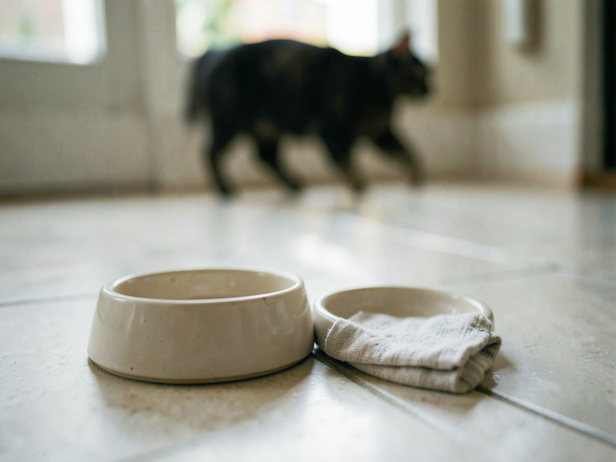
![Morning Light, Cat's Departure]()
Morning Light, Cat's Departure
Image credit : AI
A gentle reminder of how to introduce cats in India, this scene hints at a new beginning.
The first week: separate spaces and scent objects
The new cat needs a dedicated room with its own litter tray, food, water and hiding spots. Keep the door closed. Do not let the cats see each other under the door gap if you can help it, a rolled towel along the base works. On day two or three, take a soft cloth or a clean sock and gently rub it along the new cat's cheeks and chin, where the scent glands sit. Place this cloth near the resident cat's food bowl, not on top of it. Do the same in reverse: a cloth with the resident cat's scent goes into the new cat's room, again near the food. Eating near a strange smell while calm and comfortable starts to build a positive association. Swap the cloths every day or two. Watch how each cat responds. Sniffing and moving on is good. Hissing, freezing or refusing to eat near the cloth means slow down, you are moving faster than the cats are ready for.
The second week: scent on territory, not just objects
Once both cats are eating normally near each other's scent cloths without stress, move to a territory swap. Put the new cat in a neutral room or a carrier, and let the resident cat walk into the new cat's base room unsupervised. Then do the reverse. Each cat is now walking through the other's scent without the other being present. This is different from a cloth on the floor, it is the full olfactory signature of another cat layered across a space. Some resident cats will rub their own scent over everything immediately. That is normal and not aggression; it is a cat restating its own presence. Some will sniff carefully and leave. Both responses are fine. A cat that refuses to enter the room or that growls at the doorway needs more time on the cloth stage before this step.
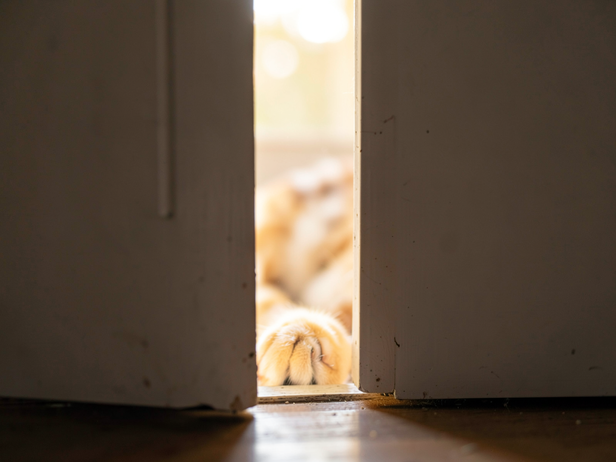
![Curious Cat Peeks Through Door]()
Curious Cat Peeks Through Door
Image credit : AI
My new cat is curious about the other side. I'm using a slow cat introduction method.
Controlled visual contact before the meeting
When both cats are moving through each other's spaces without visible distress, introduce a visual barrier: a baby gate with a mesh panel, or a door held open by two or three centimetres with a doorstop. They can now see a sliver of each other while remaining physically separated. Feed both cats on opposite sides of this barrier, starting far enough away that both eat comfortably, and moving the bowls a few centimetres closer each session. The goal is not for them to stare at each other, it is for eating, a calm and pleasurable activity, to happen in the other cat's visual presence. If either cat stops eating, growls, or fixates on the gap rather than the food, the bowls are too close. Move them back. This stage can take several days or several weeks. There is no correct speed.
The first shared room session
The first time both cats are in the same room, it should be the largest room in the home, not the new cat's base room, which the resident cat may now treat as its own territory. Keep the session short, ten to fifteen minutes, and give each cat an exit route and a high surface to retreat to. Do not hold either cat. Do not intervene in hissing or growling unless one cat is physically cornering the other with no escape. Some conflict sounds are normal; they are cats negotiating. Watch for body language rather than sound: a cat that is crouched, ears flat and tail low is overwhelmed, and that session should end. A cat that hisses once and then goes to sniff a corner is processing, not fighting. Separate them before either cat reaches a stress threshold, and repeat the session the next day. Over time, the sessions lengthen and the tension drops, not because the cats have become friends, but because neither one is a surprise to the other anymore.