Betta fish are more aware of their keeper than most people realise. They track movement at the glass, surface when a familiar shape approaches, and can learn to associate a specific hand with food within a few sessions. Hand-feeding taps into that awareness and turns a daily chore into a reliable way to check how alert and hungry your fish actually is.
Why hand-feeding works for bettas
Bettas are visual hunters. In the wild, Betta splendens takes insects and larvae from the water surface, often targeting moving prey. A finger held just above or at the waterline mimics that stimulus closely enough that most bettas investigate within the first two or three attempts. The behaviour is not a trick in the circus sense, it is the fish doing what its foraging instinct already drives it toward, with you as the delivery mechanism.
The second reason to hand-feed is practical. A betta fed from a pinch dropped across the tank surface often misses pellets that sink before it reaches them. Those pellets foul the water. Hand-feeding puts the food exactly where the fish is, which means less waste and a cleaner tank.
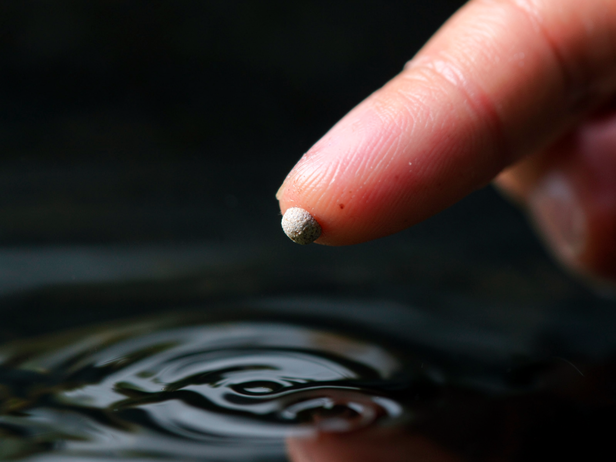
![Betta Pellet Offered]()
Betta Pellet Offered
Image credit : AI
Offering a betta pellet for feeding. Learn how to feed betta fish correctly for their health.
What you will need before you start
Use sinking or slow-sinking pellets small enough to sit on a fingertip without falling off. High-quality betta pellets are the right size; freeze-dried bloodworm pieces work too. Do not use flakes for this, they dissolve on contact with a wet finger and make portion control impossible.
Wash your hands thoroughly before each session and rinse off all soap. Soap residue and hand cream are harmful to fish. Dry your fingers before picking up the pellet, then let just the tip of your index finger enter the water. A wet hand reaching into the tank stresses the fish less than a dry one slapping the surface.
Keep sessions to two minutes or less. Bettas have a short attention window for feeding, and a prolonged session almost always ends in overfeeding because the fish keeps responding to the finger even after it has eaten enough.
The training sequence, step by step
Start with the tank light on and the room quiet. Approach slowly and hold one pellet between your thumb and index finger at the waterline. Do not tap the glass. Wait. Most bettas will approach within thirty seconds once they have seen you feed from the same spot two or three days running.
When the fish takes the pellet, withdraw your hand, wait ten seconds, then offer a second pellet the same way. Two pellets is the full meal for most adult bettas. Stop there, regardless of whether the fish is still interested. A betta that continues circling and surfacing after two pellets is not hungry, it is stimulus-seeking, which is a different thing entirely.
If the fish does not approach on the first attempt, drop the pellet in normally and try again the next day. Do not chase the fish with your finger. Repeated failed attempts in one session teach the fish to avoid the hand rather than approach it. One attempt per session is enough in the first week.
Within five to ten sessions, spread over five to ten days, most bettas will surface as soon as the hand appears near the waterline. At that point the behaviour is established and the session can become part of the daily feeding routine.
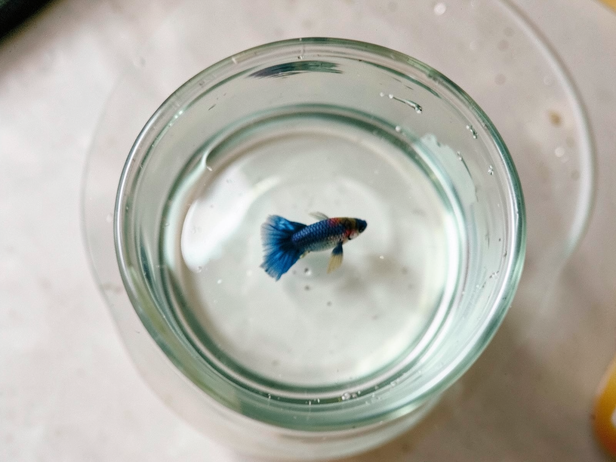
![Betta's Serene Surface Gaze]()
Betta's Serene Surface Gaze
Image credit : AI
I watch my betta fish, a moment of calm. Understanding how to feed betta fish correctly is key to their well-being.
Keeping portions right so the fish stays healthy
Overfeeding is the most common cause of illness in pet bettas. A betta's stomach is roughly the size of its eye. Two to four small pellets once or twice a day is the correct amount for an adult fish, the exact number depends on pellet size, so read the packaging and err toward less. A betta that is fed correctly will be visibly hungry at feeding time and will stop showing interest quickly after eating. A betta that grazes continuously, refuses food, or has a visibly distended belly has been overfed.
One practical check: if your betta is still actively surfacing and following your finger after two pellets, skip the next feeding entirely. A healthy betta can go two to three days without food without any harm. A day off resets the appetite signal and makes it much easier to read genuine hunger from conditioned begging.
Uneaten food that reaches the substrate should be removed with a turkey baster or a small siphon within a few minutes. Even one missed pellet can raise ammonia in a small tank faster than most owners expect.
When hand-feeding tells you something is wrong
A betta that has reliably hand-fed for weeks and suddenly refuses food, or takes a pellet and spits it out, is giving you useful information. Loss of appetite in a fish that was previously eager is worth watching for two consecutive feedings. If it continues, check water temperature, bettas need water between 24 and 28 degrees Celsius and become lethargic and disinterested in food outside that range. Check ammonia and nitrite levels with a basic test kit. If water parameters are correct and the fish still refuses food after two days, or shows clamped fins, pale colour, or unusual swimming, take it to a vet who sees fish or an aquatic specialist. These signs together point to something that water changes alone will not fix.