Most dogs are not prepared for a baby. They are prepared for the version of the family that existed before one. The smells are different, the schedule collapses, a small creature arrives and immediately becomes the centre of everything the dog used to own. Handled early, this transition is manageable. Left until the last week, it becomes a crisis. The training below works best when it starts two to three months before the due date, not because dogs are slow learners, but because habits need time to settle before stress arrives on top of them.
Teach a solid "go to your place" cue
The single most useful skill a dog can have when a baby is in the house is the ability to go to a designated spot and stay there calmly. This is not about punishment. It is about giving the dog a clear answer to the question it will ask constantly: what am I supposed to do right now?
Start with a mat or bed in a room the dog already likes. Lure it onto the mat, mark the moment all four paws land with a short verbal marker like "yes", and reward. Build duration in small steps, five seconds, then ten, then thirty, before adding distance. Once the dog holds the place reliably with you in the room, begin practising with distractions: a crying sound from a phone speaker, a pram being wheeled past, someone carrying a bundle of laundry.
The goal is a dog that hears "go to your place" and moves there without hesitation, even when the room is chaotic. That cue will be used dozens of times a day once the baby is home.
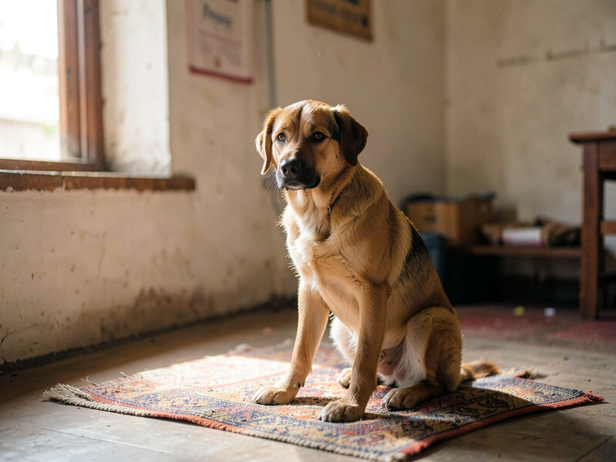
![Dog waits patiently indoors.]()
Dog waits patiently indoors.
Image credit : AI
A dog's calm posture, preparing for a new baby. This training is crucial for a smooth transition.
Desensitise to baby sounds and smells before the baby arrives
A dog that has never heard a newborn cry will react to the sound the first time. That reaction is not aggression, it is novelty. The job is to make the sound old news before it matters.
Play recordings of infant crying, babbling, and screaming at low volume while the dog eats, plays, or rests. Keep the volume low enough that the dog notices but does not react. Over several sessions, raise the volume gradually. Pair each sound with something good, a treat, a game, calm praise, so the association builds in the right direction.
Smells matter too. Baby lotion, nappy cream, and talc are all new. Let the dog sniff these on your hands or on a cloth before they appear on a person. When you bring home a blanket or item of clothing from the hospital before the baby arrives, let the dog investigate it calmly on the floor. This is not a formal exercise; it is just removing the surprise.
Adjust the dog's routine now, not after the birth
A dog that is walked at 7 am and fed at 6 pm will experience the arrival of a newborn as a complete dismantling of its world. Feeds get delayed, walks get shortened or moved, the person who used to sit quietly in the evening is now pacing at 2 am.
Begin shifting the routine gradually toward what it will realistically look like after the birth. If morning walks will be shorter, start shortening them now. If the dog will need to settle during night feeds, practise asking it to go to its mat at irregular hours. The dog does not need to understand why the routine is changing. It needs time to adjust to the new version before the reason for it arrives.
Arrange for a dog walker, a trusted neighbour, or a family member to take over one walk a day during the final weeks of pregnancy and the first months after birth. Introduce that person to the dog well before they are needed.
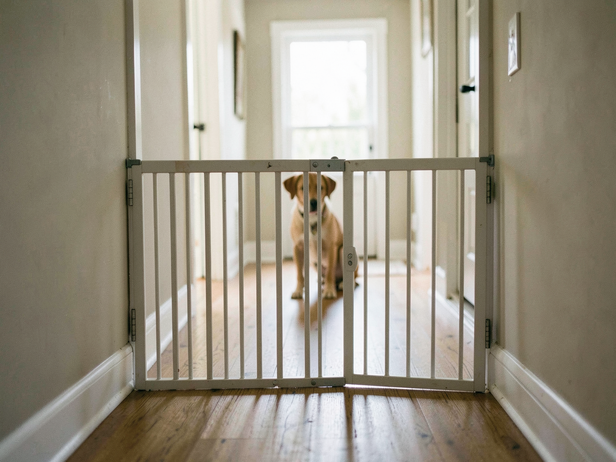
![Calm Dog Awaits]()
Calm Dog Awaits
Image credit : AI
Preparing dog for new baby: a moment of calm observation before the arrival.
Practise handling and proximity with a baby stand-in
Carry a weighted doll, a bundled towel, or a cushion in your arms while moving around the house. Ask the dog to sit before you enter a room. Practise feeding, rocking, and moving through doorways with the bundle while the dog is present. This sounds unnecessary until the moment you are holding a real baby and the dog is jumping up because that is what it has always done when you come through the door.
Work on a reliable "off" or "four on the floor" cue if jumping is a habit. Reward the dog for sitting or standing calmly near you while you hold the bundle. The dog is learning that proximity to the thing in your arms is calm and unremarkable, not exciting.
If the dog has not been taught to walk politely on a lead, now is the time. Walking a pram and a dog that pulls is not manageable.
Set new boundaries early and hold them consistently
If the nursery will be off-limits, make it off-limits now, not after the baby is in it. If the dog will no longer be allowed on the sofa in the living room, change that rule before the baby arrives. A dog that loses access to things it has always had, at the exact moment a new creature appears, will form an association between the two that is hard to undo.
Use a baby gate to create zones if needed. A dog that can see and smell the baby from behind a gate, without being able to approach unsupervised, is in a much better position than one that has been shut out of rooms entirely. Partial access with a boundary is easier for a dog to accept than sudden exclusion.
Every person in the household needs to apply the new rules the same way. One person enforcing them and another ignoring them will slow everything down and confuse the dog.
Introduce the baby calmly and in stages
When the baby comes home, do not make the introduction an event. Greet the dog without the baby first, outside if possible, so the initial excitement of reunion is spent before the baby enters the picture. Bring the baby in once the dog has settled.
Let the dog sniff from a distance. Do not force closeness. Keep the first interactions brief and reward the dog for calm behaviour near the baby. "Calm" means four paws on the floor, no jumping, no pawing, no intense staring. It does not mean the dog must be indifferent, curiosity is fine.
Never leave a dog and a baby unsupervised, regardless of the dog's temperament or training history. This is not a reflection on the dog. It is a recognition that babies move unpredictably, make sudden sounds, and grab, and that even the most patient dog has a threshold.
Know when to call a qualified trainer
If the dog has ever shown aggression toward children, strangers, or when resources are nearby, food, toys, sleeping spots, do not rely on this guide alone. Contact a qualified trainer or veterinary behaviourist before the baby arrives, not after an incident.
Signs that warrant professional input now: growling or snapping at any person, stiffening or hard staring when approached while eating or resting, a history of biting, or significant anxiety that has not responded to basic desensitisation. A behaviourist will assess the dog's specific triggers and build a plan around them. That plan may include management strategies, behaviour modification, or a referral to a vet to rule out pain or a medical cause for the behaviour.
The goal of all the preparation above is a dog that finds the baby's presence unremarkable. Not adoring, not indifferent, just calm and comfortable with a new member of the household. That outcome is achievable for most dogs with enough time and consistent work. The time to start is now.