A snuffle mat sits in the corner of thousands of Indian flats, pulled out when the dog gets restless after dinner. It keeps him busy for eight minutes, he seems calmer afterward, and that feels like a win. It is a win, but a partial one, and understanding why makes the difference between enrichment that supports training and enrichment that replaces it.
What enrichment tools actually do to a dog's brain
Snuffle mats, food puzzles, lick mats, and Kong-style stuffed toys all work through the same channel: the seeking system. When a dog uses his nose to hunt hidden kibble or works a puzzle to release food, his brain releases dopamine through the anticipation of reward, the same pathway that fires during a good training session. The effort itself is the payoff, not just the food at the end. This is why a dog who has sniffed through a mat for ten minutes often looks genuinely tired, even though he has barely moved. Olfactory work is cognitively expensive. A Beagle or an Indie with a working nose can burn more mental energy in fifteen minutes of sniffing than in a thirty-minute walk around the block.
The critical detail: this system runs on its own. The dog does not need you to activate it. He sniffs, he finds, he eats. No cue, no marker, no relationship. That is the enrichment tool's strength and its limit in one sentence.
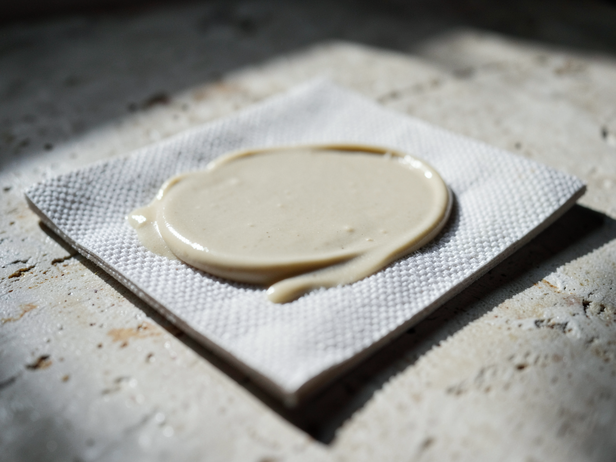
![Textured Lick Mat Detail]()
Textured Lick Mat Detail
Image credit : AI
I captured the detailed texture of this lick mat, a great tool for dog enrichment training.
Where enrichment fits inside a training plan
The right place for a snuffle mat or food puzzle is before a training session, not instead of one. A dog who arrives at a ten-minute obedience or impulse-control session already having burned some of his edge is easier to work with. His arousal level is lower, his threshold for frustration is higher, and he can hold attention longer. Think of it as warming down the engine before asking it to do precise work, not replacing the work.
Enrichment tools also have a legitimate role as a settlement cue. If you use a stuffed Kong consistently to mark the moment you sit down to work, the dog begins to associate your focus time with a calm, independent activity. Over several weeks, this becomes a conditioned response: Kong appears, dog settles. That is genuine training, because you built the association deliberately. The difference between this and just handing him a mat to stop the barking is intention and consistency.
A third place they earn their keep is during desensitisation work. If a dog is anxious about visitors, a lick mat placed near the door, presented every time the doorbell rings, removed when the visitor leaves, pairs a high-value, calming activity with the trigger. This is counter-conditioning in practice: the stimulus that once predicted something stressful now predicts something pleasant. The enrichment tool here is doing real behaviour-change work, but it is working alongside a structured plan, not standing in for one.
The gap enrichment cannot close
A dog who gets a puzzle feeder every morning and a snuffle mat every evening but no structured training is a dog who has learned nothing about how to behave around people, in new places, or when the food is not in front of him. Enrichment reduces boredom and frustration, two genuine welfare concerns, especially for dogs in flats with no garden. It does not teach a sit-stay, a recall, or how to greet a guest without jumping. Those require a learning loop: a cue, a behaviour, a marker, a reward, and repetition across different contexts. The dog has to be working with you, not alongside you.
The other risk is using enrichment to manage a behaviour problem without addressing its cause. A dog who resource-guards his food bowl does not become safer because he now eats from a snuffle mat. A dog who is anxious when left alone does not improve because he has a Kong, he just has something to do while he is anxious. If the behaviour has a fear, pain, or anxiety component, enrichment buys time and reduces pressure, but a qualified trainer or veterinary behaviourist needs to assess the root cause. Any training plan that touches resource guarding, separation distress, or aggression should involve a professional from the start.
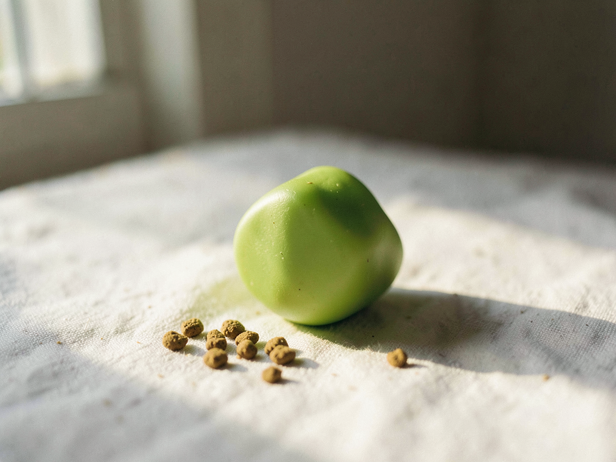
![Kibble and Kong Companion]()
Kibble and Kong Companion
Image credit : AI
A simple dog enrichment toy, perfect for mental stimulation for dogs in flats.
Choosing and introducing the right tool
Match the tool to the dog's current skill level, not to the most impressive option in the shop. A dog new to puzzle feeders should start with the simplest version, kibble scattered on a flat snuffle mat, a Kong with food that falls out easily. If the dog gives up within two minutes, the puzzle is too hard and frustration is replacing the seeking response you wanted. Difficulty should increase gradually, over days or weeks, as the dog builds confidence with the format.
For flat-dwelling dogs in Indian cities, where outdoor sniff time is often limited to a short morning walk on a leash, a snuffle mat or scatter-feed session on the balcony can meaningfully supplement what the environment does not provide. It is not a replacement for the walk; it is an addition to it. The nose needs both: free exploration outside and structured sniffing inside.
Introduce any new tool when the dog is calm and mildly hungry, not when he is already over-aroused. Let him investigate it at his own pace the first time. If he ignores it, rub a small amount of something high-value across the surface and walk away. Pressure to engage defeats the purpose.
Enrichment tools are genuine welfare equipment and they belong in most training plans. The question is always where, before a session, as a settlement cue, or as part of counter-conditioning work, not whether they can stand in for the training itself. A dog who has both a well-stocked snuffle mat and a consistent positive-reinforcement training routine is getting the full picture. One without the other is half an answer.