A male cat straining in the litter box looks, at first glance, like a cat with constipation. He crouches, he strains, he may cry out. Owners wait a day to see if it resolves. That wait is often the difference between a cat who survives and one who does not. Urinary blockage in a male cat is one of the few genuine veterinary emergencies in small-animal medicine, and understanding why male cats face this risk so disproportionately is the first step to catching it in time.
The anatomy that creates the problem
The male cat's urethra, the tube that carries urine from the bladder out of the body, is dramatically narrower and longer than a female cat's. In a female, the urethra is short and wide enough that most partial obstructions pass on their own. In a male, the urethra narrows sharply at the penile section, creating a bottleneck roughly two millimetres across at its tightest point. Any plug, crystal, or spasm at that point can seal it completely.
This is not a defect. It is the consequence of a body plan shaped around a different reproductive role. But in a domestic cat eating commercial food, drinking less than he should, and spending most of his time sedentary, that narrow passage becomes a liability. Neutered males are not protected, neutering reduces certain hormone-driven behaviours but does not change the urethral diameter.
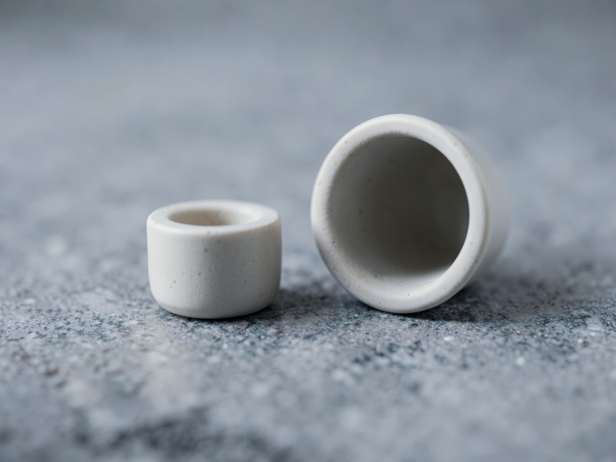
![Ceramic Tubes on Stone]()
Ceramic Tubes on Stone
Image credit : AI
A visual representation of differing diameters, reminiscent of a male cat urinary blockage scenario.
What actually blocks the urethra
Three things cause the majority of blockages in male cats, and they often work together.
The most common culprit is a urethral plug, a soft, mucus-rich matrix of inflammatory cells, proteins, and crystals that accumulates and lodges at the narrowing. These plugs are closely associated with feline idiopathic cystitis, an inflammation of the bladder wall that has no single identified cause but is strongly linked to stress, low water intake, and indoor sedentary living.
Urinary crystals are the second factor. Struvite crystals form when urine is too alkaline and concentrated; calcium oxalate crystals form in acidic, concentrated urine. Both can aggregate into grit that jams the narrow male urethra. Diet plays a direct role here: urine concentration is largely a function of how much water a cat takes in, and cats evolved as desert animals who obtain most of their moisture from prey. A cat eating only dry kibble and drinking little from a bowl produces persistently concentrated urine, raising crystal risk significantly.
The third cause is urethral spasm, the muscular wall of the urethra contracting in response to inflammation, sometimes creating a functional blockage even without a physical plug. Spasm can accompany a plug or follow one that has partially cleared.
What happens inside when the urethra is blocked
When urine cannot leave the bladder, the bladder distends. Within hours, back-pressure reaches the kidneys. The kidneys, unable to filter waste into urine that has nowhere to go, begin to fail. Potassium accumulates in the bloodstream, a condition called hyperkalaemia, and at high enough levels it disrupts the electrical signals that drive the heart. Cardiac arrhythmias follow. In a completely blocked cat who receives no treatment, this cascade typically becomes fatal within 24 to 48 hours of the blockage becoming total.
The bladder itself is also at risk. A severely distended bladder can rupture, spilling urine into the abdomen and causing septic peritonitis. Even without rupture, prolonged distension damages the bladder wall's ability to contract normally, sometimes permanently.
This is why the timeline matters. A cat who was straining yesterday and is now quiet and withdrawn is not better. A cat who stops trying to urinate and becomes lethargic is a cat whose body is shutting down.
![Bubbling Water Still Life]()
Bubbling Water Still Life
Image credit : AI
Tiny bubbles ascend in cool blue tones, a serene moment beside a ceramic bowl. Signs of blocked cat are unrelated.
Signs that mean go to a vet now
Frequent trips to the litter box with little or no urine produced, straining with visible effort, crying or vocalising in the box, licking at the genitals persistently, and passing only drops or a thin trickle are all signs of a lower urinary tract problem that needs same-day veterinary assessment.
Three signs mean do not wait for morning: the cat has produced no urine at all for more than a few hours; he is vomiting; or he has become quiet, withdrawn, and reluctant to move after a period of straining. That last combination, straining followed by sudden stillness, is a recognised pattern in cats whose blockage has become complete and whose potassium is rising. It is not relief. It is deterioration.
At the clinic, a vet will confirm the blockage by palpating the abdomen, a blocked cat's bladder is typically taut and painful, and will often run bloodwork to assess kidney function and potassium levels before deciding how to proceed. Treatment involves passing a urinary catheter under sedation or anaesthesia to relieve the obstruction, flushing the bladder, and in most cases hospitalising the cat on intravenous fluids for at least 24 hours while kidney values normalise. Do not attempt to express a blocked cat's bladder at home. A distended, obstructed bladder can rupture under external pressure.
Reducing the risk after a blockage
A male cat who has blocked once has a meaningfully higher chance of blocking again. Vets typically recommend a combination of approaches: increasing water intake by switching to wet food or adding water to meals, using a water fountain if the cat prefers moving water, and in some cases moving to a prescription urinary diet formulated to reduce crystal formation and keep urine at a less favourable pH for crystallisation. Stress reduction matters too, particularly for cats whose blockages are tied to feline idiopathic cystitis, environmental enrichment, consistent routine, and reducing conflict in multi-cat households all lower recurrence risk.
Some cats who block repeatedly are candidates for a surgical procedure called a perineal urethrostomy, which widens the urethral opening permanently. It is not a first-line response, and it carries its own risks and long-term considerations; the decision belongs to the owner and the vet together, with full information about what the surgery involves and what it does not fix.
The male cat's anatomy is not going to change. But knowing what it makes him vulnerable to, and recognising the signs early enough to act, is the difference between a frightening night at an emergency clinic and a much worse outcome.