A cat that ignores its water bowl is not being difficult. It is doing exactly what its desert-adapted biology expects of it. Cats evolved in arid environments where prey, mice, lizards, small birds, supplied nearly all the water they needed. Their thirst drive is genuinely weaker than a dog's or a human's, which means they can be chronically under-hydrated without showing obvious signs until the kidneys or urinary tract have already taken a hit.
How much water a cat actually needs
A healthy adult cat needs roughly 40 to 60 millilitres of water per kilogram of body weight each day. A 4 kg cat therefore needs somewhere between 160 and 240 ml. That sounds precise, but the real figure shifts with ambient temperature, activity level, life stage, and, this is the key variable, what the cat eats. These numbers describe total water intake from all sources combined, not just what goes into the bowl.
A cat eating only dry kibble has to drink most of that quota from a bowl, because dry food contains roughly 6 to 10 percent moisture. A cat eating wet food gets most of it from the meal itself, because wet food sits between 70 and 80 percent moisture by weight. The bowl becomes a supplement rather than the primary source. This is why a cat on wet food may drink so little from its water bowl that owners worry something is wrong, when in fact the cat is adequately hydrated.
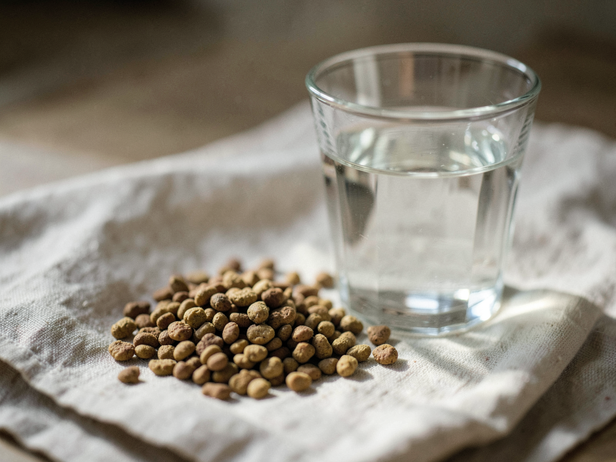
![Morning Hydration Still Life]()
Morning Hydration Still Life
Image credit : AI
A simple setup for feline hydration. Understanding how much water should a cat drink is vital for their health.
What wet food actually delivers
A 100-gram serving of wet food carries 70 to 80 ml of water directly into the cat's system, absorbed alongside the protein and fat in the meal. A cat eating two such servings a day is already taking in 140 to 160 ml of moisture from food alone, close to the lower end of what a 4 kg cat needs on a mild day. The bowl tops it up. A cat eating exclusively dry food gets perhaps 8 to 10 ml of moisture per 100 grams of kibble and has to source the rest independently.
This matters beyond comfort. The urinary tract of a cat is designed for concentrated, infrequent urination, another desert adaptation. When total water intake is low, urine becomes more concentrated, and the conditions for crystal formation and urinary blockages become more favourable. Male cats are especially vulnerable because their urethra is narrower. Chronic low-grade dehydration is one of the factors associated with feline lower urinary tract disease and chronic kidney disease, both of which are common in domestic cats and both of which are managed partly through increasing moisture intake.
Reading your cat's actual intake
The simplest way to gauge whether a cat is drinking enough is the skin turgor test: gently pinch the skin at the scruff and release it. In a well-hydrated cat it snaps back immediately. In a dehydrated cat it tents briefly before settling. This is a rough guide, not a diagnostic, a vet can assess hydration more accurately through a physical examination and blood or urine values.
Other signs worth tracking: gums should be moist and pink, not tacky or pale. Urine in the litter box should be pale yellow, not dark amber or strongly smelling. A cat that suddenly drinks noticeably more than usual, polydipsia, is a reason to call the vet, because increased thirst in cats is associated with hyperthyroidism, diabetes, and kidney disease. The concerning direction is up, not down.
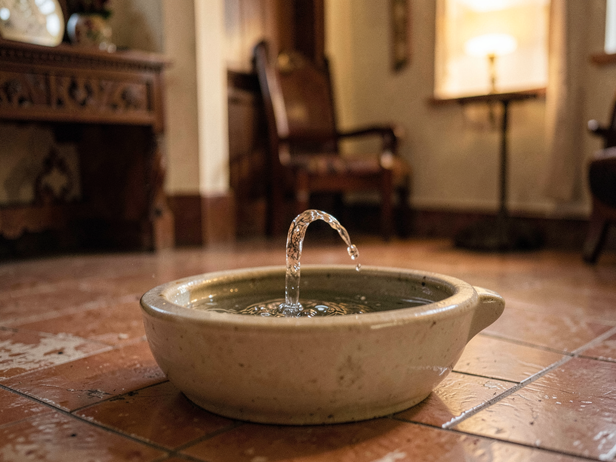
![Ceramic Fountain's Gentle Flow]()
Ceramic Fountain's Gentle Flow
Image credit : AI
Ensuring my cat gets enough water is vital, especially considering wet food water content for cats.
Making water more accessible
Cats prefer moving water to still water, an instinct that probably kept them away from stagnant pools in the wild. A running tap or a pet water fountain can increase voluntary intake meaningfully for cats that are reluctant drinkers. The bowl's location matters too: cats are less likely to drink from a bowl placed directly next to their food, possibly because proximity to a food source near a water source signals contamination risk in the wild. Placing a second bowl in a different room often helps.
For cats eating primarily dry food, adding a small amount of warm water to the kibble, enough to soften it slightly, is a low-effort way to increase moisture intake without switching diets. It is not equivalent to wet food in moisture content, but it moves the number in the right direction. Room-temperature or slightly warm water is more appealing to most cats than cold water straight from the refrigerator.
When to stop adjusting the bowl and call the vet
A cat that stops drinking entirely for more than 24 hours, shows signs of lethargy, stops using the litter box, or strains in the litter box without producing urine needs a vet the same day, not a diet change. A blocked male cat is a medical emergency. Increased thirst paired with weight loss, increased urination, or changes in coat condition should prompt a vet visit within a day or two rather than a wait-and-see approach. Hydration is something you can support at home; what drives abnormal thirst or output is something only a clinical workup can identify.