A bowl of cuttlebone, a mineral block, a diet full of leafy greens, and a bird that still develops soft bones or lays eggs it cannot pass. This is one of the most common and most preventable nutritional failures in pet birds, and it has nothing to do with how much calcium the bird eats. It has everything to do with whether the bird can use any of it.
The vitamin that makes calcium work
Calcium does not move from the gut into the bloodstream on its own. It requires vitamin D3, the active form of vitamin D, to do it. Without adequate D3, most of the calcium a bird consumes simply passes through unabsorbed. The bird is not calcium-deficient in the food it eats. It is D3-deficient, and that makes the calcium functionally unavailable.
Birds synthesise vitamin D3 the same way humans do, through a photochemical reaction in the skin. UV-B radiation, in the wavelength range of roughly 290 to 315 nanometres, converts a precursor compound in skin cells into pre-vitamin D3. The liver and kidneys then convert that into the active hormone that opens the intestinal pathway for calcium. Remove the UV-B source, and the whole chain stops at the first step.
![Cuttlebone, Greens, and UV Light]()
Cuttlebone, Greens, and UV Light
Image credit : AI
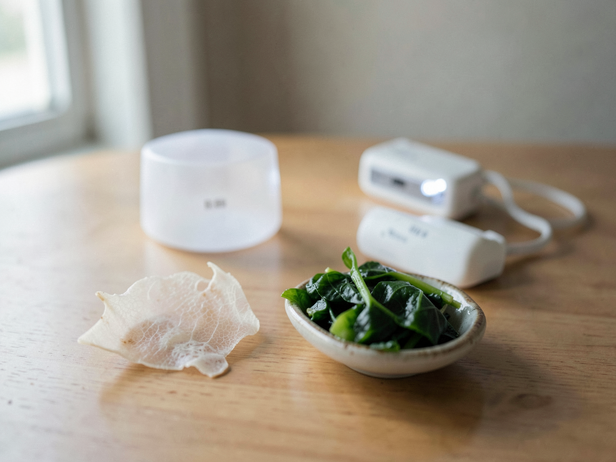
I provide essential nutrients with a cuttlebone and greens, ensuring my bird gets enough vitamin D3.
Why a window does not count
Standard glass, including the double-glazed windows common in Indian flats, filters out nearly all UV-B radiation. A bird sitting in a sunny patch by a closed window receives warmth and visible light. It receives almost no UV-B. The bird's skin cannot trigger the synthesis reaction. This is not a matter of how much light comes through the glass, it is a matter of which wavelengths do. UV-B does not pass through glass in meaningful amounts.
The practical consequence: a bird kept entirely indoors, behind glass, is living in permanent UV-B deprivation regardless of how bright the room feels. Parrots, cockatiels, budgerigars, lovebirds and finches all share this dependency. Species from high-altitude or open-habitat origins, many parrots and softbills among them, evolved under intense UV exposure and have a particularly high requirement.
What D3 deficiency looks like in birds
The signs develop slowly and are easy to attribute to other causes. Soft or rubbery beak and nails are often the first visible change. In laying hens and pet birds that cycle into laying, egg-binding is a serious risk: without enough calcium mobilised by D3, the muscles of the oviduct cannot contract effectively to pass the egg. This is a veterinary emergency. Seizures and muscle tremors can follow in advanced cases, because calcium also regulates nerve and muscle function. Bone fractures from minor impacts, poor feather quality, and general lethargy round out the picture. None of these signs is specific to D3 deficiency alone, which is why a vet assessment matters before assuming the cause.
If your bird shows muscle tremors, cannot pass an egg, or has a seizure, stop reading and reach a vet immediately. These are emergencies, not home-management situations.
![Empty Bird Cage on Balcony]()
Empty Bird Cage on Balcony
Image credit : AI
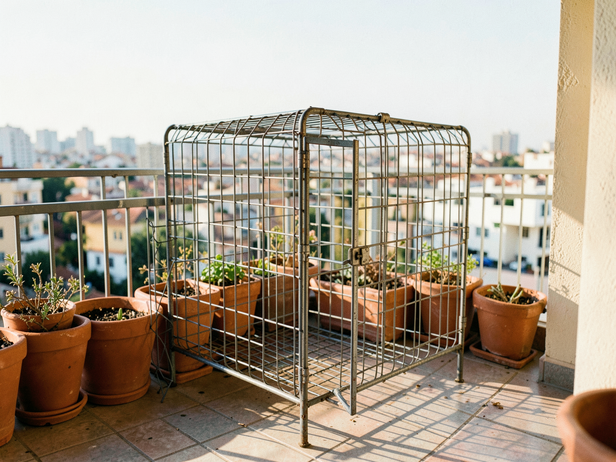
This empty cage highlights the importance of sunlight for birds, not just calcium. Proper UV-B light is crucial.
Two practical routes to UV-B in an Indian flat
Direct unfiltered outdoor light is the most effective source. Even thirty minutes of access to a balcony or an open window, where the bird is outside the glass, not behind it, provides meaningful UV-B exposure on a clear day. A travel cage or an aviary panel on a balcony works. Shade the bird so it can move away from direct sun; birds overheat quickly, and a bird that cannot escape direct afternoon sun in a Pune or Delhi summer is in danger. Never leave a bird unsupervised outdoors where cats, crows or kites can reach it.
Where outdoor access is not possible, full-spectrum UV-B lamps designed for reptiles or birds are the standard alternative. These emit UV-B in the range birds require. The lamp must be positioned within the distance the manufacturer specifies, UV-B output drops sharply with distance, and replaced on the schedule the manufacturer recommends, because UV-B output degrades well before the visible light dims. A lamp that still glows may be producing almost no UV-B. Standard household bulbs, including daylight-spectrum LED bulbs, do not emit UV-B and do not substitute for a purpose-made lamp.
Diet, D3 and the limits of supplements
Dietary D3 from animal-source foods, egg yolk is the most accessible for birds that accept it, can partially compensate when UV-B is limited, but birds are less efficient at using dietary D3 than they are at using the form they synthesise themselves. Vitamin D3 supplements exist and a vet may recommend them in deficient birds, but D3 is fat-soluble and accumulates in the body. Over-supplementation causes toxicity, which damages the kidneys and soft tissues. This is why dosing decisions belong to a vet who has assessed the bird, not to a label or a general guide. Calcium supplementation alone, without addressing the D3 pathway, will not resolve a deficiency.
The underlying point is this: calcium and vitamin D3 are not separate nutritional concerns that happen to overlap. They are one system. Feed one without the other and the whole mechanism stalls. For a bird living in an urban flat, where the architecture itself blocks the wavelength that starts the chain, the most important thing an owner can do is treat UV-B access as a daily care requirement, not an optional extra.