A circular bald patch on your cat's ear or forehead, slightly scaly at the edge and not obviously bothering the cat, is easy to dismiss. Then a red ring appears on your child's arm, or your other cat develops a similar patch, and the timeline connects itself. Ringworm is one of the most common infectious conditions passed between cats and the people who live with them, and its name misleads almost everyone who encounters it for the first time.
What ringworm actually is
Ringworm has no worm in it. The name comes from the ring-shaped lesion it leaves on human skin. The cause is a group of fungi called dermatophytes, organisms that digest keratin, the structural protein in skin, hair, and nails. In cats, the species responsible in the overwhelming majority of cases is Microsporum canis. The fungus colonises the outer layers of the skin and the hair shaft itself, which is why infected hairs break off close to the skin and leave that characteristic bald, scaly circle. The cat's immune system mounts a response, but dermatophytes are slow to clear even in healthy animals, and in kittens, long-haired breeds, and cats on immunosuppressive medication, the infection can spread across large areas of the body before it is noticed.
![Cat Hairs on Cotton]()
Cat Hairs on Cotton
Image credit : AI
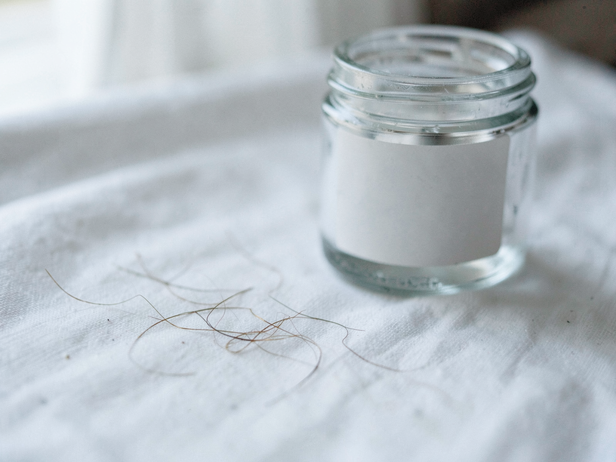
Subtle evidence of a cat's presence, a reminder of their shedding. This image hints at the delicate nature of feline companionship.
How it moves from cat to cat, and from cat to person
Transmission happens through direct contact with an infected animal or through contact with contaminated material. Fungal spores shed from infected hairs are the main vehicle. They land on bedding, sofas, grooming brushes, and carpets, and they survive in the environment for months, some studies place the figure at over a year under the right conditions. A new cat brought home, a kitten from a shelter or a breeder, or a cat that has had contact with strays can introduce spores into a flat that had no previous exposure. Once the spores are in the environment, a person who handles the cat, sits where the cat sits, or uses the same grooming tools can pick up the infection through a small break in the skin or simply through prolonged skin contact. Children are at higher risk because they handle animals more closely and their skin barriers are less robust. Adults with diabetes, those on corticosteroids or chemotherapy, and people living with HIV are at significantly higher risk of a more severe or persistent infection. In a multi-pet household, a dog sharing space with an infected cat is also a plausible secondary host, though dogs are somewhat less susceptible to M. canis than cats.
What it looks like on a cat, and why it is easy to miss
The classic presentation in cats is one or more circular areas of hair loss, usually on the face, ears, forelimbs, or tail. The skin in the affected area may look slightly reddened and scaly, or it may look almost normal. Many cats show no obvious itching, which is one reason owners do not investigate promptly. In some cats, particularly long-haired individuals such as Persians, the infection spreads in a more diffuse pattern without clear circular borders, making it harder to spot. A cat can also carry dermatophyte spores on its coat without showing any visible lesion, an asymptomatic carrier that is still capable of spreading the infection to people and other animals in the home. This is not rare; it is well-documented in shelter populations and in multi-cat households.
![Amber bottle and cream]()
Amber bottle and cream
Image credit : AI
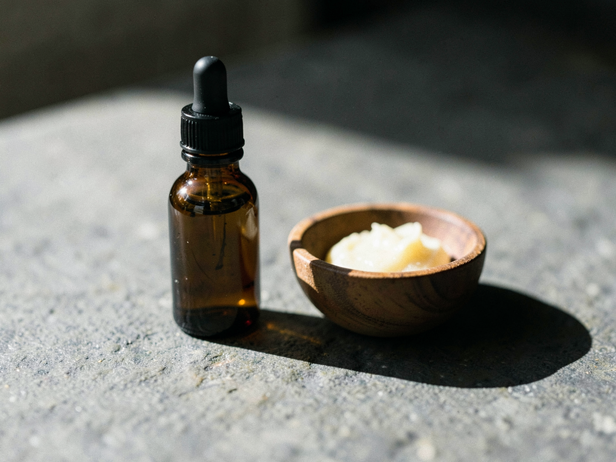
A subtle treatment for fungal infection cat, presented in a natural setting.
Diagnosis and treatment: why this needs a vet
If you see a bald patch with a scaly edge on your cat, and especially if anyone in the household has developed a ring-shaped skin lesion, take the cat to a vet rather than waiting. A Wood's lamp, an ultraviolet light, causes some strains of M. canis to fluoresce a yellow-green colour, which gives a quick preliminary result, but not all strains fluoresce and a negative result does not rule out infection. The definitive test is a fungal culture, where hairs from the edge of the lesion are grown on a culture medium for up to two to three weeks. Treatment typically involves a combination of topical antifungal therapy applied to the lesions and, in more widespread infections, oral antifungal medication prescribed by the vet. The vet will also advise on environmental decontamination, vacuuming frequently, washing bedding at high temperature, and disinfecting surfaces, because treating the cat without reducing the spore load in the flat leads to reinfection. Anyone in the household with a skin lesion should see a doctor in parallel; the human infection is treated separately, usually with a topical antifungal cream, and the two treatment courses run at the same time. If you have young children, an elderly parent, or anyone immunocompromised in the home, mention this to both the vet and the doctor so they can assess the risk level accurately.
Reducing spread while treatment is underway
Isolating the infected cat in one room is practical and worthwhile, though complete isolation in a small flat is difficult. Wash your hands thoroughly after handling the cat or its bedding. Avoid letting the cat sleep on shared furniture during treatment. Groom the cat only with tools kept separate from those used on other pets, and disinfect those tools after each use. Vacuum carpets and soft furnishings regularly and dispose of the vacuum bag or empty the canister outside. These steps do not replace treatment, but they slow the rate at which spores accumulate in the environment and reduce the chance that other people or pets in the home pick up the infection before the cat clears it. Ringworm in otherwise healthy cats resolves with proper treatment, though the course is measured in weeks, not days. The infection will not resolve on its own in most cases, and delaying treatment extends the window during which the household is at risk.