Rabbits look like they should love fruit. They are herbivores, they forage, and a slice of banana disappears in seconds. The enthusiasm is real. The tolerance is not.
A rabbit's gut is one of the most specialised digestive systems among small mammals, and it runs almost entirely on insoluble and soluble fibre. Understanding what sugar does to that system, and how little it takes to tip the balance, changes how you think about the fruit bowl.
Why a rabbit's gut is not built for sugar
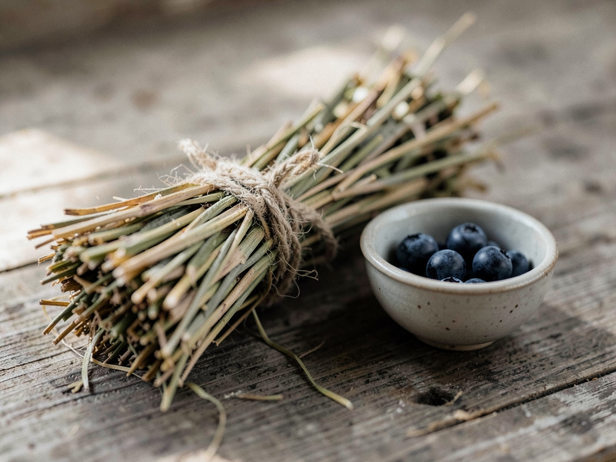
![Hay and Blueberries Still Life]()
Hay and Blueberries Still Life
Image credit : AI
A rustic still life featuring dried hay and fresh blueberries, a glimpse into a rabbit diet. Safe treats for pet rabbits.
The rabbit digestive tract relies on a process called hindgut fermentation. After food passes through the stomach and small intestine, it enters the caecum, a large, blind-ended pouch that functions like a fermentation chamber. Billions of bacteria and other microorganisms live there, breaking down plant fibre into volatile fatty acids the rabbit absorbs as energy.
This system is exquisitely tuned to fibre. When simple sugars, fructose, glucose, sucrose, arrive in the caecum in significant quantities, they shift the fermentation balance. Sugar ferments faster than fibre and feeds bacterial populations that would otherwise be kept in check. The result is a change in the caecal environment: pH drops, gas production increases, and the microbial community tilts toward species that do not belong there in large numbers.
That shift is the starting point for GI stasis, a slowdown or halt in gut motility that is one of the most dangerous conditions a rabbit can develop.
What counts as too much, and which fruits carry the most risk
There is no universal safe dose, because body weight, individual gut health, and what else the rabbit is eating all matter. The working guideline among rabbit-specialist vets is that fruit should be a treat, not a dietary component: roughly one to two teaspoons of fruit per kilogram of body weight, no more than two or three times a week, and only for rabbits already eating unlimited hay.
The sugar content of the fruit matters more than the volume. Banana and grape are among the highest-sugar options, a small piece of banana has enough fructose to constitute a full treat for a medium-sized rabbit. Berries, blueberries, raspberries, strawberries, carry less sugar per gram and are generally the lower-risk choice. Dried fruit is a different category entirely: raisins, dried mango, and dried papaya are concentrated sugar and should not be given at all. Many owners in India pick up dried fruit mixes at the market thinking they are a natural snack; for a rabbit, they are not.
Fruit with pits, cherries, plums, peaches, should never be given with the stone. The flesh is not acutely toxic in small amounts, but the pit contains compounds that release cyanide and must be kept away from any animal.
The signs that the gut is struggling
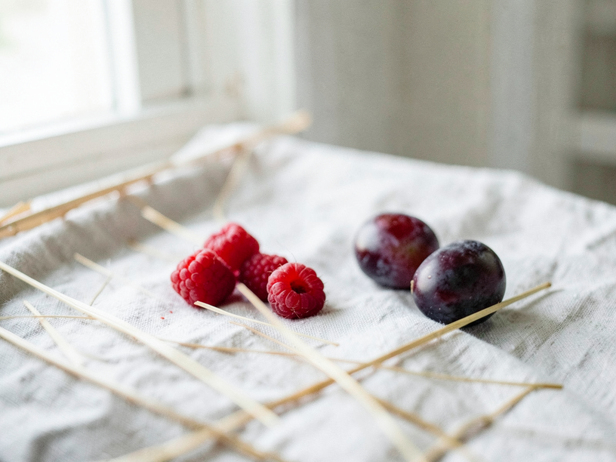
![Fresh Berries on Linen]()
Fresh Berries on Linen
Image credit : AI
A delicate arrangement of fresh raspberries and a grape, a perfect treat for rabbits. Explore safe treats for pet rabbits.
A rabbit that has had too much sugar does not always show it immediately. The caecal shift can take a day or two to produce visible symptoms. What to watch for: a drop in the number of faecal pellets, or pellets that are smaller than usual, misshapen, or strung together with mucus. A rabbit that stops eating hay, or stops eating at all, is a more urgent sign. A bloated or hard abdomen, teeth grinding, and a hunched posture that signals pain are the point at which waiting is not an option.
Caecotropes are also a useful signal. Rabbits produce two types of droppings: the hard round pellets most owners see, and soft, grape-like caecotropes that the rabbit eats directly from the anus, usually at night. A rabbit eating too much sugar or too many pellets often leaves caecotropes uneaten on the floor of the enclosure, because the gut is already overloaded with fermentable material. Uneaten caecotropes on their own are not an emergency, but they are a clear sign the diet needs adjusting.
Hay is the non-negotiable baseline
The reason fruit causes more harm in some rabbits than others comes down almost entirely to whether hay is the foundation of the diet. A rabbit eating unlimited timothy hay or orchard grass has a caecal environment buffered by constant fibre input. The same rabbit eating a commercial pellet-heavy diet with fruit on top has a gut that is already working harder than it should be, and the fruit tips it further.
In Indian homes, rabbits are often fed a mix of whatever is available, leftover roti, vegetables, pellets, and fruit as a treat. Roti is high in starch, which ferments in the caecum much like sugar does. A rabbit getting roti and fruit in the same day is receiving two sources of rapidly fermentable carbohydrate, and the combined load is higher than either alone would suggest.
Unlimited grass hay, available in pet stores in most Indian metros, and increasingly online, is the single most important thing a rabbit can have. Fruit becomes a genuinely low-risk treat only when hay is already doing the work it is supposed to do.
When to stop reading and call a vet
If a rabbit has not passed droppings in eight to twelve hours, has stopped eating or drinking, is sitting hunched with its eyes half-closed, or has a visibly distended abdomen, that is a veterinary emergency. GI stasis can become fatal within twenty-four hours. A rabbit that ate fruit yesterday and seems fine today but is quieter than usual is worth watching closely for the next day; one that is showing any of the signs above needs a vet who sees small mammals, not a general-practice clinic if you can help it.
The gut a rabbit runs on is not forgiving of sudden changes or sustained sugar loads. A few blueberries twice a week for a rabbit eating hay all day is a different situation from a banana every morning for a rabbit living mostly on pellets. The fruit is not the problem on its own. What surrounds it is.