The dog crouched near the chai stall has lost most of its fur. Its skin is thickened, grey, and folded at the neck. Passersby assume it is diseased beyond help. It almost certainly is not. What it has is mange, one of the most common and most treatable conditions in street dogs across India.
What mange actually is
![Dawn Street Dog Silhouette]()
Dawn Street Dog Silhouette
Image credit : AI
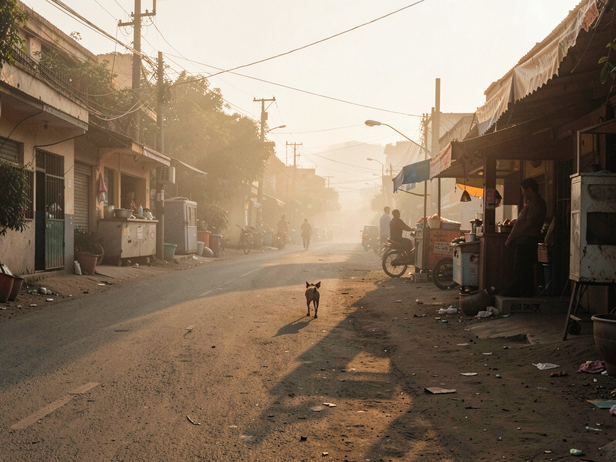
A thin dog traverses a dusty Indian street at dawn, a scene evoking the challenges of **mange in street dogs India**.
Mange is not a skin disease in the way an allergy or a fungal infection is. It is a mite infestation. Microscopic parasites burrow into or live on the surface of the skin, and the damage you see, the hair loss, the crusting, the thickened skin, is the dog's immune response to them, not the mites themselves.
There are two distinct types, and they are caused by different mites, behave differently, and require different treatment.
Sarcoptic mange: the contagious one
Sarcoptic mange is caused by Sarcoptes scabiei, a mite that burrows into the outermost layer of the skin to lay eggs. The female digs a tunnel, deposits eggs along it, and dies there. The eggs hatch in three to four days. The entire cycle from egg to reproducing adult takes roughly two weeks, which is why an infestation can escalate quickly on an untreated dog.
The mite's burrowing and its waste trigger an intense immune reaction. The dog scratches constantly. Hair falls out in patches, starting at the ears, elbows, and belly, then spreading. The skin thickens and crusts. In severe cases, secondary bacterial infections set in because the scratched and broken skin has no barrier left.
Sarcoptic mange is zoonotic, meaning it can transfer to humans and to other dogs through direct contact. The mite does not survive long on a human host and cannot complete its life cycle on us, but it causes an intensely itchy rash that can last several weeks. This is worth knowing if you are handling an affected street dog.
Demodectic mange: the immune system story
![Microscope Slide Still Life]()
Microscope Slide Still Life
Image credit : AI
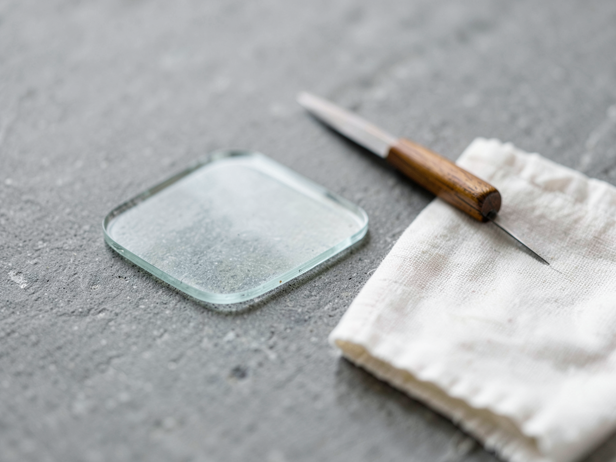
Scientific observation tools on stone. Examining potential skin mites in dogs India.
Demodex canis is a different mite entirely. It lives in hair follicles and is present in small numbers on nearly every dog, including healthy ones. It is passed from mother to puppy in the first days of life and is considered part of the normal skin fauna at low levels.
Demodectic mange happens when the mite population explodes. This occurs almost exclusively in dogs with a compromised or immature immune system: very young puppies, malnourished dogs, or dogs with an underlying illness. In a well-nourished dog with a healthy immune system, Demodex stays controlled. In a street dog dealing with malnutrition, parasitic load, and chronic stress, the immune system cannot keep the mite population in check, and the infestation spreads.
Demodectic mange is not contagious between dogs in the way sarcoptic mange is. The mite transfers only in the specific conditions of newborn nursing. What you are seeing in a street dog with demodectic mange is a signal about that dog's internal health, not a risk to other dogs it passes.
How mange is diagnosed and treated
A vet diagnoses mange through a skin scraping: a blade gently collects cells from the affected area, and the sample is examined under a microscope. Sarcoptes is notoriously difficult to find even in confirmed cases because the mites burrow deep, so a vet may treat on clinical suspicion if the presentation is consistent. Demodex is easier to find in a scraping because the mites sit in the follicle.
Treatment has changed significantly in recent years. Older protocols used organophosphate dips, which were effective but harsh and required repeated handling of a stressed animal. Current veterinary practice for both sarcoptic and demodectic mange in dogs leans on isoxazoline-class antiparasitic drugs, the same class used in modern flea and tick preventatives, or ivermectin-based injectable or oral protocols, depending on the severity and the dog's condition. The specific drug, route, and duration are decisions for the treating vet, not something to be administered at home based on a general recommendation.
A dog with secondary bacterial infection will also need antibiotics. A malnourished dog needs nutritional support alongside antiparasitic treatment, because the immune system that failed to control Demodex cannot recover without adequate protein and calories. Treating the mites without addressing the underlying condition produces incomplete results.
Full recovery from sarcoptic mange in a dog that receives treatment is common. Demodectic mange in a young dog with no other illness also carries a good prognosis. Generalised demodectic mange in an adult dog with a serious underlying condition is harder to resolve, and the underlying condition is often the limiting factor.
What you can do if you find an affected street dog
Contact a local animal welfare organisation or a community animal welfare volunteer. Several NGOs across Indian cities run treatment camps specifically for street dogs with mange. If you are able to transport the dog, a government veterinary hospital will treat it. If you handle the dog, wear gloves and wash your hands and arms thoroughly afterward.
Do not apply used engine oil, kerosene, or any home remedy to the skin. These are traditional practices in some communities and they cause chemical burns. The skin of a mangy dog is already compromised; adding a caustic substance makes the injury worse and does not kill mites. The dog needs antiparasitic medication, not a topical irritant.
A dog with mange that receives proper treatment, adequate food, and time to recover can regrow its coat entirely. The grey, folded skin you see is not permanent damage. It is the body holding on while the immune system fights something it cannot quite beat alone.