A bird's beak and nails grow continuously throughout its life, the same way human nails do. In the wild, foraging, climbing, stripping bark, and landing on rough surfaces keep them worn to a functional length. A pet bird in a flat has none of those abrasive daily tasks, which is why overgrowth is one of the most common problems vets see in companion parakeets, cockatiels, lovebirds, and mynahs.
Why beaks overgrow
The beak is made of keratin laid down over a bony core, and its growth rate is influenced by nutrition, activity, and underlying health. The most common cause of beak overgrowth in pet birds is a diet heavy in soft foods. Millet, cooked rice, soaked pulses, and fruit all require very little mechanical work from the beak. A bird that never has to crack a hard seed or strip a fibrous branch loses the natural grinding that keeps the beak in proportion.
Mites are a second cause that owners frequently miss. The scaly face mite, Knemidokoptes pilae, burrows into the soft tissue at the base of the beak and causes the keratin to grow abnormally, often with a spongy or crusted appearance. This is not a grooming problem and will not resolve with trimming alone. The mite needs to be treated.
Liver disease is a third cause, and this is where beak overgrowth moves from a husbandry issue to a clinical one. The liver plays a role in keratin metabolism. When it is not functioning well, beak keratin can grow faster than normal and soften, making the beak more prone to flaking and deformity. Birds with chronic liver disease often show overgrowth alongside other signs: a change in droppings, reduced activity, or a shift in feather condition. A beak that grows back quickly after trimming, or one that feels soft or looks discoloured, warrants a vet visit rather than another trim.
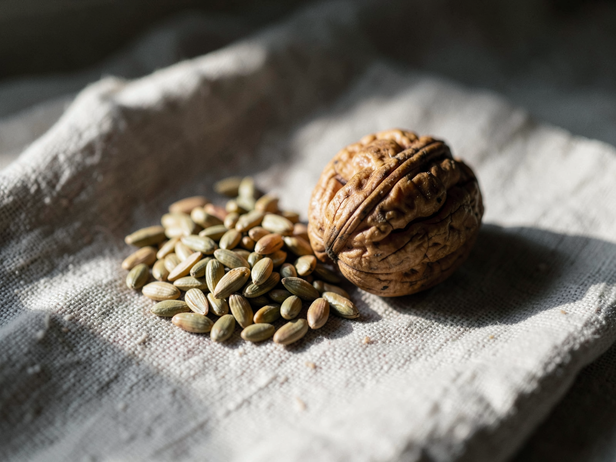
![Seed and Walnut Still Life]()
Seed and Walnut Still Life
Image credit : AI
I observe the textures of seeds and a walnut, noting the subtle grain and deep shadows.
Why nails overgrow
Nail overgrowth in pet birds is almost always an environment problem before it is a health problem. The perches in most commercially sold cages are smooth, uniform wooden dowels. A bird sitting on the same diameter of smooth wood all day has no surface variation to wear its nails against. Wild birds land on branches of different thicknesses and textures, and that variation does the work.
Replacing at least some of the cage's smooth dowels with natural wood branches of varying diameter, or adding a concrete or mineral perch, is the most effective single change an owner can make. The perch should not be so abrasive that it damages the foot's soft tissue, but enough texture to create gentle wear. Rope perches and soft rubber perches do almost nothing for nail maintenance.
Nails that are very long and curling can catch on cage bars, fabric, or the owner's clothing, and a bird that panics while caught can fracture a toe. This is the practical reason to address the length, not aesthetics.
When trimming at home is and is not appropriate
Mild nail overgrowth in a calm, handleable bird can be managed at home with a proper bird nail clipper and a styptic powder or cornflour within reach in case the quick is nicked. The quick is the blood vessel running through the nail. In pale nails it is visible as a pink line. In dark nails it is not visible, which is why dark-nailed birds are better trimmed by a vet or an experienced avian handler.
Beak trimming is a different matter. The beak has blood vessels and nerve endings, and an incorrectly trimmed beak can fracture, bleed, or leave the bird unable to eat. Unless an owner has been trained to do this by a vet, beak trimming belongs in a clinic. This is especially true for severe overgrowth, any deformity, or a beak that looks soft or discoloured.
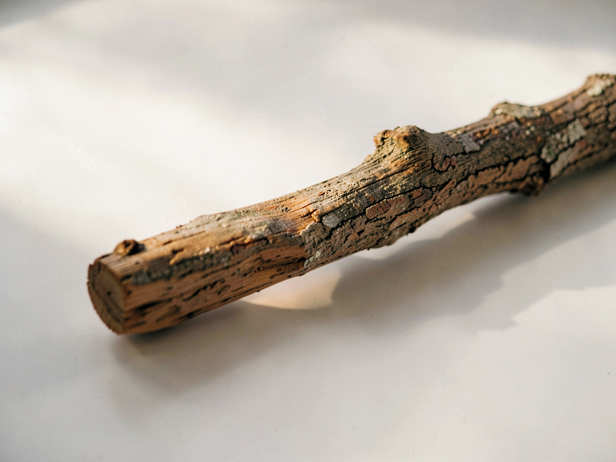
![Textured Branch on White]()
Textured Branch on White
Image credit : AI
Examining the natural bark texture, I notice details that could relate to budgie beak trimming concerns.
What to give the bird to help itself
A cuttlebone mounted inside the cage gives the bird a surface to rub its beak against, and supplies calcium at the same time. Most birds use it without encouragement. Mineral blocks serve a similar function. Offering whole, unshelled seeds or nuts appropriate to the species adds mechanical beak work that soft diets remove. Foraging toys that require the bird to work for food replicate, in a small way, the activity that keeps wild birds' beaks trim.
Diet correction takes weeks to show results in beak condition. A bird that has been on an all-millet diet for years will not show improved keratin quality in a fortnight. The change is real, but it is slow.
If a bird's beak is visibly asymmetrical, growing sideways, or has a crusty or spongy texture at the base, those are signs to stop managing it at home and call a vet. The same applies to nails that have already curled into a full circle, or a bird that is favouring one foot. At that point, the overgrowth is a symptom of something that needs diagnosis, not just a trim.