The cat shows up at dusk, thin and cautious, and you want to do something useful. That instinct is good. What you put in the bowl, and how you put it there, determines whether you are actually helping or quietly making things worse.
What a street cat's body is built to eat
Cats are obligate carnivores. Their digestive systems cannot synthesise certain amino acids, taurine most critically, and must get them from animal protein. A cat fed primarily on carbohydrates, plant matter, or low-protein scraps will develop deficiencies over time even if it appears to be eating enough. Taurine deficiency causes dilated cardiomyopathy and progressive retinal degeneration; both are irreversible once advanced. This is not a concern unique to pedigree cats. A street cat eating roti and dal every day for months is at genuine risk.
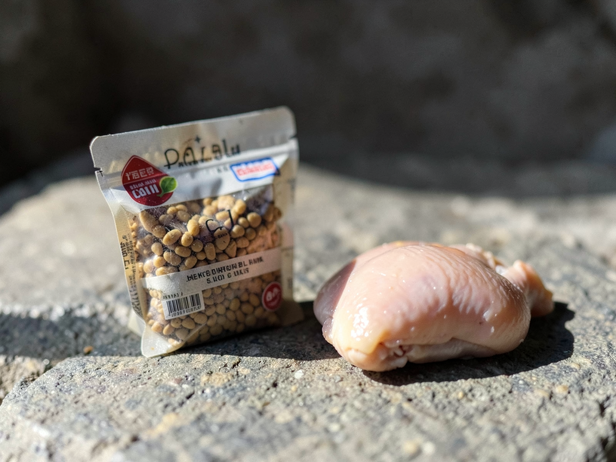
The most reliable thing you can offer is plain, cooked chicken or fish with no salt, no onion, no garlic, and no spices. Boiled and shredded, it is close to what the cat's gut expects. Commercial wet cat food, the kind sold in pouches or tins, is formulated to meet a cat's nutritional requirements and is a better daily option than home cooking, because the balance of nutrients is already worked out. Dry kibble is acceptable as a supplement but not ideal as the only food; cats have a low thirst drive and need moisture in their diet to protect their kidneys.
![Cat Food and Chicken]()
Cat Food and Chicken
Image credit : AI
I offer simple sustenance: wet cat food and boiled chicken, a basic meal for a stray cat in India.
What harms more than it helps
Milk is the most persistent mistake. Most adult cats are lactose intolerant. The enzyme that breaks down lactose, lactase, drops sharply after kittenhood. A bowl of cow's milk or tea with milk causes digestive distress: loose stool, cramping, dehydration. A cat that laps it up enthusiastically is not telling you it is fine. It is telling you it is hungry.
Onion and garlic, in any form, raw, cooked, powdered, or as part of a curry or gravy, contain thiosulphates that damage a cat's red blood cells and can cause haemolytic anaemia. Leftover dal with a tadka, rice with sabzi, or any cooked food that passed through an Indian kitchen should be treated as unsafe unless you know with certainty what went into it. Cooked bones splinter and can perforate the gut. Raw fish fed repeatedly depletes thiamine. Bread and biscuits offer almost no nutritional value and fill the stomach without nourishing it.
Xylitol, the sweetener found in some peanut butters and sugar-free snacks, is toxic to cats. If you are offering anything processed, check the label.
How to feed without creating a bigger problem
A regular feeding spot on a balcony creates a routine the cat will depend on. That is not inherently bad, but it carries responsibility. Feed at the same time each day so the cat is not waiting in heat or rain for unpredictable hours. Use a clean bowl, a dirty bowl grows bacteria fast in Indian weather, and remove uneaten food within an hour, especially wet food, which spoils quickly above 30°C. Standing water in a bowl also becomes a mosquito breeding site; change it daily.
Do not feed in quantities that attract other animals or create waste that neighbours object to. A community feeding arrangement, where two or three people in a building share the responsibility, is more sustainable than one person doing it alone and then travelling or falling ill. The cat will not understand why the food stopped.
If you are feeding regularly, consider connecting with a local animal welfare group about TNR, trap, neuter, return, programmes. A fed, unsterilised female cat will have multiple litters a year. Feeding without sterilisation increases the population you are trying to help.
![Morning Feeding Station Setup]()
Morning Feeding Station Setup
Image credit : AI
Preparing to feed stray cats in India, I placed fresh water and food on the balcony, hoping to offer a small comfort.
Signs that the cat needs more than food
A thin cat that eats well and holds its weight over a few weeks is doing reasonably. Watch for signs that food alone is not enough: persistent sneezing or eye discharge, which points to an upper respiratory infection common in street cats; wounds that are not healing; a distended belly in a young cat, which can indicate a heavy worm burden; difficulty walking or holding the head straight; and any cat that stops eating after having eaten regularly. Kittens found alone before their eyes are fully open cannot regulate their temperature and cannot survive without specialised care, a local rescue group or a vet is the right call immediately, not a bowl of milk.
Upper respiratory infections and intestinal parasites are the two conditions most likely to kill a street cat that is otherwise being fed. Both are treatable. A vet visit, even a single one, can make the difference between a cat that survives the next monsoon and one that does not. Many cities have low-cost or free clinics run by animal welfare organisations; the Animal Welfare Board of India maintains a directory of registered societies that can point you toward one.
Feeding a street cat is not a small thing. Done carefully, it extends a life. Done carelessly, it creates dependency without health. The bowl matters less than what goes in it.