A fish cannot regulate its own body temperature. Every enzyme that runs its digestion, immune response, and nervous system operates at a speed set by the water around it. Change the water temperature by three or four degrees over a few hours, and those enzymes slow down or race ahead in ways the fish's body was never built to handle. The heater on the back glass is not decoration, but neither is it the whole answer.
What temperature instability does to a fish's body
Fish are ectotherms. Their metabolic rate rises and falls with ambient water temperature, which means every biological process, digestion, oxygen uptake at the gills, antibody production, tracks the thermometer. A sudden drop in temperature slows the immune system before it slows anything else. Pathogens that a healthy fish suppresses without trouble find a host that can no longer mount a response. This is why ich (white spot disease), caused by the parasite Ichthyophthirius multifiliis, so often appears after a cold-water change or a heater failure: the fish was already carrying a low parasite load; the temperature crash gave the parasite the opening.
A sudden rise does the opposite. Warmer water holds less dissolved oxygen. A fish that was comfortable at 26°C may begin gasping at the surface at 30°C, not because it is sick, but because the water simply cannot carry enough oxygen to meet the metabolic demand that the same warmth has increased. Gill tissue can also become inflamed under prolonged heat stress, reducing the surface area available for gas exchange.
![Thermometer in Water]()
Thermometer in Water
Image credit : AI
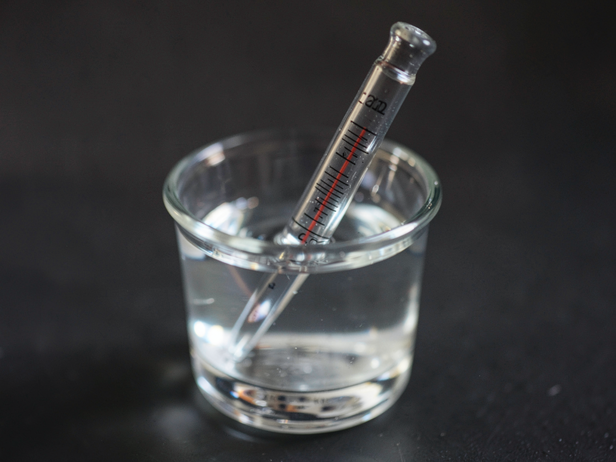
Monitoring the stable water temperature for fish health with this precise aquarium thermometer.
Why the heater's dial is not a temperature reading
Most aquarium heaters sold in India are preset or have a dial calibrated at the factory. That dial tells you the temperature the heater is set to seek, not the temperature the water has actually reached. A heater placed near the filter outlet in a 60-litre tank may keep that corner at 27°C while the far end of the tank, away from circulation, sits at 24°C. Fish that prefer the cooler corner, many tetras and corydoras do, are living in a different thermal environment than the heater's dial suggests.
Heaters also fail silently. A stuck-open heater runs continuously and can cook a tank. A stuck-closed heater does nothing while the dial still shows 27°C. Neither failure announces itself. A thermometer, ideally one at each end of a tank longer than 60 cm, is the only way to know what the water is actually doing.
Choosing and placing a heater and thermometer
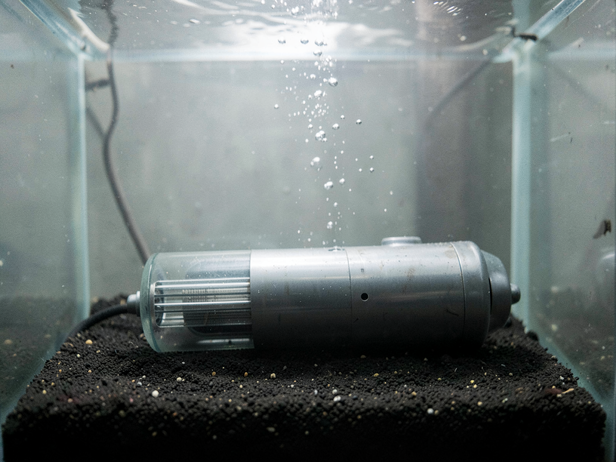
The general rule for heater sizing is roughly 1 watt per litre of water, with some margin for rooms that get cold at night. A 100-litre tank in a Bengaluru flat that stays warm year-round needs less heater capacity than the same tank in a Delhi home where the room drops to 15°C in January. Submersible heaters placed horizontally near the substrate, close to the filter intake, distribute heat more evenly than vertical placement near the surface.
For thermometers, glass stick-on models are cheap and readable but prone to inaccuracy if the adhesive lifts and air gets between the strip and the glass. Digital thermometers with a probe in the water are more reliable. Calibrate against a known reference, a medical thermometer in a glass of tank water, when you first set one up. Check the reading at the same time each day for a week after any change to the heater, the room's air conditioning, or the tank's position relative to a window.
![Submersible Heater in Aquarium]()
Submersible Heater in Aquarium
Image credit : AI
I ensure a stable water temperature for my fish with this submersible heater.
Species-specific ranges matter
Tropical community fish, most livebearers, tetras, barbs, and cichlids commonly kept in Indian homes, are comfortable between 24°C and 28°C, but that range is not universal. Discus need 28°C to 30°C and become prone to disease below 27°C. Goldfish are coldwater fish that suffer above 24°C; keeping them in a tropical community tank is a slow harm. Betta fish tolerate a wider range but do best between 26°C and 28°C, and males held consistently below 24°C show reduced activity and immune function.
Native Indian fish kept in home aquariums, rosy barbs, giant gourami, and several loach species, are often more tolerant of fluctuation than imported tropicals, having adapted to seasonal temperature variation in rivers and ponds. That tolerance does not mean instability is harmless; it means the threshold before visible stress is higher.
When temperature becomes a vet or specialist problem
A single thermometer reading outside the target range is a prompt to check the heater and adjust. A fish that is gasping, clamping its fins, sitting on the substrate, or showing white spots or patchy colouring after a temperature event needs more than a heater adjustment. These are signs of secondary infection or physiological stress that has moved past what stable temperature alone can reverse. An aquatic vet or an experienced aquarium specialist, not a general pet shop, is the right next step when fish show clinical signs after a temperature event. Stabilise the water first; do not add medication without knowing what you are treating.