Most cat owners have seen it: the bowl empties in under a minute, and then the food comes back up, barely digested, in a neat tubular pile. It is alarming the first time. By the fifth time, it is just Tuesday. Understanding why it happens makes the fix obvious.
What happens inside when a cat eats too fast
When a cat swallows food faster than the oesophagus can move it along, the lower portion of the oesophagus and the upper stomach fill with unchewed kibble or wet food before the body has time to signal fullness. The stomach wall stretches rapidly, triggering a reflex contraction that pushes the contents back up. Because the food has spent so little time in the stomach, it often comes back looking almost exactly as it went in. This is regurgitation, technically, not vomiting, though owners use the words interchangeably. True vomiting involves abdominal heaving and bile; regurgitation after fast eating is passive and quick. The distinction matters because regurgitation from speed-eating usually needs a feeding change, while repeated true vomiting with bile, lethargy, or weight loss needs a vet.
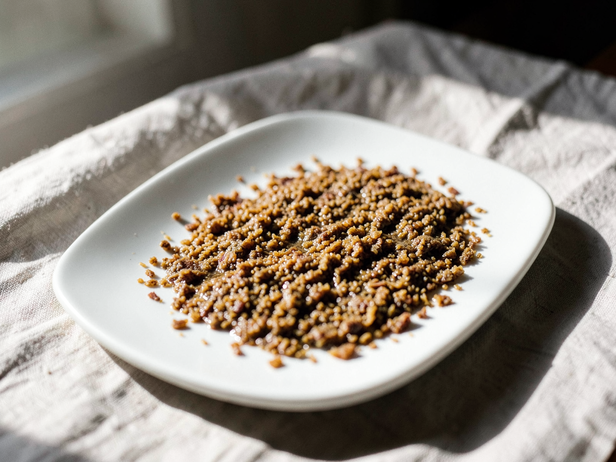
![Wet Cat Food Spread]()
Wet Cat Food Spread
Image credit : AI
I observe the texture of wet cat food, a detail often overlooked. This might be relevant for understanding why my cat regurgitates food.
Why some cats eat as if the bowl might disappear
Speed-eating is more common in cats who grew up competing for food, whether in a litter, a shelter, or a multi-cat home where another animal might finish the meal first. It also shows up in cats who were fed inconsistently and learned that food is scarce. The behaviour is learned and self-reinforcing: eating fast becomes the default, even when there is no competition at all. Some breeds, including Persians and other flat-faced cats, are anatomically more prone to regurgitation because of the angle of their oesophagus, so speed-eating compounds an existing tendency. A cat that has always eaten quickly but suddenly starts vomiting more, or vomits at times other than right after eating, is a different problem and deserves a vet visit.
Feeding changes that slow things down
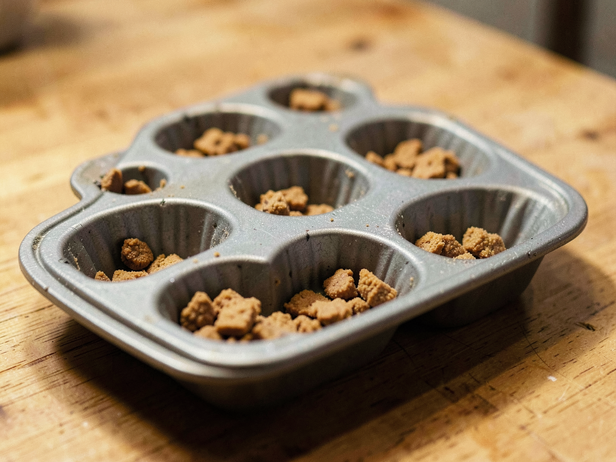
The goal is to put time and effort between the cat and each mouthful. A puzzle feeder, a slow-feeder bowl with raised ridges, or a flat plate with kibble spread thinly across it forces the cat to work for each piece. A muffin tin with a few pieces in each cup does the same job for almost no cost. For wet food, spreading it thinly across a lipped plate rather than mounding it in a bowl slows intake considerably. Smaller, more frequent meals help too: the same daily portion split across three or four servings means the stomach is never presented with a large volume at once. In a multi-cat home, feeding cats in separate rooms removes the competition that drives the behaviour in the first place. Most owners see a clear reduction in post-meal vomiting within a week of making one or two of these changes.
![Kibble in Muffin Tin]()
Kibble in Muffin Tin
Image credit : AI
Observing kibble placement, a potential aid for cats eating too fast.
What to watch for and when to call the vet
Occasional regurgitation in an otherwise healthy cat who eats fast, maintains weight, and behaves normally is unlikely to point to a medical problem. The feeding changes above address it. The picture changes when vomiting happens away from mealtimes, contains bile or blood, is accompanied by weight loss, reduced appetite, lethargy, or increased drinking, or when a cat who never had this problem suddenly develops it. Hairballs produce a distinct retching pattern and a cylindrical mass; if that is what you are seeing, it is a separate issue. Chronic vomiting in cats can indicate inflammatory bowel disease, hyperthyroidism, kidney disease, or other conditions that a vet needs to assess. If the vomiting continues after two weeks of consistent feeding changes, or if any of the signs above appear, a vet visit is the right next step rather than a further adjustment to the bowl.